Dubai Exhibit Features Art on Paper, a Much-Neglected Medium

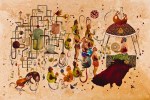
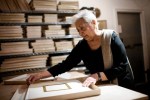
Paper exhibit in DubiaIt started with a couple of astonishing works falling into their hands – works they never knew existed in the Middle East and from a collector they had never come across. The two Anish Kapoors had been in her collection for more than a decade, the reserved British woman explained hesitantly, and she wanted to sell them to make room for newer acquisitions. The two works were the inspiration for an exhibition called Paper, which opened on February 4th in the gallery’s Dubai International Financial Centre base.

Read More: Dubai Exhibition
Mirror, Mirror: The Iranian Artist Monir Farmanfarmaian’s Dazzling Work Shines in Dubai

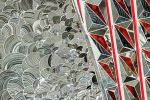
Monir Farmanfarmaian 2In twinkling tones over a crackling line from Tehran, Monir Shahroudy Farmanfarmaian smiles almost audibly as she talks about mirrors. “Mirror, mirror on the wall, who is the prettiest of them all,” she lilts. It is no wonder she lights up on the subject: mirror mosaic forms the basis of her work and it is through large installation works such as Flight of the Dolphin, part of the collection of the Metropolitan Museum of Modern Art, and Lightning for Neda, six panels that hang in the Queensland Art Gallery in Brisbane, Australia, that this octogenarian has gained international recognition.

Read More: Monir Farmanfarmaian

New Paintings, Works on Paper, and a Video by Shiva Ahmadi on View at Leila Heller Gallery

Shiva AhmadiShiva Ahmadi’s third solo exhibition is on view at Leila Heller Gallery in Chelsea at 568 West 25th Street from February 21st to March 23rd, 2013. Apocalyptic Playland features new paintings, works on paper, and also includes the artist’s fist foray into video work. Although on the surface Ahmadi’s works appear vibrant, playful, and even mythical, they nevertheless deal very much with the harsher sides of reality.

Read More: Shiva Ahmadi’s Exhibition

“A Kind of Alchemy: Medieval Persian Ceramics” Opens at the Frick Art & Historical Center

Medieval Persian ceramicsThe Frick Art & Historical Center announces the opening of A Kind of Alchemy: Medieval Persian Ceramics, a rich and colorful exhibition of more than 60 objects made between the 10th and 14th centuries in Persia (what is now present-day Iraq, Iran and Afghanistan). Recognized today as one of the major artistic expressions from the lands of Islam, medieval Persia’s beautifully decorated luxury ceramics have been prized by collectors over the centuries, but little-known by the general public. The exhibition opened at The Frick Art Museum on February 23rd, 2013 and will remain on view through June 16th, 2013.

Read More: Medieval Persian Ceramics at the Frick

Muslim Art: Allah’s 99 Names

Allah's 99 namesEven before its opening day, this exhibition was put on the list of the season’s main events. The Pushkin Museum of Fine Arts in Moscow offers an exhibition of classical Muslim art called Allah’s 99 names, which is to last from February 20th to May 26th 2013. The visitors will be able to enjoy masterpieces from the collection of the Marjani Foundation in Support and for the Development of Scientific and Cultural Programmes.

Read More: Islamic Art Exhibition at the Pushkin Museum of Fine Arts

See also: Art of the Islamic World in Moscow

The Orientalist Connector

Shafik GabrEgyptian collector of Orientalist art, Shafik Gabr, believes that Orientalism embodies a dynamic and continuing dialogue between East and West. “The Middle East has always been a crossroads between these worlds,” he says. “We owe the Orientalists a great debt, because although much of what they painted lives on today in our streets and villages, we constantly need to be reminded of the richness and value of our culture. For many years we Arabs did not reconcile ourselves to Orientalism. Now, from those paintings we’re getting to know about our own traditions.”

Read More: Shafik Gabr Reveals His Vast Collection of Orientalist Art

‘We Will Not Fail’ Meticulously Upends Mass Media Imagery

Samira YaminFive new works by Samira Yamin, currently on display at the Santa Monica Museum of Art, merge traditional Islamic art with modern mass media, resulting in poetic, contemplative objects both visually beautiful and conceptually disorienting.

Read More: Samira Yamin Exhibit at the Santa Monica Museum of Art

A Victorian in Arabia

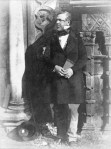
David RobertsDuring the late 18th and early 19th centuries, following Napoleon’s conquest of Europe and the opening of overland trade routes to India for foreigners (then countries hardly visited by Westerners), artists and archaeologists from Britain and France in particular were drawn to the region. Following the example of so many British artists before him, David Roberts (1796–1864) regularly travelled in Europe in search of new subjects. But unlike most of his contemporaries, he travelled extensively in the Middle East and North Africa, under conditions that at the time were often arduous, dangerous, and potentially injurious to the health of a northern European.

Read More: A Victorian in Arabia

A Joy for All to See

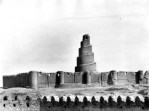
Samarra2As the acrid dust dies down from the war in Iraq and bullets cease to reach their human targets, it is time to discover what remains of its unique archaeological heritage and, sadly, which sites have been damaged. This year is the 100th anniversary of the excavation of the legendary royal city of Samarra, hardly touched – except by conflict – since then. In fact, UNESCO states that eighty percent remains to be revealed. An exhibition entitled Samarra – Centre of the World at the Pergamon Museum for Islamic Art, Berlin, celebrates the 100th anniversary of excavations of the site. Exhibits include fragments of murals, stucco carving and wood paneling from palaces, lusterware ceramics, Chinese porcelain illustrative of the city’s far-reaching trade links, and also original excavation photographs. The exhibition closes on May 26th, 2013.

Read More: A Joy for all to See

See also: Samarra, Centre of the World

Under Saudi Sand: The Great Arabian Road Show

Roads of ArabiaExcavation of archaeological sites only began in Saudi Arabia in the 1970s, yet these digs have already brought an astonishing wealth of treasures to light. They are astonishing because these digs are uncovering a virtually unknown ancient past. “Some of it has just come out of the ground only two years ago,” says Massumeh Farhad, curator of a revelatory exhibition displaying recently discovered archaeological material. Farhad is also Curator of Islamic Art at the Smithsonian’s Sackler Gallery, where Roads of Arabia: Archaeology and History of the Kingdom of Saudi Arabia is exploding myths about the Arabian Peninsula. Roads of Arabia is open until February 24th, 2013 at the Sackler Gallery, after which it will travel to Houston, Chicago, and San Francisco.

Read More: Roads of Arabia

Collecting Art Is Deeply Personal

Nadia SamdaniI view collecting (art) as something deeply personal. Sometimes, as with any passion-driven pursuit, it takes a while for an individual to understand her motivations and vision. In my case, I went through different chapters as a collector, and my tastes have evolved significantly. Still, what remains constant is that an artwork must speak to me, move me in some fundamental way—I have to love it. It’s not about what looks good in one’s home. Rather, art’s appeal is in the unique and truthful perspective on reality that it presents you with.

Read More: Nadia Samdani of the Samdani Art Foundation on Collecting Art

Iraq Restores Historic Ottoman Site

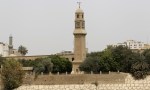
The clock tower of Qushla is seen at noon in central BaghdadAt the restoration site of the Ottoman governor’s headquarters, known as Qishla, near the Tigris River in Baghdad, Iraqi journalist Imad al-Khafaji says, “I feel, as the work proceeds, that we are builders.” A few months ago the Iraqi government launched a campaign to restore the building of Qishla, built by the Ottomans in Baghdad in 1855 to serve as the headquarters for their forces.

Read More: Iraq Restores Historic Ottoman Site

The Art of Urban Introspection

In this essay (published in 2008), Kinsey Katchka discusses the work of two Egyptian artists who are inspired by the urban environment as well as by Sufism. Their art reflects two aspects of Cairene life: the frenetic activity and density of communication that characterize cosmopolitan centres, and the more contemplative aspects of Sufism. The author argues that Sufi philosophies and practice mediate between the personal nature of spirituality and the realities of urban life in the present day.

Read More: The Art of Urban Introspection, by Kinsey Katchka

Celebrating Khusrau

KhusrauDelhi is celebrating the legacy of its famous court poet Amir Khusrau Dehlavi again. The Archaeological Survey of India, in collaboration with Aga Khan Trust for Culture, is hosting a fine and rare line-up of musicians apart from exhibitions, film screenings and symposiums on the genius of Khusrau. Jashn-e-Khusrau is open to the public.

Read More: Celebrating Khusrau

See also: Jashn-e-Khusrau Festival 2013

Musical Traditions and Ceremonies of Bukhara

In this essay (published in 2008), Alexander Djumaev considers Bukharian musical traditions as multi-cultural phenomena which demonstrate different types of syntheses – pre-Islamic and Islamic elements, inter-confessional cooperation and mutual influences of ethnic groups and peoples living in the city. Various factors, such as climatic conditions, traditional architecture and the inclination of its citizens towards musical entertainment, have influenced the development of traditional music in Bukhara. The main genres of musical art are considered in the framework of traditions of urban life. The author sees this trait of Bukharian culture and mentality as reflecting a duality: religiousness but also an intense love of secular pleasures in which music will always play an important role.

Read More: Musical Traditions and Ceremonies of Bukhara, by Alexander Djumaev

Love in the Sackler

SacklerIn Harmony, the Sackler Museum’s exhibition of Norma Jean Calderwood’s personal collection of Islamic art (January 31st, 2013 to June 1st, 2013) hands its viewer a bouquet of art exuding the aroma of love. It features ceramics, Islamic lacquered objects, single-page paintings, and many manuscript folios from Islamic epic poetry. Thematically, the content of the works varies greatly, from regicide to blessings; stylistically, the objects are stunningly beautiful. The exhibition is so rich it begs the viewer to explore it for hours.

Read More: Love in the Sackler

The Use of the Arabic Script in Northern Mozambique

Northern Mozambican Muslim population has been using the Arabic script for writing in KiSwahili and local African languages for centuries. Even today, many people continue using this script in private correspondence. Despite the abundance of the documents in this script that are housed at the Mozambique Historical Archives as well as in private hands, these documents have never been addressed or researched either from linguistic, historical, cultural or religious vantage points. For the last seven years, the Archives have been trying to draw attention of the scholars and obtain funds for the preservation and research of the documents. In this article (published in 2008), two short letters from the collection of the Mozambique Historical Archives are transcribed and translated with the help of a local shaykh who was educated within the regional historical Islamic literacy tradition.

Read More: The Use of Arabic Script in Northern Mozambique, by Liazzat Bonate

Dividing Lines and the Art of the Exile

Zarina Hashmi 2“Do exiles just wander around, or do they look for a home?” Zarina Hashmi asked recently. Being an exile is something of a core identity for the Indian-born, New York-based artist. It began in 1959, 12 years after the traumatic partition of her native country, when her father, like many Indian Muslims, moved the family to the newly declared nation of Pakistan. “Home,” she would recall, “is the center of my universe…my hiding place, a house with four walls, sometimes with four wheels.”

Read More: Dividing Lines and the Art of the Exile

See Also: Zarina Hashmi at the Guggenheim

Fadli Yusoff Pushes the Boundaries

Fadli YusoffThere is a contemplative stillness in the painting depicting a man deep in prayer, even as ribbons of text dance around him and colours swirl. There Is No God But Allah, Prophet Muhammad The Messenger Of Allah is one of approximately 30 figurative artworks to emerge from artist Fadli Yusoff’s studio in time for his first solo exhibition, simply entitled Md Fadli Yusoff 2007-2012.

Read More: Fadli Yusoff Pushes the Boundaries

Interview: Maxwell Anderson on Turkey, Art Exchange, the Arts District, and the Market

Dallas MuseumIt has been about a year since Maxwell Anderson became the director of the Dallas Museum of Art. We sat down with Anderson just before the end of 2012 for a conversation about the new initiatives he has launched this past year. In part three of the interview, Anderson and I discuss the art market, a collaboration with Turkey, the future of the Arts District, and more.

Read More: Interview with Maxwell Anderson

‘Gaza Fashion Week’ Comes to London Art Gallery

Palestinian Artists in LondonBritain is, it seems, becoming the place to see Palestinian contemporary art. After exhibitions in Manchester and London in 2012 devoted to or with major representation of Palestinian artists, the capital has now upped the ante with the opening of P21, a gallery specializing in work by Palestinian artists or engaging with the theme of Palestine.

Read More: Palestinian Art Comes to London

Corning Museum of Glass Mourns the Loss of Former Director David Whitehouse

David WhitehouseDavid Whitehouse, former executive director of The Corning Museum of Glass, died February 17th, 2013, following a brief battle with cancer. He was 71. Whitehouse joined The Corning Museum of Glass in 1984 as chief curator. He became director in 1992, then executive director and curator of ancient and Islamic glass in 1999. He remained in that role until 2011. Whitehouse had a profound impact on the Museum and on the advancement of the scholarship and understanding of glass.

Read More: David Whitehouse