Michael Brand: Cosmopolitan, Controlled and Colourful

Michael Brand

The day before the show, he was working at a 15th-century architectural site, the ruined fortress town of Mandu in India. He drove 1½ hours from Mandu to the nearest airport at Indore, then flew for 1½ hours to Mumbai, spent several hours in transit before boarding a flight to Frankfurt, Germany, where he changed planes for Los Angeles, ‘‘went home, had a shower and changed, and went to the Hollywood Bowl to see Nick Cave perform. Fantastic. ‘‘I set a pretty high bar for it,’’ he admits. ‘‘But he actually was that good.’’

Read More: Michael Brand: Cosmopolitan, Controlled and Colourful

Hamra Abbas’s Exhibition Explores the Colour Black and Links to the Kaaba

Hamra Abbas 2

Black is an absence of colour or an amalgamation of all colours. Either way, it is not a colour in its own right. It is this scientific mystery that fascinated the artist Hamra Abbas, a topic on which she spent months, searching for a way to visually represent it. The result is the namesake piece of her latest exhibition currently showing at Lawrie Shabibi gallery in Dubai’s Alserkal Avenue, Kaaba Picture as a Misprint.

Read More: Hamra Abbas’s Exhibition Explores the Colour Black and Links to the Kaaba

Ottoman Manuscripts on Show in Croatia

Ottoman manuscripts in Croatia

A sixteenth century Persian manuscript detailing the life of Turko-Mongol ruler Tamerlane and a copy of the Muslim holy book of Quran in Persian from the fifteenth century are the two of the highlights of an exhibition of manuscripts from the Islamic world on show in at the Croatian Academy of Science and Arts in Zagreb. Organised by representatives from the Yunus Emre Institute and the Croatian Academy of Science and Arts in Zagreb, the exhibition opened Monday and will run till May 31.

Read More: Ottoman Manuscripts on Show in Croatia

The Triumph of Form Over Content

Samir Sayegh

For centuries, Arabic calligraphy was diligently studied, faithfully reproduced and carefully refined by generations of master calligraphers, revered as the pre-eminent form of art in Islamic societies where figuration was rejected in favor of the beauty of the written word. Over the past two centuries, however, perceptions of calligraphy have changed. Often dismissed as “traditional” by those who champion contemporary media, it is increasingly perceived not as art but as artisanal decoration, an attractive means of conveying meaning. Lebanon’s foremost calligrapher Samir Sayegh has been battling this shift in attitude for decades.

Read More: The Triumph of Form Over Content

Crumbling Heritage in Walled City

Peshawar walled city

“Let the quill write about event and the year, blessed be this abode for you,” reads Persian text on a commemorative plaque put up on the main gate of a modest house in the congested Ganj area of Walled City. Built in 1890, this house once belonged to the family of Yahya Khan, the third president of Pakistan. Brick by brick, buildings in part of Peshawar have been demolished. A few of those monumental structures that were once the pride of this city, still stand. Time has left its mark on the Yahya family house, but the residual grandeur of the rich architecture is still awe-inspiring. The house was owned by Yahya’s grandfather Ghulam Haider Khan. Later Rahat Ali Khan, an uncle of Yahya, inherited it from his father. Saadat Ali Khan, Yahya Khan’s father, got another house in the same lane that has already been razed to the ground.

Read More: Crumbling Heritage in Walled City

Artistic Strokes of Meditative Precision

Lubna Agha

Born in 1949 in Quetta, Pakistan, Lubna Agha was an accomplished realist whose works are widely celebrated as part of a revolutionary Islamic art movement in both figurative and non-figurative abstracts. As a precocious pre-teen, she had shown a sharp artistic bend and enrolled as a full-time student at Karachi School of Art, where she soon started winning competitions and gold medals. In her initial years in the art world, Lubna was impressed by the works of modern masters abroad and moved quickly to the pure abstract with great success at an early age. At the age of 22, she sent ripples through the Pakistani art world by becoming the first female artist to hold a solo show of abstract paintings at the prestigious Arts Council.

Read More: Artistic Strokes of Meditative Precision

Four Artists Works Depicting Social Issues on Display at Nomad

To look is not to see

In this fast-changing world, artists are engaging in dialogue through their creative expression. In what appears to be a sort of conversation or communication on the social landscape of the country, four printmakers presented their artworks at an exhibition titled To Look is not to See at the Nomad Art Gallery. “I always have stories in my head,” said Iram Wani, who was inspired by the traditional Islamic art motifs and designs during a recent trip to Spain.

Read More: Four Artists Works Depicting Social Issues on Display at Nomad

Hassan Hajjaj Wins 2014 PULSE Prize

Hassan Hajjaj portraits 2

PULSE New York named Hassan Hajjaj their 2014 PULSE Prize winner on Friday. Hajjaj was chosen for the award, including a $2,500 prize, by an invitational jury including Kathy Battista, Director of Contemporary Art at Sotheby’s Institute of Art NY; Paddy Johnson, founder and Editorial Director of Art F City; Julia Kaganskiy, director of NEW INC., New Museum; and Alice Gray Stites, Museum Director and Chief Curator of 21c Museum Hotels. Part fashion photography, part hip hop, part pop art, the self-taught Moroccan-born artist’s work combines a vibrant mix of textures and colors to create stunning portraits as idiosyncratic as the people he photographs.

Read More: Hassan Hajjaj Wins 2014 PULSE Prize

Reflections on Changing Cities at Cuadro

Urban Reflections

The photography exhibition titled Urban Reflections is a contemplation of our changing urban landscapes by three artists from different countries. Zeinab Al Hashemi, Vikram Divecha and Nadine Kanso have used diverse and innovative ways to document the decay and development in our cities, and to express their feelings of nostalgia about what has been lost in our relentless pursuit of progress and modernity.

Read More: Reflections on Changing Cities at Cuadro

An Iranian Developer’s Entrancing Game About His Culture and the Mathematics of Art

Mahdi Bahrami

When 21-year old Mahdi Bahrami took the stage at this year’s Experimental Gameplay Workshop, the audience was entranced by his game Engare. Projected onto a large screen to a crowd of hundreds of people, Bahrami showed solutions to his geometric, ancient Iranian art-influenced puzzle game. “So you have an object on a table,” he said to the audience, pointing to a screen where a rectangle sat on the edge of a desk. “Now if you draw a point somewhere on that object, what kind of line would it make if it fell?” He placed a dot on the corner of the rectangle. He hit “play.” The rectangle tumbled off the table, leaving behind a squiggly line.

Read More: An Iranian Developer’s Entrancing Game About His Culture and the Mathematics of Art

V&A Exhibition of Islamic Art to Tour Russia

Jameel Prize exhibition in Russia

London’s V&A museum will go on tour in Russia with an exhibition of Islamic art featuring ten artists and designers that were shortlisted for its international art award, the Jameel Prize. The prize is awarded biannually for contemporary designers and artists inspired by Islamic traditions in art, craft and design in order to widen global understanding of Islamic culture in the modern world. The exhibition, at the Hermitage-Kazan Exhibition Centre in the Republic of Tatarstan, comprises more than 20 artworks including Arabic typography and calligraphy, video installations and mosque-inspired fashion, all of which fuse contemporary and Islamic design.

Read More: V&A Exhibition of Islamic Art to Tour Russia

New Link Between Qutub Shahi and Golconda Fort Discovered

Tomb of Jamsheed Quli Qutb Shah

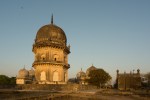
Restoration work at the Qutub Shahi Tombs by the Aga Khan Trust for Culture has led to the surprise discovery of the signs of an old gate within the complex from where the burial processions from the Golconda Fort entered the tombs complex for the final ceremony of the departed royal. Initial excavation on the southern side of Sultan Ibrahim Qutub Shah tomb has thrown up a pathway with remnants of walls on either side leading to the compound wall of the complex where the gate might have existed in the past. Enquiries with locals revealed that the gate was called Murda Darwaza or Murda Gate. There are signs of a well and an area nearby where the bodies were bathed. The gate was located in alignment with the southern side of Ibrahim Qutb Shah tomb.

Read More: New Link Between Qutub Shahi and Golconda Fort Discovered

Amateur Archaeologists Unearth Viking Gold

Viking gold

After hours of searching through the mud with metal detectors, amateur archaeologists Frank Pelle and Bent Gregersen made the discovery of their lives on a ploughed field in Bornholm earlier in April. The two lucky gold-diggers found an ancient Viking gold treasure hidden in the ground. “It was an amazing feeling, for we had searched for hundreds of hours without luck,” Pelle told Ekstra Bladet.

Read More: Amateur Archaeologists Unearth Viking Gold

Met Museum Announces Exhibition of Jeweled Arts from Al-Thani Collection

Metropolitan Museum of Art 3

Thomas P. Campbell, Director and CEO of The Metropolitan Museum of Art, announced today that an exhibition of some 60 jeweled objects from the private collection formed by Sheikh Hamad bin Abdullah Al-Thani will be presented at the Museum this fall. Treasures from India: Jewels from the Al-Thani Collection, on view October 28 through January 25, will provide a glimpse into the evolving styles of the jeweled arts in India from the Mughal period until the early 20th century, with emphasis on later exchanges with the West. The exhibition will be shown within the Metropolitan Museum’s Islamic art galleries, adjacent to the Museum’s own collection of Mughal-period art.

Read More: Met Museum Announces Exhibition of Jeweled Arts from Al-Thani Collection

French Exhibition Captures the Visual and Visceral Spirit of Hajj

Hajj exhibition in Paris

It is the largest exhibition ever held in France on the pilgrimage to Mecca. Hajj, Pilgrimage to the Mecca opens at the Institut du Monde Arabe (Institute of the Arab World) in Paris on April 23, tracing its historical evolution and artists’ impressions of the journey through 230 objects. The items have been curated from public and private collections, including the Louvre, diplomatic archives, university libraries and the British Museum. The exhibition is organised jointly with Saudi Arabia’s King Abdulaziz Public Library.

Read More: French Exhibition Captures the Visual and Visceral Spirit of Hajj

Good Fortune Helps Egypt Recover Its Stolen Heritage

Egypt's stolen heritage

When French Egyptologist Olivier Perdu saw a fragment of a pharaonic statue on display in a Brussels gallery last year, he assumed it was a twin of an ancient masterpiece he had examined in Egypt a quarter of a century earlier. The reality was an even more remarkable coincidence: the fragment was part of the very same artifact — a unique 6th century BC statue hewn from pale green stone — that Perdu had received special permission to study in Cairo in 1989. The statue, a 29 cm-high (11 inches) representation of a man wearing a pharaonic headdress was smashed by looters who broke into the Cairo Museum during the 2011 uprising against Hosni Mubarak. Its top portion had been missing since then.

Read More: Good Fortune Helps Egypt Recover Its Stolen Heritage

Amid Devastation of Aleppo, Syria, Archaeological Museum Fights to Preserve Heritage

Aleppo National Museum

One must dodge sniper bullets these days to get to the Aleppo National Museum, located on the edge of the historic center of this war-torn northern Syrian city. Inside, the place looks more like a bunker than a cultural institution housing treasures from archaeological excavations across northern and eastern Syria over the past 100 years. In the courtyard, a massive basalt stone lion from Arslan Tash — the site of an Iron Age kingdom east of Aleppo conquered by the Assyrians in the 9th century B.C. — is now almost completely covered with bags filled with sand and pebbles to protect it from mortars and rockets that often crash into the museum’s courtyard.

Read More: Amid Devastation of Aleppo, Syria, Archaeological Museum Fights to Preserve Heritage

Dubai Metro Stations to be Transformed into Art Museums

Dubai metro stations

Dubai ruler Sheikh Mohammed bin Rashid Al Maktoum on Monday issued directives to transform the emirate’s metro stations into art museums. Sheikh Mohammed said metro stations should display artworks and creations from different themes and cultures in an effort to make art accessible to as many people as possible in Dubai. He said the project should be completed within 12 months and will be launched to coincide with the start of Art Dubai 2015. Phase one of the project will include transforming four vital metro stations into art museums.

Read More: Dubai Metro Stations to be Transformed into Art Museums

Glorious Calligraphy

DesignByTH2

On the international entertainment circuit of Asia, Malaysia’s position has been slipping consistently. Somehow, all the big acts seem to have a homing instinct for Singapore, missing out on the fun hub of the peninsula. Instead of waiting for visiting cultural emissaries to arrive, residents of the Klang Valley should see which eagles of the arts have already landed. Contrary to expectations, some of the most important names in international contemporary art are comfortably settled in Kuala Lumpur.

Read More: Glorious Calligraphy

Rare Ottoman Bowl Breaks World Record at Auction

Ottoman bowl at Christies - April 2014

A rare and early Iznik pottery bowl dated around 1510 from Turkey’s Ottoman Empire has sold for over £1.4 million at auction. The white bowl decorated in two shades of blue with Cyprus trees and cartouches was sold by Christies in London to an anonymous bidder setting a new auction record for Iznik pottery.

Read More: Rare Ottoman Bowl Breaks World Record at Auction

A Great Fruit Bat Helps Bonhams Islamic and Indian Art Sale Take Wing with £4.5m Auction

Islamic Bonhams auction April 2014

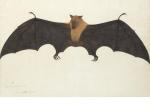
An important painting of a Great Indian fruit bat or flying fox (Pteropus giganteus) with its 1.5 meter wingspan sold for £458,500 at Bonhams Islamic and Indian Art sale in London yesterday [8th April]. The sale achieved a total of £4.5 million. This pen and ink, watercolor with gum arabic, heightened with bodycolour, on watermarked paper, from the Calcutta Collection of Lady Impey and painted by the artist Bhawani Das, had been estimated to sell for £80,000-£120,000, but its final price was four times higher than expected.

Read More: Painting of Fruit Bat from Impey Album Leads Bonhams Islamic and Indian Art Auction

Royal Portrait of Fath ‘Ali Shah Sells for Nearly £3 Million

Fath Ali Shah portrait

The magnificent and extremely rare life-size Qajar royal portrait of Fath ‘Ali Shah attended by a prince, attributed to Mihr ‘Ali, circa 1820 CE, sold for £2,994,500 (inclusive of buyers premium) at Sotheby’s ‘Arts of the Islamic World’ auction today [9th April 2014]. A round of applause greeted the fall of the hammer at £2.6 million, a bid executed by Edward Gibbs, Head of Department, and Chairman, Middle East & India, acting on behalf of an anonymous telephone buyer.

Read More: Royal Portrait of Fath ‘Ali Shah

Pictures from the Fraser Album to go on Sale in London

Bonhams auction April 2014

Bonhams will sell three stunning images from The Fraser Album, discovered amongst the papers of this Scottish family in 1979, at its next auction of Indian and Islamic art on 8 April 2014 in London. The Album consists of more than ninety watercolours of breathtaking quality, which provide an extraordinary portrait of life in and around Delhi in the early 19th Century. This was an area which was relatively unknown to the British at that date, with Mughal control ceded to them only in 1803 and the Emperor nominally in power.

Read More: Pictures from the Fraser Album to go on Sale in London

See also: Rare 19th Century Indian Paintings up for Auction

“I Am Interested in Simple Ideas”

Kings and Pawns exhibition

One of the most inspiring sights for William Greenwood unfolds when he walks into the exhibition that he has put together, right after an uproarious batch of school children makes its way out. The young and rather genial curator at the Museum of Islamic Art [Doha], in charge of Kings and Pawns: Board Games from India to Spain that opened recently to warm response, lets out a chuckle when he muses over the sight. “At about my waist height, the glass cases are just covered in their hand prints, nose prints and face prints. I really love to see that. I think that’s a really good sign,” he says, referring to the many schools that have been keenly paying visits in the mornings, “I hope children find this exhibition fascinating.”

Read More: “I Am Interested in Simple Ideas”

Royal Portrait of Fath ‘Ali Shah to be Offered at Auction in London

Fath Ali Shah portrait

The Arts of the Islamic World auction to be held at Sotheby’s, London, on April 9th 2014 is led by a magnificent Qajar royal portrait of Fath ‘Ali Shah. Estimated at £1,500,000 – £2,500,000, this life-size portrait is one of sixteen that are recorded, of which only four are present in Western museum collections. Fath ‘Ali Shah was the pre-eminent Qajar emperor of Persia and, as a key patron of the arts, he commissioned a number of monumental portraits, using these images as tools of propaganda, immortalising his rule. This painting is attributed to Mihr ‘Ali, one of the preferred painters of the Qajar court.

Read More: Royal Portrait of Fath ‘Ali Shah to be Offered at Auction in London

See video: Anatomy of an Artwork – A Qajar Royal Portrait