Islamic Art Museum’s Wondrous Diversity

Museum of Islamic Art Cairo

The origin of Cairo’s outstanding Museum of Islamic Art dates back to the era of Khedive Ismail era (ruled from 1863-1879), when it was decided to start collecting examples of rare woodwork and plaster artefacts, as well as metal, ceramic, glass, crystal, and textile objects of all periods, from throughout the Islamic world.

Read More: Museum of Islamic Art, Cairo

Illuminated Geographies: Pakistani Miniaturist Practice in the Wake of the Global Turn

illuminated geographies

The Tufts University Art Gallery at the Shirley and Alex Aidekman Arts Center proudly presents Illuminated Geographies: Pakistani Miniaturist Practice in the Wake of the Global Turn, featuring new works by Ambreen Butt, Faiza Butt, Murad Khan Mumtaz, and Saira Wasim, on view through March 31th, 2013.

Read More: Illuminated Geographies

Taksim Excavations Reveal Historic Ottoman Structures

Taksim excavations

Excavations continuing as part of the project to pedestrianize Taksim have revealed two water outlets 80 centimeters in diameter from the late Ottoman period, halting work in the area. Istanbul Culture and Tourism Director Ahmet Emre Bilgili issued a statement that the historical remains were 60-70 meters below the asphalt, adding that he and Istanbul Archaeology Museums Director Zeynep Kızıltan inspected the excavation area.

Read More: Taksim Excavations Reveal Historic Ottoman Structures

16th century Ottoman Iznik Masterpeices Return to Mayfair After a Century for Sale at Bonhams

Iznik bottles

Two rare Iznik bottles from the golden age of the Ottoman Empire will return to New Bond Street in Mayfair after nearly a century when they are auctioned at Bonhams’ next Indian and Islamic sale on April 23rd, 2013 for an estimated £150,000. The bottles were previously sold by the well-known antiques dealer Frank Dickinson from his gallery at 104 New Bond Street in January 1919 for what was then the huge sum of £501 10s. The buyer was Leonard Daneham Cunliffe, the Deputy Governor of the Bank of England, co-founder of the merchant bank Cunliffe Brothers, a Director of the Hudson Bay Company and a major investor in Harrods.

Read More: Ottoman Iznik Masterpieces at Bonhams

Singing, Spirituality and Islam: If Music be the Food of Love

Singing spirituality and Islam

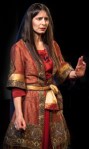
A crowd of young women in burkas and some men gather outside a café in Zanzibar, bewildered by the sight: an African woman, in a West African ‘Mumu’ (kaftan) and covered head, playing Ghazal poetry as an Islamic call to prayer. Sitting on the café terrace and accompanied by an acoustic guitar, Nawal’s clear voice captivates the audience – until it is broken by the cry of a visibly upset street vendor. “How dare you use the name of Allah in a song!”, he shouts.

Read More: Singing, Spirituality and Islam

Flock at Northern Stage, Newcastle

Flock

A magical piece of theatre inspired by the Arab Spring and conjured up with the help of local residents and artists will unfold at Northern Stage in Newcastle this week against the backdrop of an origami forest. The setting for Flock, which will also feature a birdsong-inspired score, has been created by visual artist Yvette Hawkins, one of several local talents to collaborate on the imaginative show with theatre company Zendeh.

Read More: Flock at Northern Stage, Newcastle

Artist Chases Metal and Explores Faith

Kitamura Yasutaka

After Kitamura Yasutaka finished high school, he had to decide which path to follow — his options were either to pursue a career as an artist or to become a professional chef. Perhaps not surprisingly, Yasutaka enrolled at the Tokyo University of the Arts and later furthered his studies at the Yamanashi Prefectural Institute of Gemology and Jewelry Art. After all, an affinity to crafts and art has been running in his family for four generations, dating back to the late 19th century, and was something familiar to the Japanese artist from a young age.

Read More: Artist Chases Metal and Explores Faith

Rare Iranian Artworks on Display at Opera Gallery, Dubai

Opera Gallery

Iran’s flourishing contemporary art scene will be the focus of Opera Gallery’s upcoming exhibit, allowing visitors to gauge just how much the meaning of true art has evolved from the days of Persia. The Art of Iran showcase features 30 Iranian artists, including works by celebrated professionals such as Mohammad Ehsai, Nasrollah Afjehei, Khosro Khosravi and Koorosh Shishegaran but also upcoming contemporaries such as Negar Varasteh and Shima Esfandyari.

Read More: Iranian Artworks on Display at Opera Gallery, Dubai

A Glimpse of the Magnificent Mughals

Magnificent Mughals

Entering the softly lit space with sitar harmonies delicately wafting through the air, one is apprehensive that the Mughal India: Art, Culture and Empire exhibit may present a narrow, clichéd, gift-shop approach to the Mughal dynasty. Exhilaratingly, it turns out to be a spectacular treasure trove of imperial life, unearthed by curator Malini Roy, from the vaults of the British Library.

Read More: A Glimpse of the Magnificent Mughals

Exhibit Highlights Modern Islamic Art

Ayad Alkadi

Challenging the norms yet honoring the traditions of their Islamic heritage through their work, six contemporary artists will have pieces on display through March 30th, 2013 at the University of North Texas Art Gallery. Cross Currents: Tradition and Innovation in Contem­porary Art of the Islamic World is a traveling exhibition curated and organized by Jessica Hunter-Larsen of the InterDisciplinary Experi­men­tal Art Program at Colorado College in Colorado Springs.

Read More: Exhibit at University of North Texas Art Gallery Highlights Modern Islamic Art

Leading Modern & Contemporary Artists Represented in Christie’s Dubai April Auction

Christie's auction in Dubai

Works by leading artists including Zenderoudi, Sepehri, Moshiri, Moudarres, Guiragossian, Kayyali and Essaydi will lead the Christie’s sale of Modern and Contemporary Arab, Iranian and Turkish art to be held in Dubai on April 16th and 17th, 2013. The part II sale which offers work from more contemporary, emerging artists, will once again include pieces from $3,000.

Read More: Christie’s Contemporary Art Auction in Dubai

Between Paradise and Political Capital: The Semiotics of Safavid Isfahan

In the late 16th century the Safavid Shah Abbas I established Isfahan as the capital of his empire. He designed a plan on a monumental scale in the garden fields south of the old Saljuq center, which integrated the river Zayendehrud into the formation of the new palatial city. The orthogonal intersection of the Chahar Bagh Avenue and the river created a chahar bagh (four garden) pattern on the scale of a city, which produced a synthesis between Persian and Islamic concepts of paradise, Turkic nomadic traditions of ritual and social uses of gardens, and the principle of a royal capital city. The symbolism and figurativeness of Isfahan within the frame of a chahar bagh cannot be completely separated from traditional notions of garden and paradise, but goes beyond the allegoric interpretation of religious or mystical references to Islamic paradise, bearing distinct iconographic and deliberate political connotations of empire. This paper, by Heidi A. Walcher, is based on the hermeneutic analysis of Safavid gardens and contrasts traditional interpretations of Persian and Islamic gardens along the paradigm of paradise with an expanded definition of the political implications of paradise.

Read More: Between Paradise and Political Capital, by Heidi A. Walcher
Stories from the Shahnama at Harvard’s Arthur M. Sackler Museum

Stories from the ShahnamaDelving deep into the rich culture and epic mythology of Persia, acclaimed storyteller Xanthe Gresham performs sections of the poem the Shahnama (The Persian Book of Kings) on March 5th, 2013 at Harvard’s Arthur M. Sackler Museum in Cambridge, Mass. The performance will bring the audience into a world of romance, lust, tragedy, and war — where fathers and sons may be strangers in battle; where kings treat others like pawns in a game of chess; where beauty can be a gift and a curse; and femme fatales may condemn young men to journey through fire.

Read More: Stories from the Shahnama at Harvard’s Arthur M. Sackler Museum

Donning the Cloak: Safavid Figural Silks and the Display of Identity

In a red world bathed in shimmering gold light, a man sits with his head in his hand as wild beasts encircle him. He is emaciated, has unkempt hair, and wears only a waistcloth — but he has a dreamy smile on his face. Nearby, a camel bears a palanquin carrying a stately woman, her head tipped to one side, arm outstretched from the window of her traveling abode toward her lover. Beneath her, the signature ‘Work of Ghiyath’ is woven in Kufic script inside an eight-pointed star on the palanquin. This depiction of the literary characters Layla and Majnun is one of a small group of figural textiles from the cache of fine luxury silks produced in Safavid Iran (1501-1722 CE). The red lampas metal-ground silk resides in the permanent collection of the Textile Museum in Washington.

Read More: Donning the Cloak, by Nazanin Hedayat Shenasa

Fighting Threatens Islamic Artifacts in Troubled Timbuktu

Fighting in the Muslim country of Mali in western Africa has delayed the American tour of a unique exhibit featuring centuries-old texts and artifacts from Timbuktu, an ancient center of Islamic learning. The Legacy of Timbuktu was scheduled to open April 20th 2013 at the Fort Worth Museum of Science and History in Texas, but curators from the International Museum of Muslim Cultures in Jackson, Miss., which is organizing the exhibit, could not travel to the Saharan city to retrieve several manuscripts and artifacts it planned to display.

Read More: The Legacy of Timbuktu

Middle Eastern Art Goes Under the Hammer in Dubai for UN World Food Programme

Auction in DubaiArt can be a catalyst for change by drawing attention to important issues in society and encouraging people to think deeply about what is happening around them. An exhibition organised by the UN World Food Programme (WFP) aims to use this power of art to raise awareness about world hunger and the WFP’s efforts to combat it, while generating funds for this humanitarian cause. The show, titled Aware, has been organised by the WFP offices in Iran and the UAE in collaboration with Contemporary Practices Art Journal and The Farjam Collection. It features paintings, sculptures, calligraphy and photographic artworks donated by artists from Iran, Iraq, Egypt, Lebanon and the UAE. The works will be auctioned at The Young Collectors Auction to be held at the Ayyam Art Centre on April 15th 2013, with the entire proceeds going to WFP Iran for funding their relief operations for refugees living in Iran.

Read More: Middle Eastern Art Goes Under the Hammer in Dubai

Where Local Talent Grows: The Upcoming Sikka Art Fair

Sikka Art FairAlthough Sikka Art Fair is only in its third year, it is quickly establishing its niche in what could be seen as a saturated art fair market. This year Sikka opens only 10 days before Art Dubai and one day after Sharjah’s Biennial starts but organisers are confident the fair will be on a par with its neighbouring events. Sikka this year features 72 commissioned works from 14 disciplines including visual and performing art, film, animation, spoken word, music and literature.

Read More: Sikka Art Fair

McClung Exhibit Celebrates the Grandeur of Turkomen Decorative Art

McClung MuseumMention art and antiquities, and the typical Western mind might picture a Greek statue, stained glass, Egyptian sarcophagi, or the ceiling of the Sistine Chapel—things that are often large or heavy and can break, crack, fade, or lose heads throughout time. But what’s featured in the McClung Museum’s exhibition Splendid Treasures of the Turkomen Tribes From Central Asia, on display through May 12th, 2013 is entirely portable.

Read More: McClung Museum Celebrates Turkomen Decorative Art

See also: Treasures of Turkoman Tribes

A Stringed Art

Ibrahim QuraishiMore than a millennium after rudimentary forms of the violin came to India from his ancestral land, Ibrahim Quraishi has lent another dimension to the aesthetics of the string instrument by featuring it in the country’s first biennale. At Pepper House, the artist of Uzbek-Yemeni descent, has hung tastefully from a tile-roof ceiling a long row of 30 white violins which has caught the fancy of visitors.

Read More: Ibrahim Quraishi

An Injection of Modernity Revives Arabic Calligraphy

Etched on ceramic plates or carved into glass cups, Arabic calligraphy designs, using a centuries-old art form that plays with the curves and horizontal lines of Arabic script, are gaining popularity across the Middle East. Scripts can decorate objects made from a range of materials, including acrylic glass, wood, clay, stone and copper. The availability of diverse materials, and the use of new color schemes and modern styles are reviving this tradition and in the process helping to create a sense of cultural identity.

Read More: An Injection of Modernity Revives Arabic Calligraphy

Once-reviled Orientalist Art Inspires Egyptian Industrialist to Improve East-West Relations

Shafik Gabr 2Shafik Gabr’s Woodley Park home is filled with paintings once written off as paternal, even racist, images of the Middle East as seen through the eyes of 19th-century European artists — a world of daring snake charmers, menacing harem guards and exotic women. But Gabr, a restless Egyptian industrialist who keeps three ­iPhones and a BlackBerry stacked on a desk in front of him, sees something else. He regards Orientalist painters such as Charles Wilda, Johann Discart, John Frederick Lewis and Jean-Leon Geromeas intrepid early globalists who put themselves at risk to document a new world opened by Napoleon Bonaparte’s Egyptian expedition from 1798 to 1801. They have compelled him to launch an initiative to improve East-West understanding.

Read More: Shafik Gabr

See also: Shafik Gabr Reveals His Vast Collection of Orientalist Art

Kremlin Museum Plans to Exhibit Nizam Jewels

The Moscow Kremlin Museum may exhibit jewellery from the priceless collection of Nizam of Hyderabad at an exhibition of Indian jewellery in the Russian capital [in 2014]. “A preliminary agreement has been reached with the National Museum in New Delhi. Talks are being held to present jewellery from the Nizam of Hyderabad collection,” said Elena Gagarina, director-general of Moscow Kremlin Museum.

Read More: Kremlin Museum to Exhibit Nizam Jewels

Safeguard the Manuscripts of Djenné

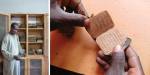
Manuscripts in DjenneThe world has been focusing on the Malian city of Timbuktu and on the fate of its ancient shrines and manuscripts, but few are aware of the city of Djenné, 220 miles to the south-west. This Unesco World Heritage Site sits in the heart of the Niger delta, just 75 miles south of Sévaré, the town from which the French continue to launch air strikes into the north of Mali, where pockets of rebels are still present.

Read More: The Manuscripts of Djenne

Exhibit Features Miniature Paintings Inspired by Frida Kahlo

Nearly 60 years after her death, acclaimed Mexican artist Frida Kahlo is the inspiration for an exhibition of drawings which opened February 23rd at Promenade Gallery in Lakeview, Mississauga. Drawing Women features about 18 drawings by five South Asian artists: Reeta Saeed, Sumaira Tazeen Sheikh, Kanchan Raste, Asma Mahmood and her daughter, Bushra Mahmood. Saeed and Sheikh are both graduates of the National College of Arts Lahore in Pakistan, majoring in the traditional technique of miniature painting.

Read More: Exhibit Features Miniature Paintings