What is Islamic Architecture Anyway?

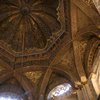
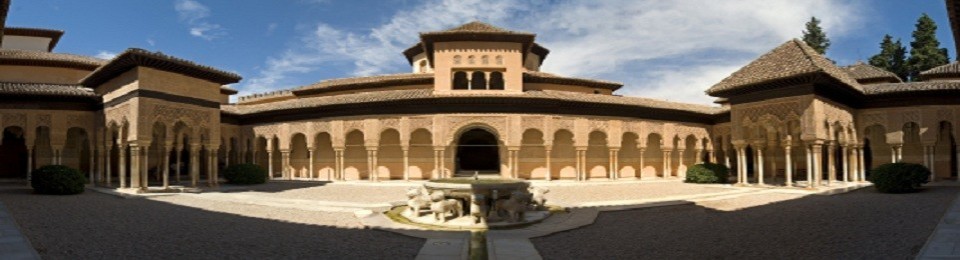
I have been teaching Islamic architecture at MIT for the past twenty-one years. My classes have by and large attracted two types of students. There are those who see Islamic architecture as their heritage: Muslim students from abroad, Muslim-American students, and Arab-American non-Muslims. Then there are the students who imagine Islamic architecture as exotic, mysterious, and aesthetically curious, carrying the whiff of far-distant lands. They have seen it mostly in fiction (Arabian Nights for an earlier generation, Disney’s Aladdin for this one) and they are intrigued and somewhat titillated by that fiction. These two types of students are but a microcosmic – and perhaps faintly comical – reflection of the status of Islamic architecture within both academia and architectural practice today.

Read More: What is Islamic Architecture Anyway?, by Nasser Rabbat
Mathematics and Arts: Connections between Theory and Practice in the Medieval Islamic World

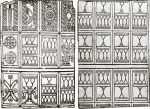
Two mathematical sources, On the Geometric Constructions Necessary for the Artisan, by Abu’l-Wafa’ (ca. 940–998 CE), and the anonymous work, On Interlocks of Similar or Corresponding Figures (ca. 1300 CE), provide us with insight into the collaboration between mathematicians and artisans in the Islamic world. In this paper (published in 2000), Alpay Ozdural presents a series of quotations from these two sources, which show that mathematicians taught geometry to artisans by means of cut-and-paste methods and geometrical figures that had the potential of being used for ornamental purposes.

Read More: Mathematics and Arts, by Alpay Ozdural

The Humanity Game: Art, Islam, and the War on Terror

In this essay (published in 2008), Jessica Winegar examines the connections between art and politics in Middle East arts events in the U.S. since 9/11/2001. It critiques the universalist assumptions about humanity and the agentive capacity of art to build bridges of understanding in contexts of so-called civilizational conflict—assumptions that have strong roots in anthropology. By juxtaposing evidence of how the notion of “humanity” is deployed in exhibitions of Palestinian art with an analysis of the three more predominant types of arts events (historical Islamic art, Sufi arts, and contemporary art by Muslim women), the essay demonstrates how American secular elite discourse on Middle Eastern art corresponds to that of the “War on Terror.”

Read More: The Humanity Game: Art, Islam, and the War on Terror, by Jessica Winegar

Jammu & Kashmir Ferrets out Heritage

Jammu and KashmirThe Jammu & Kashmir (J&K) chapter of the Indian National Trust for Art and Cultural Heritage (INTACH) has been entrusted with the responsibility of preparing a blueprint of the Dastigeer Sahib shrine that was gutted in a devastating fire on June 25th 2012. In recent years INTACH has been doing a lot of visible work in J&K which is being deeply appreciated. It has embarked on a mission to preserve the heritage and cultural ethos of the state. INTACH has been instrumental in exploring villages in the Valley to identify their heritage in the hope that tourists will be drawn to these locations.

Read More: Jammu & Kashmir Ferrets out Heritage

Going Wow in Nizamuddin

Humayun's tombA few hundred metres from the crazy traffic in the Nizamuddin area on Mathura Road emblems of Delhi’s heritage have been coming to life. It is a revival with many facets: in architecture, design, music, craftsmanship, gardens, water systems, urban planning, colours and cuisine. Monuments have been restored with rare passion and creative skills. Old landscapes have been rediscovered. Structures lost to decades of neglect are visible once again, their perfections intact. Indigenous species of trees have been brought back in thousands.

Read More: Nizamuddin Basti

Jashn-e-Khusrau Festival 2013

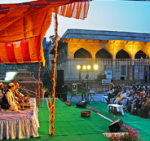
Jashn-e-KhusrauAs part of a major Urban Renewal project in the Humayun’s Tomb – Hazrat Nizamuddin Basti area of Delhi, the Aga Khan Trust for Culture is hosting the Jashn-e-Khusrau festival with the support of the Ford Foundation from February 15th onwards. The urban renewal initiative links conservation of the built heritage with programmes to improve the Quality of Life for local communities.

Read More: Jashn-e-Khusrau Festival 2013

Contemporary Mosque Architecture

The mosque is Islam’s most emblematic building, as well as an expression of collective identity. By exploring the built form of mosques around the world and prevalent architectural trends in mosque building, this article (published in 2008) considers what makes mosques identifiable to Muslims and non-Muslims, as well as the ways architecture represents the identity of a community and also shifts in accordance with changing social and cultural contexts.

Read More: Contemporary Mosque Architecture, by Hasan-Uddin Khan

Syrian Rebels Loot Artifacts to Raise Money for Fight Against Assad

Syria LootingTo the caches of ammunition and medicines that they lug each day from this border city back into their homeland, Syrian rebels have added new tools to support their fight against President Bashar al-Assad: metal detectors and pickaxes. The rebels, struggling to finance their effort, have joined an emerging trade in illicitly acquired Syrian artifacts and antiquities, selling off the country’s past as the war for its future intensifies.

Read More: Syrian Rebels Loot Artifacts

Identities and Islam: Material Culture, Self and Society in the Pre-Modern Muslim World

Identiies and Islam SymposiumThe inaugural UK Symposium on Islamic Archaeology Identities and Islam will take place at the University of Southampton on April 20th, 2013. Archaeological scholarship has revealed considerable temporal and geographic variation in material expressions of identity within the Islamic world, through architecture, art, crafts, burial and subsistence, as well as in the organisation of trade and exchange. How integral was the uniting force of Islam in the construction of personal, group, and state identity in the past? To what extent can we see identity as being formed locally and diachronically – either in opposition to different external and internal cultural groups, influenced by pre-existing indigenous cultures and contemporary neighbouring states, or resulting from particular political changes?

Read More: Identities and Islam and Identities and Islam Symposium

Leading Islamic Archaeologist Publishes Most Detailed Ever Study of Hajj Pilgrimage

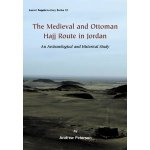
Andrew Petersen's bookFollowing in the footsteps of some of the world’s most famous explorers, a University of Wales Trinity Saint David lecturer has published the most detailed ever archaeological study into the route of the Hajj pilgrimage to Mecca. Containing evidence gathered from Dr. Andrew Petersen’s twenty plus years of research and fieldwork, The Medieval and Ottoman Hajj Route in Jordan: An Archaeological and Historical Study documents the archaeological and architectural remains that line the sacred route to Mecca, a route travelled yearly by devout Muslims during the Hajj pilgrimage.

Read More: Archaeological Study on the Hajj Route

The Archaeology of Islam in Britain: Recognition and Potential

What did the British know about Islam before the modern period? In this essay published in 2008, Andrew Petersen reviews evidence which shows that there was contact with, and appreciation of, Muslim culture from almost the time of the Hegira in the seventh century. This appreciation varied and was reflected in different choices of material culture: coinage, ceramics and architecture, in successive periods from the eighth century to the nineteenth.

Read More: The Archaeology of Islam in Britain, by Andrew Petersen

Mecca Redevelopment Sparks Heritage Concerns

MeccaAn Ottoman-era portico in Mecca’s Grand Mosque has become the latest battleground in a conflict between those who want to preserve the city’s architectural heritage and Saudi authorities pushing for redevelopment. The 17th century portico – one of the oldest parts of the Grand Mosque, Islam’s holiest – is being removed by Mecca authorities as part of an expansion project to create more space for soaring numbers of pilgrims.

Read More: Mecca Redevelopment

Related Story: Heritage, Pilgrimage and the War on History

Heritage, Pilgrimage and the War on History

Saudi ArabiaIn the Grand Mosque of Mecca, is an elegant, Ottoman portico from the 17th century. In the latest development plan developed for the city of Mecca by Saudi authorities, the portico has been ordered destroyed. Its demolition, a familiar sight in Mecca, would have proceeded unnoticed, were it not for an objection raised by a Saudi historian based in the United Kingdom who raised his voice against what he saw was an ordered evisceration of Meccan history.

Read More: Heritage, Pilgrimage and the War on History

Saudi Commission for Tourism and Antiquities to Develop Islamic Sites

SCTAPrince Sultan bin Salman, president of the Saudi Commission for Tourism and Antiquities, yesterday announced SCTA’s plan to develop historical Islamic sites in the Kingdom, including those in Makkah and Madinah. Addressing the First Conference of Archaeology and Tourism in Al-Ula: Challenges and Aspirations, he said the project would be carried out in consultation with Islamic scholars and archaeologists.

Read More: Saudi Commission to Develop Islamic Sites

The Many Shades of Islamic Art

Many Shades of Islamic ArtIslamic art is not an easy term to define because of its territorial diversity stretching across 14 centuries and covering areas as varied as calligraphy, painting, ceramics, textiles and architecture among others. The First Edition of the Muscat Art Festival, themed Creative Process and part of the Muscat Festival 2013, brought together eminent experts Venetia Porter, from the British Museum, London, Ahmed Moustafa from UK and Charbel Dagher from Lebanon to present various perspectives at the inaugural conference of MAF on ‘Islamic Art’, at the Sultan Qaboos Grand Mosque.

Read More: Many Shades of Islamic Art

“A Monument of Buzzwords”: The Work of Artist, Samir El Kordy

Samir El Kordy“A Monument of Buzzwords”, the work of Egyptian artist Samir El Kordy and part of the exhibition “PhotoCairo 5” at Townhouse Gallery, in downtown Cairo gives us more than just “buzzwords.” PhotoCairo 5 is a large-scale contemporary art project organized by the Contemporary Image Collective and curated by Mia Jankowicz, which explores paradigm shifts. Involving international and local, emerging and established artists, the exhibition examines the ability of art to trigger affective responses from the viewer.

Read More: Samir El Kordy

Zaha Hadid: Black Square, White Cube, and the Twenty-First Century Museum

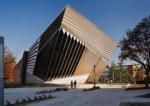
Zaha HadidThe staircase of Zaha Hadid Architects’ recently opened Eli and Edythe Broad Art Museum at Michigan State University in East Lansing is sleek and straightforward. Its intention is functional; its design is simple (as simple as a contorted, suspended mass can be). A departure from the use of a traditional grand stairway as a means of announcing the authority of an American cultural institution, its narrow path cuts through three distinct levels of sensory experience, as each floor of the museum has been configured to showcase a varied permanent collection.

Read More: Zaha Hadid and the 21st-century Museum

Photography Exhibit at Baylor University Focuses on Middle Eastern Culture

Middle East PatternsBaylor University’s W.R. Poage Legislative Library will present its spring exhibit – Middle East Patterns: Places, Peoples and Politics – now through May 15th, featuring 150 original photographs from Dr. Colbert Held, a 1938 alumnus of Baylor, former Foreign Service Officer with the State Department and retired diplomat-in-residence at Baylor.

Read More: Photography Exhibit Focuses on Middle Eastern Culture

Louvre Abu Dhabi Exhibit to Open on April 22nd 2013

Louvre Abu Dhabi exhibitionLouvre Abu Dhabi will open its next exhibition on April 22nd, 2013 on Saadiyat Island showcasing important works of art from the Louvre Abu Dhabi permanent collection, some of which have never been seen or revealed before. Almost 130 art works will be shown at the exhibition titled Birth of a Museum at Manarat Al Saadiyat, Saadiyat Cultural District’s art and exhibition centre and will give visitors an insight into the museum’s narrative and collection ahead of its opening in 2015.

Read More: Louvre Abu Dhabi Exhibition

Light From the Middle East at the Victoria and Albert Museum: A Review

CIS:E.354-2010The photographer Abbas’s images of the Iranian revolution have been described as “the memory of the event.” I certainly remember them. Or I remember the event. I remember anyway my parents deciding that we had seen enough of these images on the streets, so they folded up their newspapers and unplugged our television at home. Abbas’s images are the first ones you see upon entering the rather dark space of Light from the Middle East, a photography exhibition at the Victoria and Albert Museum, London.

Read More: Light from the Middle East at the V&A

See also: Light from the Middle East and Familiar Transformed with the Unexpected

Fragments of a Lost Past or Evidence of a Connected History: The Role and Concepts of Islamic Art in the Museum Context

ArtsIslamicaacademic-sThe first few years of the 21st century have witnessed an impressive re-evaluation of Islamic art and archaeology. Most of the larger collections of Islamic art have been, or still are, undergoing reorganization. Museums and galleries have increasingly become important forums for public interest in Muslim cultures. Shifting global societies and the growing presence of Muslims in Europe and North America have meant that museums of Islamic art have assumed new duties and responsibilities, willingly or not. Countries with a Muslim majority, too, are witnessing a renewed interest in the artistic heritage of the past. Yet despite all this, there has been little discussion on content, categories of order, and the new roles played by museums. What are the stories embedded in the objects they exhibit, and how can these stories be told? In this lecture delivered in Edinburgh, Scotland, in September 2012, Dr Stefan Weber, Director of the Museum of Islamic Art at the Pergamon Museum, Berlin, presents the behind-the-scenes thinking which governed the way Islamic art has been presented to the public in the past and how this is changing for the future. Dr Weber also explores the approach being taken by his own museum, which is being redesigned to meet the needs of a rapidly-growing number of visitors.

Lecture Audio: Fragments of a Lost Past – Audio

Lecture Summary: Fragments of a Lost Past – Summary

Slaying Saints and Torching Texts

Mali Al Qaidas CountryWhen I first journeyed to Bamako to research Sufism in Mali in 2006, my American students generally asked two questions: Where is Mali and what is Sufism? Today, the answer to both of these questions is found daily in the headline news. Cultural heritage in Mali is under attack. But just as the armed conflict there is not simply a battle between Islamic extremists and a weak Malian army supported by the French, the destruction of Sufi shrines and Islamic manuscripts not merely the result of an iconoclastic and intolerant religious fanaticism. While these violent attacks on Mali’s Islamic heritage are indeed tragic, they are sadly not isolated or unique.

Read More: Slaying Saints and Torching Texts

Work Starts on £11m Zaha Hadid Building for the Middle East Centre in Oxford

Middle East CentreOne of the world’s most celebrated architects, Dame Zaha Hadid, was in Oxford on January 30th, 2013 for a groundbreaking ceremony to mark the start of work on a building she has designed for the Middle East Centre at St Antony’s College. Zaha Hadid, who was recently made a dame for her services to architecture, is best known in the UK for her design of the Aquatics Centre for the London Olympic Games. Dubbed ‘The Softbridge’ because of its design, the new construction will be known on completion as The Investcorp Building. The project is expected to be finished by the summer of 2014.

Read More: Middle East Centre, Oxford