Columbia Museum of Art Announces Contemporary Exhibition by South Carolina Based Artist

Steven Naifeh

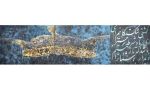
The Columbia Museum of Art organizes and presents the first retrospective exhibition of the art of Steven Naifeh. Found in Translation: The Art of Steven Naifeh opened on Friday, May 17th, 2013 and remains on view through Sunday, September 1st, 2013. The 26 large-scale works of modern art reflect Naifeh’s personal taste, preferences and attitudes about geometric abstraction that developed over the span of 40 years. It is hardly surprising that Naifeh’s childhood in the Middle East educated his eye to the rigorous forms of Arab and Islamic art.

Read More: Steven Naifeh

Eternal Sleep: The Uyghur Shrines of the Taklamakan Desert

Lisa Ross 2

There are mosques in towns all over China, but the most concentrated signs of Islamic belief are found in the western province of Xinjiang. The region is home to most of China’s Uyghurs, a Muslim people linguistically and culturally distinct from the Han Chinese (the ethnic majority in China). The majority of Uyghurs live in the southwest of the province, in oasis cities that skirt the edges of the Taklamakan Desert. This is the setting for Lisa Ross’s Living Shrines of Uyghur China, a book of photographs a decade in the making, whose subject is the shrines to folk saints (in Uyghur, mazar) found throughout the region.

Read More: The Uyghur Shrines of the Taklamakan Desert: An Interview with Lisa Ross

Illustrated 18th century manuscript of Piri Reis’ Kitab-i Bahriye sells for £326,500 at Sotheby’s

A very rare and fine illustrated manuscript of the Kitab-i Bahriye based on the original version of the great Ottoman admiral, geographer and cartographer Piri Reis (d.1554), sold for £326,500 at Sotheby’s, London, yesterday [May 14th, 2013]. The Kitab-i Bahriye (Book of navigation or maritime matters) is an important portolano or book of sailing directions.

Read More: Manuscript of Piri Reis’ Kitab-i Bahriye sells for £326,500 at Sotheby’s

Faiza Shaikh Combines Belief Systems on Canvas to Explore Tolerance

Faiza Shaikh

Faceless monks and whirling dervishes adorned the walls of VM Art Gallery at the launch of artist Faiza Shaikh’s exhibition, Tolerance, on Monday [May 13th, 2013]. “I began working on this collection in 2012,” said Faiza, adding that she had used verses from the Quran in some of her previous collections as well but in this one, she had expanded the theme to include Buddhism and Sufism. “The central idea here is that of peace,” she added.

Read More: Faiza Shaikh Combines Belief Systems on Canvas to Explore Tolerance

Museum of Islamic Art Showcases Rare Swords from Collection

Swords exhibition at MIA

The Museum of Islamic Art (MIA) yesterday [May 14th, 2013] unveiled a collection of swords valued for their rarity, beauty and historical significance at the opening of Steel and Gold: Historic Swords from the MIA Collection. Ghada Al Sayegh, exhibition coordinator, said the expo sheds light on the importance of swords not as weapons but objects of fashion and masterpieces as design. The objects, she said belong to MIA’s permanent collection, most of which have never been on display.

Read More: Museum of Islamic Art Showcases Rare Swords

Exhibition Presents Works by Artists Based in Africa, China, Europe, India, and the Middle East

Trade routes exhibition

Trade routes have connected the major centres of civilisation in Europe and Asia since antiquity. These routes not only made the exchange of goods possible, but also fostered cultural exchanges between distant regions. The group exhibition, ‘Trade Routes’, on view at Hauser & Wirth’s Piccadilly gallery, presents a diverse picture of where these trade routes stand in today’s globalised society through the lens of 15 artists. The exhibition features video installations, sculptures and two-dimensional works by artists based in Africa, China, Europe, India, and the Middle East including Adel Abidin, Fatima Al Qadiri & Khalid al Gharaballi, Alighiero Boetti, Monir Farmanfarmaian, Subodh Gupta, Gülsün Karamustafa, Bharti Kher, Rachid Koraïchi, Lee Xe, Maha Malluh, Bettina Pousttchi, Hassan Sharif, Wael Shawky and David Zink Yi.

Read More: Trade Routes

Nagaur Fort Among 20 Finalists for Aga Khan Award

The 12th century Nagaur Fort, which has been under the private domain’s largest architectural conservation, has made it to the shortlisted nominee list for US$ 1 million Aga Khan Award for Architecture 2013. The award is conferred in recognition of architectural excellence in the field of historic preservation, reuse and area conservation, as well as landscape design and improvement of the environment.

Read More: Nagaur Fort Among Finalists for Aga Khan Award for Architecture

See also: Aga Khan Award for Architecture Shortlist Announced

Iranian Recycled Stone Apartment #1 Among 2013 Aga Khan Architecture Award Nominees

Mahallat AKAA

Every three years, the Aga Khan Architecture Award acknowledges projects relevant to Islam that are culturally, environmentally and socially superior. Accompanied by a generous $1 million prize, it is among the world’s most prestigious architecture awards. Apartment #1 by Tehran’s Architecture by Collective Terrain is one of 20 projects nominated, and though it faces stiff competition from projects like the Thula Fort Preservation project in Yemen, the recycled stone complex is an excellent example of the work that the Aga Khan Development Network likes to support.

Read More: Iranian Recycled Stone Apartment Among AKAA Nominees

See also: Aga Khan Award for Architecture Shortlist Announced

RIBA Acquires Charles Correa Archive: India’s ‘Greatest’ Architect

Charles Correa exhibition RIBA 2

Celebrating 50 years of architectural work in India and the recent acquisition of his archive, Royal Institute of British Architects, London, is launching a new exhibition this spring – Charles Correa: Indian’s Greatest Architect. The first major UK retrospective of this living legend, the exhibition will celebrate the work of renowned Indian architect Charles Correa, is curated by Dr Irena Murray and designed by David Adjaye; it runs from May 14th until September 4th, 2013. The exhibition will accompanied by an ‘Out of India’ series of events, talks and screenings.

Read More: RIBA Acquires Charles Correa Archive

Islamic Medical Science Collection on View for First Time

Royal College of Physicians

Called The Mirror of Health: Discovering Medicine in the Golden Age of Islam, and curated by Professor Peter E Pormann from The University of Manchester, the exhibition shows how medical tradition developed in Europe and the Middle East. At its heart are newly researched manuscripts depicting the medical traditions that developed in the golden age of Islam from the 9th to the 17th centuries.

Read More: Islamic Medical Science Collection on View for First Time

The Active Feminine: Performance Art in Lebanon with Reference to Marya Kazoun

Marya Kazoun

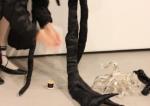
In the setting of the current Arab art boom and the political flux ignited by regional uprisings, the difficulty in differentiating between performance art and activism increases, further intertwining the abstract borders that divide them. Nonetheless, while activism pushes its way as a societal form of rejection, performance art conversely sneaks into the social sphere as an accepted method of protest, encouraged by the public as a sign of cultural sophistication.

Read More: Marya Kazoun

Mounir Fatmi’s Art Without Prejudice

Mounir Fatmi

Mounir Fatmi looks utterly exasperated. But there is a question I must ask. Last year, the Moroccan-born, France-based artist had one of his works removed from display in Toulouse when certain religious groups took exception to his use of the Quran in the piece. Shortly afterwards, Paris’ Institut du Monde Arabe censored a video called Sleep (Al Naim) because it depicted Salman Rushdie. So does Fatmi willfully chase headlines?

Read More: Mounir Fatmi’s Art Without Prejudice

Thula Fort Restoration in Yemen Nominated for 2013 Aga Khan Architecture Award

Thula Fort

To the outside world, Yemen is an obscure distant land where Al Qaeda terrorists hang out and men sit around chewing khat, but to its own residents and others familiar with the Middle East, the land harbors a treasure trove of historic artefacts (and so much more). Not only does Yemen have one of the largest collection of multi-storey clay towers, otherwise known as Manhattan of the desert, but it also boasts an impressive collection of stone buildings that date back to the 1st millennium BCE. This includes the Thula Fort in Sana’a, which is one of 20 nominees for the 2013 Aga Khan Award for Architecture.

Read More: Thula Fort Restoration in Yemen Nominated for 2013 Aga Khan Award for Architecture

See also: Aga Khan Award for Architecture Shortlist Announced

Poetry in Painting

Seema Sathyu

In Bangalore-based painter Seema Sathyu’s world, you are constantly juggling paradoxes. Her oeuvre spans three decades but her excitement, when talking about her work, is undimmed by the years. There is a fragility to her that is a stark contrast to her dramatic paintings, some of which are on show at her new exhibition Harf Hai Sarmasti, at the ZAZA Stay Gallery, New Delhi. Her current series is largely inspired by the poetry of 13th century Persian poet Amir Khusrau, a Sufi mystic and disciple of Nizamuddin Auliya of Delhi.

Read More: Poetry in Painting

In Mali, Scribe Keeps an Ancient Calling Alive

Homemade twig pens stand like off-duty soldiers in a jar on Boubacar Sadeck’s worktable. The morning sun steals into a room stuffed with a jumble of papers, ink bottles and stretched animal hides. He sits thoughtfully before a blank sheet of paper, with several old manuscripts — the color of dark tea and covered with Arabic script — open at his side. Occasionally a breeze wafts in and playfully flicks one of the old brown pages to the floor. Copying the words of ancient scholars in elegant Arabic calligraphy makes Sadeck feel close to heaven.

Read More: In Mali, Scribe Keeps an Ancient Calling Alive

Sharjah Museums Department Signs Ground Breaking MoU with State Museums of Berlin

The Sharjah Museums Department (SMD) have signed a ground breaking Memorandum of Understanding (MoU) with the State Museums of Berlin, the largest museum organisation in Germany, and the Goethe Institute, the worldwide cultural institution of the Federal Republic of Germany.

Read More: Sharjah Museums Department Signs MoU with State Museums of Berlin

From Church to Mosque to Museum Back to Mosque

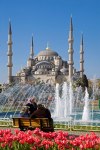
In 1921 an ecumenical service was held in six languages at St. John the Divine, New York City’s Episcopal cathedral, to call for the return of Byzantium’s most important monument to the Orthodox Church. Days after his 1453 conquest of Constantinople, today’s Istanbul, Mehmet II decided to turn the 6th century basilica of St. Sophia into a mosque. Some 500 years later, with the city under Allied occupation, Christendom wanted the building back.

Read More: From Church to Mosque to Museum Back to Mosque

Aga Khan Award for Architecture Shortlist Announced

AKAA 2013

From innovative mud and bamboo schools to state of the art “green” high-rises, the Master Jury for the 2013 Aga Khan Award for Architecture has selected 20 deserving nominees to be in the running for the prestigious, US$1 million prize. Since the award was launched 36 years ago, over 100 projects have received the prize and more than 7,500 building projects have been documented for exhibiting architectural excellence and improving the overall quality of life in their regions.

Read More: Aga Khan Award for Architecture Shortlist Announced

The End of an Era: The Less than Grand Opening of the New Ottoman Archives

Ottoman archive

For generations, historians of the Ottoman Empire and its former territories in the Balkans and the Arab Middle East participated in a rite of passage linking them to the Ottoman bureaucrats they studied. Going to work at the Ottoman Archives (Başbakanlık Osmanlı Arşivi) entailed the humbling experience of passing through the famous gates at Bab-ı Ali, or as it came to be known in the West, the Sublime Porte. During Ottoman times, Bab-ı Ali housed the offices of the Grand Vizier and the heart of the Ottoman bureaucracy. Indeed, the term Bab-ı Ali came to be synonymous with the state itself. With their location just steps from Topkapı Palace and the imperial gardens that now make up Gülhane Park, one’s daily commute to the Ottoman archives, housed in a cluster of nineteenth-century buildings just inside the confines of the Sublime Porte, often felt like stepping into the shoes of one’s historical subjects. Naturally, the decision to move Ottoman archival collections to a new location was met with considerable feelings of melancholy and disappointment.

Read More: Opening of the New Ottoman Archives

How Khalili Almost Sold His Collection to Abu Dhabi

Nasser Khalili

Nasser David Khalili, the billionaire property developer and collector of Islamic art, has won a court case against a Dubai-based businessman, Farbod Dowlatshahi, his former associate and a one-time member of the board of his family trust. The case has revealed that he lent large amounts of money to Dowlatshahi for art deals that never materialised, among them an attempt to sell the Khalili collection to Abu Dhabi.

Read More: How Khalili Almost Sold His Collection to Abu Dhabi

Orientalist Sale in London Packs a Big Punch

The Offering at Sotheby's

Featuring only 22 lots, Sotheby’s latest sale of Orientalist art was a small affair but one that definitely packed a big punch. Achieving a total of £5.3m hammer, it overshot the pre-sale estimate of £2.6m-3.8m which meant it was among the best performing auctions in this sector in recent years.

Read More: Orientalist Sale in London Packs a Big Punch

Reza Derakhshani’s Works Evoke Iran’s Magnificent Past

Reza Derakhshani

If you want a reason to visit Reza Derakhshani’s solo show at Salsali Private Museum, the fact that the main installation has completely changed since it was unveiled during Art Week is a good one. The black-sand snakes that the artist shaped with a common house brush before the opening in March have been swept away and replaced with skulls that lie at the base of the tomb of Cyrus the Great, the founder of the Persian Empire. The area has also been curtained off and filled with black light. To see the glowing shape of Pasargadae, you must peek through cut-out eyeholes. Its dynamism, colour and theme summarise the exhibition.

Read More: Reza Derakhshani’s Works Evoke Iran’s Magnificent Past

From “Islamic Art” to “Arab Lands, Turkey, Iran, Central Asia and Later South Asia”: Reliving the Distortions of History

Metropolitan Museum of Art 2

This is the exceptional collection in all America, and it is being neglected. I urge you to make the reinstallation of Islam your highest priority. If you were to create an Islamic wing, you’d find that our holdings – splendid bronzes, excellent silver, majestic tiles, gorgeous carpets, intricate woodcarving, masterful pottery, and glorious miniatures – would become as popular as the European paintings. You laugh? These words were recollected by the influential former director of the Metropolitan Museum of Art (Met) Thomas Hoving in his memoir Making the Mummies Dance, remembering an exchange with Maurice Sven Dimand, curator at the Met, in 1967. This was no laughing matter, and in fact, the museum created the Department of Islamic Art eight years later, which became one of the most important exhibition spaces on the subject. In 2003, almost three decades later, the galleries were closed for renovation; the public came face to face with them once again on November 1, 2011.

Read More: From “Islamic Art” to “Arab Lands, Turkey, Iran, Central Asia and Later South Asia”

First as Shadow, Then as Farce: An Evening with Medieval Puppeteer Ibn Daniyal at CUNY in New York

Ibn Daniyal

The thirteenth-century occulist Muhammad Ibn Daniyal, said to have occasionally blinded his patients, is remembered both for his tragic optometry and for his comedic shadow puppet plays. A refugee from Mosul, Ibn Daniyal once entertained Sultans and urchins alike in the streets and salons of medieval Cairo. Perhaps he was better at summoning the shadows than the light. His Tayf al-Khayāl trilogy (“The Shadow Spirit”) is known as the only work of Arabic drama to have survived from the pre-modern period in its entirety.

Read More: An Evening with Ibn Daniyal