Nour Festival Celebrates Two Months of Middle Eastern Arts, Culture in London

Nour Festival 2013

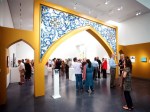
Today [October 2, 2013] marks the launch of the Nour Festival – a two month long celebration Middle Eastern and North African arts and culture with over 60 events taking place in 20 venues around Kensington & Chelsea. Nour, now in its fourth year, is rapidly becoming the most significant festival of its kind in Europe. It lifts the lid on the astonishing and often untold story of contemporary art and culture coming from the Middle East and North Africa.

Read More: Nour Festival 2013

Conflict and Cultural Heritage in Syria

On September 25, at an event at the Metropolitan Museum of Art in New York City, the International Council of Museums (ICOM) announced the Emergency Red List of Syrian Cultural Objects to fight against illicit traffic in cultural goods. World Monuments Fund President Bonnie Burnham was one of the speakers at the event, and below is an edited version of her remarks.

Read More: Conflict and Cultural Heritage in Syria

See also: Emergency Red List of Syrian Cultural Objects at Risk

16th-Century Lotus Pond Found in Sunder Nursery

A team from the Aga Khan Trust for Culture engaged in conservation work at Sunder Nursery has stumbled upon a lotus pond there which dates back to the 16th century. Concealed by dirt, the pond was earlier believed to be a well. Once the layers of earth were carefully set aside, it was found to be just over a metre in depth. Its edge was crafted in the shape of eight petals,” said a senior Trust official.

Read More: 16th-Century Lotus Pond found in Sunder Nursery

How the City of Mud Stays Standing: Meet the Masons of Djenné, Mali

Mud masons of Mali

The story of Djenné, Mali, is typically told through its architecture—monumental mud-brick structures that seem to rise out of the earth like a desert mirage. Every building in Djenné’s historic sector, designated a UNESCO World Heritage site in 1988, has been molded and reinforced by generations of mud masons, following an indigenous tradition as old as the city itself. When Natural History Museum curator Mary Jo Arnoldi traveled to Djenné in 2010, she wanted to meet the masons behind the city of mud, to give them a chance to “tell this story in their own words.”

Read More: How the City of Mud Stays Standing: Meet the Masons of Djenne, Mali

Emergency Red List of Syrian Cultural Objects at Risk

Red List of Syrian Cultural Objects

The fight against illicit traffic in cultural goods requires the enhancement of legal instruments and the use of practical tools disseminating information, raising public awareness, and preventing illegal export. Following reports of widespread damage and looting at cultural heritage sites in Syria, ICOM decided to publish the Emergency Red List of Syrian Cultural Objects at Risk with the aim to help art and heritage professionals and law enforcement officials identify Syrian objects that are protected by national and international legislations. In order to facilitate identification, the Emergency Red List illustrates the categories or types of cultural items that are most likely to be illegally bought and sold. Museums, auction houses, art dealers and collectors are encouraged not to acquire such objects without having carefully and thoroughly researched their origin and all the relevant legal documentation. Due to the great diversity of objects, styles and periods, the Emergency Red List of Syrian Cultural Objects at Risk is far from exhaustive. Any cultural good that could have originated from Syria should be subjected to detailed scrutiny and precautionary measures.

Read More: Emergency Red List of Syrian Cultural Objects at Risk

Islamic Art: Echo and Return

Nelson-Atkins Museum exhibition 2

Using Islamic art as a springboard for modern works can be a fraught exercise. But the question of how artists today respond to this heritage vocabulary is fascinating. And on August 31, the interpretations of 12 artists from Iraq, Saudi Arabia, Iran, Pakistan, India and America opened at the Nelson-Atkins Museum in Kansas City, Missouri in an exhibition titled Echoes. “We are contemporary, but are also informed and influenced by our histories, our traditions, our cultures — artists certainly are,” explained Kimberly Masteller, the curator of the exhibition, in a press release.

Read More: Islamic Art: Echo and Return

Alphabets Shaped into Works of Art

Muqtar Ahmad

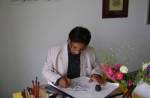
To unravel one’s calling in life is the first step towards the making of an evangelist. For Muqtar Ahmad, one of India’s most renowned Arabic calligraphers, that moment of reckoning came at an early age when teachers in his village school at Ranjhol, near Hyderabad, praised him for his beautiful handwriting which looked like calligraphy. Ahmad’s journey into the world of this intense form of art initially began under the tutelage of Zakir Al Hashmi and Gazi Tahiruddin Qaisar, two prominent calligraphers practising and teaching their art in Hyderabad’s Chatta Bazaar, renowned for printing invitation cards in Urdu calligraphy. After learning his first steps, the young Ahmad left for Bengaluru in the late 1980s and started working for the Urdu newspaper Salar.

Read More: Alphabets Shaped into Works of Art

Centuries of Syria’s History Destroyed in Just Two Years

Syria's heritage

Besides killing more than 100,000 people, Syria’s civil war is exacting another irreparable toll as historic sites and artworks are looted or destroyed in the fighting. An emergency list of endangered artworks was released Wednesday [25 September 2013] at the Metropolitan Museum of Art in New York. The initiative stems from the International Council of Museums, in collaboration with UNESCO and the US State Department.

Read More: Centuries of Syria’s History Destroyed in Just Two Years

Paris-Sorbonne University Abu Dhabi Hosts ‘Golden Age of Arab and Islamic Science’ Exhibition

Paris-Sorbonne University Abu Dhabi has held a press conference at the university headquarters on Al Reem Island to announce the launch of the Golden Age of Arab and Islamic Science exhibition. This will be held in the university’s lobby from 24 September 2013 to 14 January 2014. The exhibition will shed light on a selection of scientific and intellectual accomplishments that the Islamic civilisations became famous for, changes that went on to have a huge impact on the future of civilisations across the world. These include the study of The Sky and The Earth, Humanity, and the Arts and Sciences.

Read More: Paris-Sorbonne University Abu Dhabi Hosts Islamic Science Exhibition

Qureshi Brings Blood-themed Art to Rome

ADDITION-ITALY-ROME-ART-QURESHI

Pakistani artist Imran Qureshi brought his award-winning exhibition on beauty and violence to Rome on Monday [September 23, 2013], unveiling the blood-themed creations which saw him appointed Deutsche Bank’s 2013 “Artist of the Year.” The 41-year-old, who was given the honor of creating an installation on the rooftop of New York’s Metropolitan Museum of Art this year, has brought 35 works to Rome’s Macro museum for an exhibition that runs until November 17, 2013.

Read More: Qureshi Brings Blood-themed Art to Rome

Mugham: Rich Intangible Heritage of Azerbaijan

Mugham

Azerbaijani mugham, a unique musical and poetic phenomenon, was created on the basis of the historical and cultural traditions that have existed for centuries. It is one of the most valuable monuments of the material and spiritual culture of Azerbaijan and the greatest achievement of the musical and poetic art of the Azerbaijani people. The multi-faceted and emotional shape, profound content and spiritual essence are closely linked to the perception of life and worldview of the people who created this genre of music. The elegance of the melodic and rhythmic mugham reminds of the rich patterns of Azerbaijani carpets, mosques with colored ornaments, national jewellery decorated to the minute detail as well as metaphoric Oriental poetry.

Read More: Mugham: Rich, Intangible Heritage of Azerbaijan

New Body of Work by British Artist Idris Khan on View at Victoria Miro in London

Idris Khan

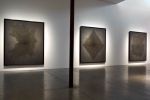
Victoria Miro presents a new body of work by Idris Khan in his third solo presentation with the gallery. Beyond the Black (20 September – 9 November 2013) marks an important departure from Khan’s photographic based works and comprises a suite of large black paintings, a monumental site specific wall drawing and a series of works on paper, all of which consider the metaphysics of creativity.

Read More: New Body of Work by British Artist Idris Khan

Iran Modern, Asia Society, New York

Iran modern 2

In the west, “modern” almost always means “good”. Who would reject the healthy, youthful optimism that the word implies? In other parts of the world, it’s a more volatile term, pitting liberalism against custom, commerce against religion, globalisation against local pride. Iran Modern at the Asia Society in New York presses a finger to this tender spot of ambivalence. In the 1960s and 70s, during the reign of a west-besotted Shah, Iran tasted modernity and then violently spat it out. A sense of discovery and doom gives the exhibition its poignant energy: Persian Pop, late-blooming cubism and various exalted and kitschy hybrids had their glorious moments. The period’s artistic richness stokes an appetite for an epilogue, but the show breaks off in 1979, when the country changed and artists scattered.

Read More: Iran Modern, Asia Society, New York

See also: A Dawn Interrupted

The Tangled Web They Wove

Interwoven globe

Interwoven Globe: The Worldwide Textile Trade, 1500-1800 is not your usual textile show. There is hardly a mention of warp and weft, only rare explanations of technique, and no in-depth exploration of the social contexts in which the artisans worked. Instead, the show uses cotton chintzes and silks, embroideries and tapestries, lively prints and luscious velvets to tell a much bigger story: how the global world we live in today took shape.

Read More: The Tangled Web They Wove

The Sword of Tipu Sultan

It’s always a mystery how so many ancient and priceless art objects are floating around, more than enough to keep auctioneers busy and profitable. Remember the bejewelled sword of Tipu Sultan that was bought at an auction in 2004 by Vijay Mallya for the equivalent of R1.5 crore and brought back to India? Well, there’s another one that has come up for auction by Sotheby’s. The actual auction takes place in London on 9th October and the items for sale offer a unique insight into Muslim history and culture, encompassing almost 1,400 years of decorative art produced in lands under Islamic patronage from Spain to India.

Read More: The Sword of Tipu Sultan

Who’s Stealing Afghanistan’s Cultural Treasures?

Looting Afghanistan's cultural treasures

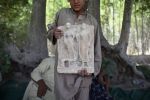
The battered white Corolla rumbles down a rocky road past fields of okra and great earthen mounds topped by the crumbling remains of ancient battlements. Taking a hard right and then a hard left, the old car bounces up onto a small dirt soccer field and jerks to a stop. “All of this is the tepe,” says Abdul Wahid, a neatly dressed farmer in his 40s, pointing at a dirt expanse so pitted it looks like it has been carpet-bombed. He gets out of the car and walks over crumbling humps of dirt, skirting pits left by looters.

Read More: Who’s Stealing Afghanistan’s Cultural Treasures?

Koç Art Empire to Expand with Istanbul Space

Koc contemporary art museum

One of Turkey’s most powerful art dynasties, the Koç family, has moved a step closer to building a major museum for its contemporary art collection. The Vehbi Koç Foundation, established in 1969 by Koç Holding, the largest conglomerate in Turkey, has chosen the London-based Grimshaw Architects to design the building. Koç Contemporary, which is due to open in 2016, will be in the central Beyoglu area of Istanbul, the same district as Istanbul Modern, which opened in 2004.

Read More: Koç Art Empire to Expand with Istanbul Space

On an Inspired, Spirited Spree

Komail Aijazuddin

A glance at Komail Aijazuddin’s work and one is overpowered by the contrast of red, gold and black and the intricacies within. The visual artist displayed a collection of his no-holds-barred paintings, “Red and Gold” at the newly-renovated Khaas Art Gallery on Tuesday, 17 September 2013. Aijazuddin’s work is as risqué as it is experimental. The series is nuanced with symbols, cultures and iconographies where the artist has explored divine connections, theocratic morality, human frailty, longing amidst abundance and judgment, among other themes.

Read More: On an Inspired, Spirited Spree

Schuster Gallery’s Exhibit Sheds Light on Islamic Culture

Schuster Gallery Photography exhibition

Art, culture, religion and inspiration all come together in the Schuster Gallery’s current art exhibition, titled “Muslim/American, American/Muslim.” The exhibition, which opened August 30 and will continue until October 30, features photographs taken by Robert Gerhardt, who reached out to Gannon University’s Schuster Gallery after reading an article published in 2012 about Muslim students’ increasing presence in private Catholic universities, including Gannon. The photographs, taken mostly in states with a high Muslim population like New York, New Jersey and Illinois, shed light on everyday lives of American Muslims, with several shots of Muslims worshipping in mosques or around the country.

Read More: Schuster Gallery’s Exhibit Sheds Light on Islamic Culture

A Dawn Interrupted

Iran modern

When a museum in the Western world focuses on a problematic foreign country, it usually wants to temper the antipathy between the two cultures by going beyond stereotypes, illustrating the other culture’s “vibrancy,” emphasizing its rich past, pointing up our shared history. All of which applies to Iran Modern, an exhibition at the Asia Society of more than 100 modernist works by 26 influential Iranian artists from the 1950s to the time of the Islamic Revolution in 1979. According to Melissa Chiu, the Asia Society’s director, the show “reminds us of a time of close relations between the U.S. and Iran, demonstrates that modernism and internationalism flourished outside the West in places like Iran—which many people might consider unlikely, but we can see that Iran is a country with a strong evolving artistic tradition.”

Read More: A Dawn Interrupted

See also: A Society Evolves

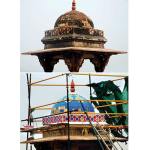
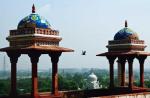
Humayun’s Tomb Redone with Mughal Techniques

Humayun's tomb 3

The restored Humayun’s Tomb will be inaugurated by prime minister Manmohan Singh and the Aga Khan on Wednesday. The project, which began in 1997 and will continue at least until 2017, is the largest and most ambitious heritage conservation project undertaken in India, and the only one by a non-government body, the Aga Khan Trust for Culture (AKTC).

Read More: Humayun’s Tomb Redone with Mughal Techniques

See also: After Humayun, Who? and 16th Century Tools Giving Facelift to Mughal Gateway

Houria Niati: Identity Search

Houria Niati

It takes time to recover from the indignities of colonialism, to exploit its positive aspects, let go of memories of its deleterious side — or not — and blend this shifting cavalcade with celebration of one’s indigenous culture. In the case of Algerian artist Houria Niati, this process has been as complex as for anybody else, with many nuanced layers of heritage to reconcile: start with French colonialism, add Arab/Islamic, and mash it up with the Berber blood of her mother. To add to the mix, Niati has been a member of the diaspora since 1977, when she arrived in London. Since then she has built a global reputation, with numerous exhibitions and musical performances. One of the most important North African contemporary artists, she is being recognized with a major exhibition this autumn celebrating 30 years of London shows. The exhibition will showcase work from throughout her career, from oils and pastels to digital installations.

Read More: Houria Niati: Identity Search

Nelson Offers an Engaging Look at Islamic Art Through the Ages

Nelson-Atkins Museum exhibition

Although Americans’ relationship with Islam is often fraught with fear and suspicion, a small but highly engaging exhibit at the Nelson-Atkins Museum of Art offers multiple points of positive contact, from the sheer beauty of historical works to the abhorrence of violence expressed in contemporary pieces. Called Echoes: Islamic Art and Contemporary Artists, the exhibit brings the culture of Islam to life with stellar objects, striking pairings, moving images and music.

Read More: Nelson Offers an Engaging Look at Islamic Art

See also: Pakistani Truck is Canvas on Wheels

After Humayun, Who?

Humayun's tomb 2

Finally, Humayun can sleep easy. The restoration work on the Mughal emperor’s tomb in Delhi ends next week. On the evening of 18 September, Prime Minister Manmohan Singh, industrialist Ratan Tata and philanthropist Aga Khan will visit the 16th century monument to mark the completion of this ambitious undertaking. “It took us six years and 200,000 man-days of painstaking work by craftsmen,” says Ratish Nanda, project director of Aga Khan Trust for Culture, which is restoring the much larger Humayun Tomb complex, including the monuments in the neighbouring Sunder Nursery. The trust is also involved in the urban renewal of the historic Hazrat Nizamuddin Basti area.

Read More: After Humayun, Who?