Persian Silk in Viking Burials

Persian silk in Viking burials

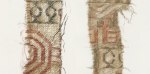
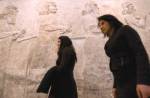
The silk trade was far more comprehensive than we have hitherto assumed and recent research may change our perceptions of the history of the Norwegian Vikings. After four years of in-depth investigation of the silk trade of the Viking Age, Marianne Vedeler, Associate Professor at the Museum of Cultural History, University of Oslo has found that the Norwegian Vikings maintained trade connections with Persia and the Byzantine Empire through a network of traders from a variety of places and cultures who brought the silk to the Nordic countries.

Read More: Persian Silk in Viking Burials

Examining the Beauty and Harmony of Islamic Artist Shirin Neshat

Shirin Neshat 4

Beauty and harmony are paramount in Islamic art. These qualities are also integral to the photographs, videos and films of Shirin Neshat. Born in Iran in 1957, the New York-based artist engages the Persian aesthetic and cultural traditions of her homeland to explore the ever-changing present of Iran. Her ravishing images show women crossing boundaries and asserting power despite Islamic norms that constrict their freedom. A rifle barrel protrudes like an earring alongside the face of a young woman in an image from Neshat’s 1996 series, “Women of Allah,” in the show She Who Tells a Story: Women Photographers from Iran and the Arab World, on view through Jan. 12 at the Museum of Fine Arts Boston.

Read More: Examining the Beauty and Harmony of Islamic Artist Shirin Neshat

‘Nur: Light in Art and Science from the Islamic World’, Seville

Nur exhibition in Seville 2

Put a square on another square, rotate it, and you get an eight-point star. Put that star with others, and you get new stars and new squares. Set those into a lattice of multicoloured glass, like the 15th-century north African window in this new exhibition, and you get an object of prismatic, mathematical beauty. Overlay the fact that Christian Spain used this star motif in its own mudéjar style while at the same time abhorring the religious culture that made it – and you also get a paradox that Europe is still puzzling out.

Read More: Nur: Light in Art and Science from the Islamic World

See also: Exhibition on Islamic Art Opens in Seville

Interview: ‘Iranian New Wave’ Film Curator Uncovers a Precious, Threatened Legacy

Iranian New Wave Cinema

Screening over three weeks in November, Asia Society New York’s film series Iranian New Wave offers a rare opportunity to explore a vital yet little seen period in Iran’s film history. Responding to the same currents that were then electrifying cinema from Paris to Prague to Tokyo, Iranian filmmakers of the 1960s and ’70s produced a range of formally innovative, socially conscious and philosophically searching films that paved the way for the later, more internationally recognized generation of auteurs that includes Abbas Kiarostami, Jafar Panahi, Ashghar Farhadi and Mohsen Makhmalbaf. Presented in conjunction with Asia Society Museum’s Iran Modern exhibition, Iranian New Wave encompasses fiction features, documentary shorts and a documentary about this era of Iranian film in seven programs. Below, Asia Society Film Curator La Frances Hui discusses the genesis of the series and some of the hurdles she had to overcome in bringing these rare films to New York in 2013.

Read More: Iranian New Wave Film Curator Uncovers a Precious, Threatened Legacy

Miniature Exhibition: Country’s Predicaments Depicted with a Tinge of Humour

Hadia Moiz

Whatever your political leaning, miniature artist Hadia Moiz’s work will have you pause and reflect and perhaps even laugh with self-deprecating ambivalence. Irreverent and satirical, her latest exhibition Lotta Republic opened at Khaas Art Gallery on Tuesday [29 October, 2013]. The tongue-in-cheek paintings mock the incompetence of Pakistan’s political system, which the artist said has affected social and moral values of many like her. “We are surrounded by self-centered, power-hungry fiends who will go to any extent to self-indulge while depriving the common man of basic necessities,” she said.

Read More: Miniature Exhibition: Country’s Predicaments Depicted with a Tinge of Humour

Scientific Center after Nizami Ganjavi to Open at Oxford University

Nizami Ganjavi centre at Oxford University

A memorandum of understanding on establishing the Scientific Center of Azerbaijan and Caucasian Studies named after great Azerbaijani poet Nizami Ganjavi at the University of Oxford, one of the leading universities in the world, was signed in Oxford on October 28. The memorandum was inked with Director of International Development at the University of Oxford, Liesl Elder, as part of a visit of Moscow State University Baku branch rector, co-chair of the Anglo-Azerbaijani Society, Professor Nargiz Pashayeva, to Oxford. The facility will be the first Azerbaijani research center to study the history and culture of Azerbaijan and the Caucasus region, established at the Oxford University in the UK.

Read More: Scientific Center after Nizami Ganjavi to Open at Oxford University

Cosmic Connection: Where the Worlds of Art and Spirituality Intersect

Khabar-e Tahayyur

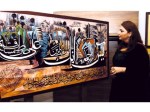
There are layers to creative expression that transcend physical boundaries, bridging contact between the divine and the mortal. Art is then, a visual mantra. This is the essence of an exhibition of paintings and calligraphy works that opened at AP Gallerie on Friday [November 1, 2013]. Titled Khabar-e-Tahayyur, the showcase features masterpieces by celebrated artists and calligraphers Ustad Allah Bux, Sadequain, Zawar Hussain and Ustad Khursheed Gohar Qalam.

Read More: Cosmic Connection: Where the Worlds of Art and Spirituality Intersect

The Focus-Abengoa Foundation Opens the Exhibition “Nur: Light in Art and Science from the Islamic World” at the Hospital de los Venerables in Seville, Spain

Nur exhibition in Seville

The Focus-Abengoa Foundation today [25 October, 2013] presented the most important travelling exhibition of Islamic art and culture, Nur: Light in Art and Science from the Islamic World, spanning more than ten centuries and including ancient artworks and objects from throughout the Islamic world. The exhibition will be on display in Seville from October before travelling to the Dallas Museum of Art (USA) in Spring 2014. Featuring 150 objects from public and private collections in Europe, North Africa, the Middle East, and the United States, Nur: Light in Art and Science from the Islamic World explores the use and meaning of light in Islamic art and science, and demonstrates how light is a unifying motif in Islamic civilizations worldwide.

Read More: Exhibition on Islamic Art Opens in Seville

In Lahore, Improving Livelihoods and Preserving Heritage Go Hand in Hand

Preserving Lahore

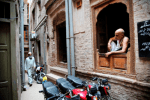
As one enters the Delhi Gate of Lahore’s fabled Walled City, it is with the knowledge that travelers from across the world have walked through its grand arch for hundreds of years. The gate faces the historic path pointing towards its namesake city, serving as a reminder of South Asia’s interconnected history. Inhabited for over 1,000 years, Lahore’s Walled City has served as the capital of Mughal and Sikh empires, along with being a major center of colonial India. Today, it continues to be a part of Pakistan’s, and South Asia’s, rich cultural heritage. As Lahore has grown and expanded beyond the Walled City, much of its grandeur has fallen into disrepair as newer areas became the center of investment.

Read More: In Lahore, Improving Livelihoods and Preserving Heritage Go Hand in Hand

What Lies Under the Qutb Shahi Tombs?

Qutb Shahi Tombs 3

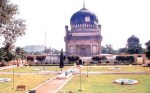
The city will soon have an active excavation site, but instead of coveted treasure, the government seems to be looking for old civic systems. The State Department of Archaeology and Museums will kick-start the exercise, but unlike their earlier attempts to dig out treasure from beneath Naubat Pahad in the city, they are on the lookout for pathways, water works and gardens underneath the Qutb Shahi Tombs premises. Once permission is granted, the department intends to carry out a test phase by conducting scientific explorations at certain spots before deciding to go ahead full steam.

Read More: What Lies Under the Qutb Shahi Tombs?

Kashi Kari: Centuries Old Mosaic Art on Verge of Extinction

Kashi Kari

In one of the most densely populated localities of Multan, stands the Sawi Mosque, depicting an exquisite piece of mosaic art called Kashi Kari. It was built by Nawab Said Khan Qureshi, a noble of the courts of Mughal emperors Shah Jahan and Aurangzeb Alamgir, in Kotla Toley Khan. The Sawi Mosque is the oldest mosque in Multan and is being renovated currently. Kashi Kari – meaning mosaic art in Persian – is a form of decorative art that involves ceramic assortment on tiles, faience and fabric. Artists say that lack of resources is a reason the art is fading in the region.

Read More: Kashi Kari: Centuries Old Mosaic Art on Verge of Extinction

Abu Dhabi Research Tries to Find Ancient Arabic Manuscripts on the Art of Falconry

They are falcon hunters, but their prey is to be found not in the desert sands but hidden in the dusty shelves of public libraries and private collections around the world. For two French researchers, the object of the hunt is the rarest of all written works on falconry, a 13th-century treatise in medieval Arabic that would be the oldest such document in the world. Patrick Pallait and Catherine Tsagarakis work for the Middle East Falconry Archive, a research project sponsored by Sheikh Mohammed bin Zayed, the Crown Prince of Abu Dhabi, with aim of creating a digital and physical library of Arabic-script texts on falconry.

Read More: Abu Dhabi Research Tries to Find Ancient Arabic Manuscripts on the Art of Falconry

Saudi Artist’s First London Solo Exhibition Considers Freedom, Bureaucracy

Abdulnasser Gharem

The works of Saudi artist Abdulnasser Gharem are always thought-provoking, raising many questions—some clear, others not so much. In his first solo exhibition in London, Gharem presents some of his early works alongside his latest creations. A clear theme resonates from the very beginning. It is in an endless debate of contemporary questions, starting from a single point and continuing, moving from one work to the other with grace and beautiful imagery, drawing you in from the first glance. From his most famous pieces is the series Concrete, in which blocks of different shapes and colors are stamped with words and phrases. The message of each piece in the series is the same: they are borders and boundaries, roadblocks to human dreams and desires, molded by mentalities that do not give space for free minds to make independent choices. This important theme runs throughout Gharem’s work, which makes heavy use of text and calligraphy—but each piece carries its own message and meaning far deeper than the letters written on them.

Read More: Saudi Artist Abdulnasser Gharem’s First London Solo Exhibition

The Veil Illuminated: Photographer Drew Tal Reimagines the Niqab In New Exhibit

Drew Tal

Worlds Apart, an exhibition of photographic works by Drew Tal opened at Emmanuel Fremin Gallery last week. The focus of the exhibition – which is also being shown in Istanbul, Turkey – is the Muslim veil. Most of the works are, at least ostensibly, portraits of various Muslim women, some wearing the niqab (veil) and some wearing the hijab (headscarf).

Read More: The Veil Illuminated

Patchy Repairs Mar Red Fort Restoration

The renovated Humayun’s Tomb was inaugurated recently in a high-profile function attended by the Prime Minister, the Aga Khan, Ratan Tata and chief minister Sheila Dikshit. Amid all the fanfare, it probably didn’t occur to anyone that another World Heritage Site, which had set out on the road to renovation around the same time as the Mughal emperor’s tomb, had fallen by the wayside . It’s the Red Fort, a symbol of Mughal pride and, perhaps, vainglory.

Read More: Patchy Repairs Mar Red Fort Restoration

As the Hajj Begins, the Destruction of Mecca’s Heritage Continues

APTOPIX Mideast Saudi Arabia Hajj

Two million Muslims have flooded into Saudi Arabia’s Mina Valley from Mecca for the start of the Hajj pilgrimage this week. Dressed in simple white garments and freed from their worldly possessions, they are following in the footsteps of the prophet Muhammad. But in Islam’s holiest city, there is increasingly little sign of the prophet’s legacy – or the frugal life he espoused. “The authorities are trying to destroy anything in Mecca that is associated with the prophet’s life,” says Irfan al-Alawi, director of the UK-based Islamic Heritage Research Foundation, who recently returned from a trip to the city. “They have already bulldozed the house of his wife, his grandson and his companion – and now they are coming for his birthplace. And for what? Yet more seven-star hotels.”

Read More: As the Hajj Begins, the Destruction of Mecca’s Heritage Continues

Qatar Museums Shake-up

Qater Museums shake-up

The Qatar Museums Authority (QMA), the body that oversees the present and future museums in the tiny, energy-rich Gulf state of Qatar, is completing a transition into a “private entity for public good”, including new policies that will impact on finance, human resources and tendering. “It is a major change,” Ed Dolman, the chief executive of the authority, tells The Art Newspaper. “This is a commonly used structure in Qatar, where so many projects are funded by the government. It means that the QMA will generate its own revenues, for example through sponsorship, but will still have government support and will still be approved and audited.”

Read More: Qatar Museums Shake-up

Hunt for Sultan’s Heart Uncovers an Ottoman Village in Hungary

Suleyman the magnificent

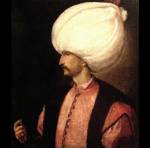
A team of scientists has discovered the foundations of a rare, historic Ottoman village on Hungarian soil as part of a hunt to find the heart of Suleiman the Magnificent, the most famous sultan of the Ottoman Empire. The village was revealed nine months into the project, which has been jointly undertaken by Hungarian and Turkish art historians and archaeologists and is funded by the Turkish government. The aim is to find Suleiman’s shrine, believed to have been built 450 years ago in southern Hungary.

Read More: Hunt for Sultan’s Heart Uncovers an Ottoman Village in Hungary

The Vanderbilt Mughal ‘Star-Lattice’ Carpet Sells for £4,786,500 at Christie’s, London

Mughal star-lattice carpet

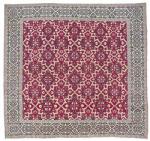
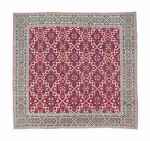
A rare and magnificent Millefleur ‘star-lattice’ carpet dating to late 17th/early 18th century Mughal India sold for £4,786,500 at Christie’s today [October 8, 2013]. One of only 12 Millefleur carpets from this illustrious time in Mughal India, this carpet was once owned by American industrialist Cornelius Vanderbilt and remained in his family for over a century. During the 16th, 17th and 18th centuries the carpet looms of the Mughal dynasty in India produced many of the most magnificent carpets extant today. These beautiful carpets were originally woven to adorn the palaces of the Mughal Indian aristocracy, but through Dutch, Portuguese and English trading companies they quickly became highly sought after objects by wealthy Europeans. With the rise of industrial wealth in the United States in the second half of the 19th century, many of the new American millionaires began to emulate the collecting tastes of earlier European aristocracy. Along with collecting early furniture and old master paintings, these wealthy Americans avidly acquired magnificent early carpets. During this period, many 16th, 17th and 18th century Safavid Persian, Ottoman Turkish, and Mughal Indian carpets entered the collections of the most prominent Americans such as J.P. Morgan, Henry Clay Frick and Benjamin Altman. Among this esteemed group with a passion for rare, early carpets was Cornelius Vanderbilt II, who acquired this carpet for his palatial mansion at 1 West 57th Street in New York City.

Read More: Mughal Millefleurs ‘Star-Lattice’ Carpet
Monument Fails to Draw Visitors

Maner Sharif

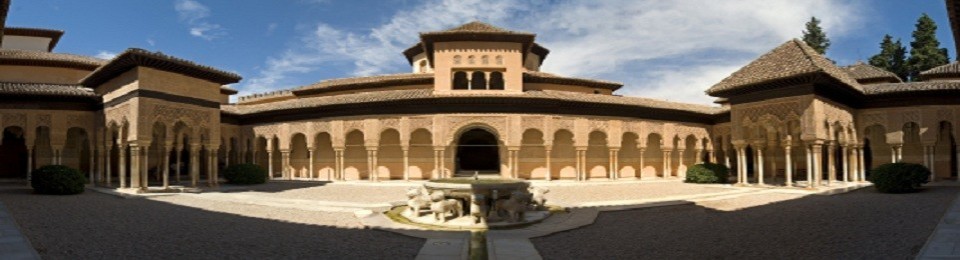
Gunjan Kumar, 50, had been working with the aviation sector in Patna for the last three decades. For years, he has heard in Hindi movies about the “Maner laddoos”, the sweet delicacy made with pure ghee, and which gave the nondescript place like Maner the national fame. But he never got an opportunity to visit Maner Sharif, barely 35 km from Patna. This is the unexplored tourist spot in Maner where the then Mughal Governor of Bihar Ibrahim Khan built a mausoleum in memory of Sufi saint Makhdoom Shah Daulat in 1616. The mausoleum, one of the exemplary displays of grand style of Afghan and Mughal architecture, is known as Maner Sharif.

Read More: Monument Fails to Draw Visitors

The Tomb Restorers

Tomb restorers

At first sight, the kitchen equipment at Humayun’s Tomb belies the scale and complexity of the restoration of the Unesco World Heritage Site. But when you see the glory of the restored Mughal monument, which was thrown open to the public on September 18, you realise that a pateela, thaali, hamaam-dasta, sil-batta, chakki and dosa batter grinder can be used for purposes other than just culinary.

Read More: The Tomb Restorers

Modern Iranian Art

Modern Iranian Art

What’s so apparent from Iran Modern is the relative obscurity of Iranian art in galleries and institutions since the American collector Abby Weed Grey began buying art from Iran in the 1960s. With the largest collection of modern Iranian Art outside Iran, Ms. Grey established the Grey Art Gallery at New York University in 1974 to provide a greater understanding of non-Western art. Although her vision was realized in a major art fair titled One World Through Art that she helped organize in Minnesota in 1972, and her seminal exhibition Between Word and Image: Modern Iranian Visual Culture at the Grey Art Gallery in 2002 was well received, these works have received short shrift since then. Now, for the first time, Iran Modern at the Asia Society, alongside Modern Iranian Art: Selections from the Abby Ward Grey Collection at N.Y.U. at the Grey Art Gallery, which features some of Ms. Grey’s collection, and Calligraffiti: 1984 – 2013 at the Leila Heller Gallery, highlight salient features of Iranian modernism and its inspiration for current artists from the region.

Read More: Modern Iranian Art

Islamic Art Week at Christie’s London, 7 – 11 October 2013

Vanderbilt Mughal carpet

Islamic Art Week at Christie’s London will feature four sales which will take place from 7–11 October 2013 at King Street and South Kensington. The sales offer both new and established collectors the opportunity to acquire important and beautiful works with exceptional provenance. On 8 October 2013 the Oriental Rugs & Carpets sale at King Street will feature the rare and magnificent Vanderbilt Mughal “star-lattice” carpet, which was owned by American industrialist Cornelius Vanderbilt II and remained in his family for nearly a century (estimate: £1.5 – 2 million).

Read More: Islamic Art Week at Christie’s London, 7-11 October 2013

Behind the Veil

She who tells a story

Edward Said, a literary scholar and public intellectual, spent much of his lifetime ruing the way Westerners represented the Islamic world. “What America refuses to see clearly,” he wrote months before he died in 2003, “it can hardly hope to remedy.” A fascinating exhibition at the Museum of Fine Arts Boston brings the region into sharper focus. She Who Tells A Story collects the work of 12 contemporary female photographers and film-makers from the Middle East. At a time when American and European views of the Islamic world tend to be filtered through a lens of fear and anxiety, these images offer a more nuanced portrait of a culturally complicated place.

Read More: Behind the Veil

See also: The Middle East Through Women’s Cameras

Baghdad Beckons Zaha Hadid?

Baghdad Museum Zaha Hadid

The Iraqi Minister of Tourism and Antiquities, Liwa Sumaism, has said that his government plans to build a new museum in west Baghdad that will house objects currently in the collection of the Iraq National Museum. The Iraqi government has reportedly invited the Iraqi-born, British architect Zaha Hadid to submit designs for the project; a spokeswoman for Hadid says that she is “unable to confirm or comment” on the project.

Read More: Baghdad Beckons Zaha Hadid?