
Dutch University Gives Tribute to Arabic Manuscripts

Leiden University

As the Arab world struggles to preserve the Arabic language as it is increasingly overshadowed by the English-speaking world, there are institutions like Leiden University that have dedicated over 400 years to this language crusade as manifested through its rarest collection of manuscripts and scrolls. “The chair of Arabic was founded in 1613, which makes it one of the oldest in Europe,” says Dr Luit Mols, the curator of Middle East, West and Central Asia at the National Museum of Ethnology in Leiden, who curated the upcoming 400-year anniversary of Islamic Studies exhibition as it makes its stop in Abu Dhabi.

Read More: Dutch University Gives Tribute to Arabic Manuscripts
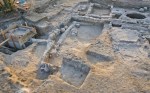
Remains of a 900 Year Old Estate Discovered by Archaeologists

Fatimid house in Ramla

Remains of an affluent estate that had a fountain in its garden were recently unearthed during the course of excavations in Ramla. Two residential rooms were exposed of a wealthy estate that was built of ashlar stones. Archaeologists date the structure to the Fatimid period (late tenth century and first half of the eleventh century CE).

Read More: Remains of a 900 Year Old Estate Discovered by Archaeologists

See also: Medieval Arab Mansion Unearthed in Ramle

Medieval Arab Mansion Unearthed in Ramle

Mansion in Ramle

Archaeologists have unearthed a medieval villa in the central Israeli city of Ramle, complete with a water fountain and intact plumbing dating to the 11th century — just before the beginning of the Crusades. The Israel Antiquities Authority announced the find, located on the outskirts of the city, on Sunday [December 8, 2013].

Read More: Medieval Arab Mansion Unearthed in Ramle

A Closer Look at the Nominees for the Third Jameel Prize

Jameel Prize 2013 shortlist 2

In just four years, the Jameel Prize has become one of the most important international awards for contemporary art and design inspired by Islamic traditions. The Victoria & Albert (V&A) Museum in London will announce the 2013 winner, who will receive £25,000 on Tuesday [December 10, 2013]. We look at the nominees and catch up with four favourites.

Read More: A Closer Look at the Nominees for the Third Jameel Prize

See also: Interviews with Artists Shortlisted for the V&A’s Jameel Prize 2013

Interviews with Artists Shortlisted for the V&A’s Jameel Prize 2013

Jameel Prize 2013 shortlist

When London’s Victoria and Albert Museum opened its doors in 1857, its mission was to inspire artists, craftsmen and manufacturers by showing design excellence in its many forms. The museum had amassed a large collection of Islamic art and artefacts, believing the British could learn a thing or two from the principles of geometry, pattern-making, decoration and function exemplified by work from Turkey, Iran, Egypt, Syria and other places in the region. Many years on, the Jameel Prize, supported by the Abdul Latif Jameel Community Initiatives, awards contemporary artists influenced by Islamic traditions of craft and design, and looks further afield for the fruits of contemporary middle-eastern art.

Read More: Interviews with Artists Shortlisted for the V&A’s Jameel Prize 2013

UMMA to Exhibit 11 Centuries of Islamic Art in ‘Fragments from the Past’

Fragments from the Past at UMMA

For the next several months, the University of Michigan Museum of Art (UMMA) will exhibit Islamic art that showcases the beauty and complexity of everyday objects from the eighth through the 19th centuries. A collaborative effort, UMMA will host the exhibition of objects from the Kelsey Museum of Architecture in its glass-walled Stenn Gallery. This exhibition is part of the UM Collections Collaborations series, supported by the Andrew W. Mellon Foundation, where the UMMA showcases the diversity of the University’s art collections.

Read More: ‘Fragments from the Past’ at University of Michigan Museum of Art

Faiza Shaikh: Painting Music on Canvas

Faiza Shaikh 2

For artiste Faiza Shaikh, the music never stops. Through her prolific collection of paintings, launched at an exhibition in Islamabad on November 26, Shaikh explores the facets of spiritual desire that lend themselves to an enriching existence, invoking music and verse as an inherent analogy for human awareness. Based in London, Shaikh’s work relates to a sincere connection between the canvas and her own positive ethos; her inspiration is lifted from the longing verses of Rumi, and from a curiosity about the role of Sufism in a contemporary context.

Read More: Faiza Shaikh: Painting Music on Canvas

See also: Faiza Shaikh Combines Belief Systems on Canvas to Explore Tolerance

Blast Destroys Centuries Old Libyan Shrine

Murad Agha mosque

Suspected Islamic extremists destroyed a centuries-old shrine in the Libyan capital on Wednesday [26 November], but the tomb inside withstood the attack, witnesses said. The explosives were placed around the mausoleum of Murad Agha, the first Ottoman governor of Tripoli, who ruled from 1551-1553. The shrine is attached to a mosque of the same name, which did not appear to have been damaged.

Read More: Blast Destroys Centuries Old Libyan Shrine

The Treasure of Shah Shuja

Shah Shuja

The rich history of Bangladesh has, undoubtedly, many colourful and entertaining tales to tell. And, no doubt, also many that are tragic. It is, however, difficult to find any tales with much basis in substance, especially explorations of the great mysteries that such histories as exist leave behind, once the tale is told. The real story of the defeat of Alexander; why Gangarian soldiers were fighting with the Roman Army in Asia Minor in the 1st century BCE; and, perhaps the greatest mystery of all, with deep significance through subsequent centuries, what happened to the Buddhist tradition of which there remains so much tangible evidence in the country? All, and more, lend themselves to tales of imagination and research. But few, perhaps, can offer us quite the romantic potential of the story of the demise of one of the Mughal dynasty’s most celebrated sons, and the disappearance of his treasure.

Read More: The Treasure of Shah Shuja

To Each Her Own: Eclectic Work of Nine Art Graduates on Display at Gallery6

Thesis in miniature

Think about miniature art and the mind conjures up Mughal era images such as horses, elephants, monarchy and thrones. Breaking away from this stereotype, a group of nine recent graduates of Fatima Jinnah Women University showcased their artworks at an exhibition titled Thesis in Miniature at Gallery6 recently. The artists are Ayesha Bilal, Maramla Umair, Ridae Fatima, Rubab Zahra, Saima Farooq, Sidra Ashraf, Sofia Younas, Sumaiya Noor and Zahra Bangash.

Read More: To Each Her Own: Eclectic Work of Nine Art Graduates on Display at Gallery6

World Heritage Week: Time to Celebrate or Mourn?

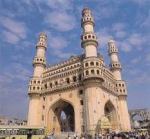
Chahar minar Hyderabad

The World Heritage Week is on, so should there be celebrations or mourning? This depends on which side of the fence one is: the government and its influential circle will readily join the jamboree and celebrate, but the civil society, which has cried itself hoarse appealing to the government to try and salvage the neglected monuments in the state, will certainly see no reason for the celebrations. Take for instance the tallest heritage icon in the city, the Charminar. The state government has time and again claimed that the Charminar and its precincts would be conserved as a heritage area as the 412-year-old monument is a symbol of Hyderabad’s history, culture and architecture.

Read More: Time to Celebrate or Mourn?

Amin Jaffer on Indian Jewellery and His New Book, Beyond Extravagance

Amin Jaffer 2

Dr Amin Jaffer is arguably one of the best known authorities on Indian Art and Jewellery. As Christie’s International Director of Asian Art, he is well regarded by important collectors for his in-depth knowledge and ability to inspire cohesive acquisitions. He is also an accomplished author and scholar. It was with great excitement, that the art world came to the V & A in London for the launch of Assouline Publishing’s Beyond Extravagance: A Royal Collection of Gems & Jewels, a book exploring the unique tradition of Indian jewellery based on the private Al-Thani collection. Edited by Dr Jaffer, with essays by world- renowned jewellery specialists and scholars, this 416-page book takes us on a historical journey of Indian jewellery as reflected in this magnificent private collection!

Read More: Amin Jaffer on Indian Jewellery and His New Book, Beyond Extravagance

See also: Amin Jaffer

Amin Jaffer: Christie’s International Director of Asian Art

Amin Jaffer

Dr Amin Jaffer is a study in suave sophistication. An impressive raconteur, he is the opposite of what one might expect of a serious art historian and advisor. His career has straddled the worlds of academia and commerce, but one of his admirable qualities is how effortless he makes it all seem. While he regards himself as Indian in terms of ethnicity, his birthplace is actually Kigali, Rwanda. The youngest of three children, Amin spent his formative years in Rwanda, Kenya, Belgium, England, Canada and the USA. His first exposure to art was at the age of six when his mother took him to the Louvre and to Versailles. He still has a photograph he took at the time, of the Raft of the Medusa by Géricault. From that early age, Amin knew that art was his calling, a passion that carried over to his university education.

Read More: Amin Jaffer

See also: A Sweeping Look at More than Four Centuries of Jewelry from India

and

Video: Beyond Extravagance: Interview with Amin Jaffer

A Sweeping Look at More Than 4 Centuries of Jewelry from India

Mughal jewellery

In 2009, Sheikh Hamad bin Abdulla al-Thani visited an exhibition titled Maharaja, the Splendor of India’s Royal Courts, at the Victoria and Albert Museum in London and was smitten. Over the next four years Mr. Thani, a member of the Qatari royal family, went on a quest to put together a collection of Indian jewelry and artwork of exceptional provenance, buying up the best that could be found in auctions or through specialized dealers. In this he was aided by Amin Jaffer, a consultant curator for the Victoria and Albert show who in 2009 was working in the museum’s Asian department, and who now is international director of Asian art at Christie’s.

Read More: A Sweeping Look at More than Four Centuries of Jewelry from India

See also Video: Beyond Extravagance: Interview with Amin Jaffer

Shoja Azari: FAKE Idyllic Life

Shoja Azari

Leila Heller Gallery is pleased to present new painting installations and video works by Shoja Azari that seamlessly intertwine myth with reality, quotation with intervention in order to examine the integral roles played by history and context in depictions of the Islamic world. Originally trained as a filmmaker and as a video artist, Azari over the last seven years has been incorporating elements of the moving picture with brush strokes to create a distinctive body of work that redefines filmmaking while conceptually and formally subverting the classic definition of painting.

Read More: Shoja Azari: FAKE Idyllic Life

Marrakech’s New Arts Scene in the Funky Old Medina

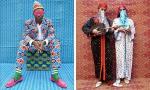
Portraits by Marrakech-born pop artist Hassan Hajjaj, popularly known as Morocco's Andy Warhol.

It’s just another sunny Saturday morning in the cool, green oasis that is Le Jardin, a lively riad cafe in the heart of the Marrakech medina and the social hub of the emerging arts scene in the old city. What strikes me about the gathering at my table is the cosmopolitan nature of it all. Kamal Laftimi, who owns the cafe, is there with a New York-based restaurant designer, Sebastian de Gzell, discussing a project they will open together in the spring. His wife, Laila Hida, is the creator of a philanthropic new studio space, Riad 18. Artsi Ifrach turns vintage Moroccan textiles into haute couture, while Algerian designer Nyora Nemiche, who sells her flamboyant abaya robes from a pop-up shop above the cafe, counts Erykah Badu and rapper Mos Def among her fans. Together, they form part of a creative revolution that is bubbling away behind the city’s ancient walls.

Read More: Marrakech’s New Arts Scene in the Funky Old Medina

Exhibition Devoted to Nizami Ganjavi Opens in Paris

Nizami Ganjavi exhibition

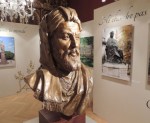
Paris hosted an exhibition devoted to the life and creativity of great Azerbaijani poet Nizami Ganjavi at the Museum of Letters and Manuscripts on November 12, 2013. The exhibition was held with the support of the Heydar Aliyev Foundation and the assistance of the Azerbaijani Embassy in France. Birth anniversaries of genius Azerbaijani masters of the word Nizami Ganjavi and Mahsati Ganjavi were celebrated in France with the support of the Heydar Aliyev Foundation.

Read More: Exhibition Devoted to Nizami Ganjavi Opens in Paris

Fotofest Brings Unprecedented Collection of Arab Photographic Art to U.S.

Fotofest 2014

Between Lord Byron’s ecstatic Orientalism, with its colorful harems and whirling dervishes, and the more recent Western views of the Middle East, with their mostly blinkered focus on images of conflict or rapturous oil wealth, the Arab world as seen and decoded by Arab eyes still seems amazingly absent from the Occidental gallery, especially the American one. The upcoming Fotofest photography biennial, which will take place in early 2014 in Houston, will offer Americans a serious opportunity to become familiar with this important and well-established body of work by contemporary Arab photographers.

Read More: Fotofest 2014 Brings Unprecedented Collection of Contemporary Arab Photographic Art to USA

O.M.G: Conceptual Photography Chronicles a Chaotic Culture

Bassem Samir

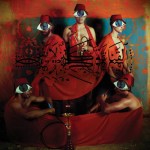
In his first solo exhibition, entitled O.M.G, which opened at Safarkhan Gallery, contemporary artist Bassem Samir showcases a collection of heavily stylised conceptual photographs addressing contemporary Egyptian culture and the state of chaos that pervades it.

Read More: O.M.G: Conceptual Photography Chronicles a Chaotic Culture

Paper Production Continues Traditionally at Museum in Turkey’s Yalova

Ibrahim Muteferrika Museum

Paper production still continues traditionally at the İbrahim Müteferrika Paper Museum, which was opened this year by the municipality in the northwestern province of Yalova. In an atelier established inside the museum, paper is produced with traditional methods by using tree branches, and visitors are also able to join in this process.

Read More: Paper Production Continues Traditionally at Museum in Turkey’s Yalova

End of the Dark Age is in Sight

National Museum Iraq

The directors of Iraq’s two main museums are hopeful that the day is in sight when their institutions will be open. The museums in Baghdad and Basra have been closed for more than two decades, depriving a generation of Iraqis of their heritage. Last month, during a visit to London, Amira Edan, the director of Iraq’s National Museum in Baghdad, told us that she hopes her institution will reopen to visitors next year. And Qahtan Al Abeed, the director of the Basra Museum, said that he expects his institution will open in the spring of 2015.

Read More: End of the Dark Age is in Sight

Sweden Surrenders Unique Ottoman Art

The Swedish National Museum has lost its appeal to keep a ‘unique collection’ of Turkish art from the 1700s in Sweden, as a court ruling opened the door for the London-based heir to sell off some 100 Ottoman portraits and landscapes piecemeal. The collection was pieced together by two brothers, sent to what was then Constantinople to represent Sweden. It includes portraits from the Ottoman court but also of landscapes, and was kept by the Celsing family in latter years at Biby Manour near Eskilstuna, in central Sweden.

Read More: Sweden Surrenders Unique Ottoman Art