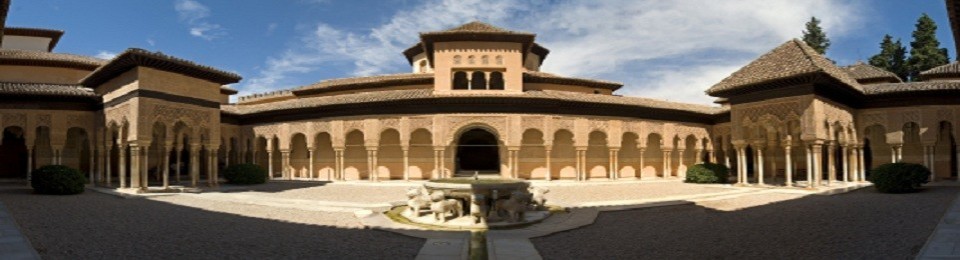
Hyperbolic Islamic Patterns: A Beginning

For more than a millennium, Islamic artists and craftsmen have used geometric patterns to decorate buildings, cloth, pottery, and other artifacts. Many of these patterns were ‘wallpaper’ patterns — they were planar patterns that repeated in two different directions. Recently related patterns have also been drawn on the Platonic solids, which can conceptually be projected outward onto their circumscribing spheres, thus utilizing a second of the three ‘classical geometries’. In this paper, Douglas Dunham extends this process by exhibiting repeating Islamic patterns in hyperbolic geometry, the third classical geometry.

Read More: Hyperbolic Islamic Patterns, by Douglas Dunham

Computer Generated Islamic Star Patterns

Islamic star patterns are a beautiful and highly geometric art form. Many analyses have been done of their complex structure and symmetries. In this paper, Craig S. Kaplan picks up one line of analysis based on placing stars and rosettes in a formation dictated by a tiling of the plane, and develops a software implementation of the technique. He then discusses the construction of the designs and shows some computer-generated results.

Read More: Computer Generated Islamic Star Patterns, by Craig S. Kaplan

Virtual Hagia Sophia: Restitution, Visualization and Virtual Life Simulation

In this paper, the authors present a case study centred on the virtual restitution and virtual life simulation of a highly complex and endangered heritage edifice: the church of Hagia Sophia, in Istanbul, Turkey. The paper aims to describe the techniques used in order to achieve a photo-realistic simulation of the selected space and its characters, as well as to point out the challenges and solutions that such a work implies at different stages in production. Most of these issues are mainly focused on the reconstruction of the architecture of the site, but in order to achieve an accurate simulation the social aspect must not be forgotten.

Read More: Virtual Hagia Sophia, by Foni, Papagiannakis and Magnenat-Thalmann

Nabil Nahas’s New Collection for Lawrie Shabib Gallery in Dubai

Nabil Nahas

After a particularly heavy storm in 1991, the artist Nabil Nahas took a walk along Southampton Beach in Long Island, New York, and found it littered with starfish, spewed out by the recently tumultuous sea. According to William Lawrie, who wrote an essay on the seminal Lebanese artist many years later, it was the turning point in his career. “Fascinated by the random composition they made against the wet sand, Nahas attached a starfish body to one of the panels of a diptych, itself part of the Circle series,” writes Lawrie. “This was a pivotal work and he knew it, thus entitling it Eureka.”

Read More: Nabil Nahas’s New Collection for Lawrie Shabib Gallery in Dubai

Waqas Khan: My Art Discovery of the Year

The breath of compassionate, 2012, Waqas Khan

It was only at the end of 2013 that I encountered my artist of the year. Waqas Khan showed a work at the Frieze art fair this year but, I’m sad to say, I missed it in the hubbub. It was only when I saw his sensational, visonary art in the Jameel Prize at the V&A that I fell head over heels for an artist who reveals the unstable contours of all things.

Read More: Waqas Khan

Islamic World Through Women’s Eyes

Women Photographers

Middle Eastern women, supposedly powerless and oppressed behind walls and veils, are in fact a force in both society and the arts. They played a major role in the Arab Spring and continue to do so in the flourishing regional art scene — specifically in photography — which is alive and very well indeed. Some Middle Eastern photographers have taken their cameras to the barricades, physical ones and those less obvious, like the barriers erected by stereotypes, which they remain determined to defy. The Museum of Fine Arts, Boston, takes note in She Who Tells a Story: Women Photographers From Iran and the Arab World, an ambitious and revealing exhibition of work by 12 women, some internationally known.

Read More: Islamic World Through Women’s Eyes

See also: Behind the Veil and The Middle East Through Women’s Cameras

The Spiritual Legacy of Multan Preserved in a Book

Multan

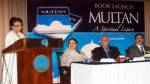
Chahar cheez ast tohfa-e-Multan. Gard, garma, geda-o-goristan. (With four special gifts Multan abounds. Dust, heat, beggars and burial grounds). This famous Persian saying sums up Fauzia Husain Qureshi’s journey with her book Multan – A Spiritual Legacy. And that is exactly how she described it at the book launch held on Friday [20 December] at the Royal Palm Golf and Country Club.

Read More: The Spiritual Legacy of Multan Preserved in a Book

Resonance of Heritage: Silent for Years, Kafi Music to be Heard Again

Kafi music

Kafi, a distinctive genre of Sindhi poetry in the past, finds its enthusiasts petering out day by day much to the chagrin of its bastion. Superseded by modern forms of singing and music, kafi writers have vanished as dramatically as its listeners. “While we were documenting Sughars (traditional Sindhi folk narratives) around Sindh, we found that the art of writing and singing kafi is becoming extinct,” said Dr Fehmida Hussain, chairperson of the Sindhi Language Authority (SLA).

Read More: Resonance of Heritage: Silent for Years, Kafi Music to be Heard Again

Threshold To History

Ark door

We know when the walnut tree used to build the wooden ark for the Ben Ezra synagogue in Cairo was cut down. Through carbon tracing, researchers have determined the date sometime after 1043. And researchers have also shown that the ark was first used in the 1080s and restored and redecorated over time. What remains a mystery is how this medieval carved door ended up in storeroom of a Fort Lauderdale auction house in the late 20th century.

Read More: Threshold to History

See also: The Arc of a Rare Ark Door

Against Hatred: ‘Shadow Art’ Aims to Enlighten Many Hearts

Tusif Ahmed

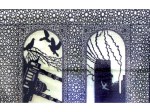
Reminiscent of an ancient culture, the fine art of paper cutting has been resurrected by a contemporary Australian artist who showcased his work at the Nomad Centre and Art Gallery on Monday [23 December]. Titled Shadow Art the exhibition of Tusif Ahmed’s work features a total of 19 pieces of Islamic art rendered in the traditional folk art of paper cutting, which evolved around 2,000 years ago in China and then travelled to Central Europe via the Silk Route, notably evolving with strong regional variations in Austria, Poland and Germany.

Read More: Against Hatred: ‘Shadow Art’ Aims to Enlighten Many Hearts

Imran Qureshi Designs Pocket Tube Map for 150th London Underground Anniversary

Imran Qureshi 3

The final art commission of London Underground’s 150th anniversary year has been revealed. It is the new edition of the Pocket Tube map released in time Christmas, which will have a cover by Imran Qureshi commissioned through Art on the Underground. Possibly one of the most widely viewed art commissions in the world, 12 million copies are distributed throughout the London tube network. For his cover artwork, entitled All Time Would be Perpetual Spring, Qureshi has used the techniques of traditional Mughal miniature painting from his native Pakistan to present an intricate floral design for each line on the network, inspired by their distinct colours.

Read More: Imran Qureshi Designs Pocket Tube Map for 150th London Underground Anniversary

Why The Body in Indian Art and Thought Exhibition is Unique

Radha Krishna

The heady mix of sensuality and religion that defines so much of Indian art often confuses and even alarms western viewers when they first encounter it. The sacred and the sensuous rub shoulders in an intimate manner that seems strange to sensibilities that have been trained to see art through the lenses of a tradition rooted in Christian attitudes to sexuality and religion: why, we wonder, would a monastery built for celibate Buddhist monks be decorated with images of beautiful, half-naked palace women? How could it be appropriate to cover the exterior walls of a religious building with graphically copulating couples?

Read More: Why The Body in Indian Art and Thought Exhibition is Unique

See also: Show of Indian Treasures Explores the Contradictions of the Corporeal

Cleveland Museum of Art Lands a Major Trove of Mughal and Deccan Court Paintings

Cleveland Museum of Arts

A major collection of Indian paintings assembled on the West Coast has come to Cleveland. Just in time for the completion of its eight-year, $350 million expansion and renovation, the Cleveland Museum of Art announced its purchase of a rare and highly regarded collection of 95 paintings from the Islamic royal Deccan and Mughal courts.

Read More: Cleveland Museum of Art Lands a Major Trove of Mughal and Deccan Court Paintings

Show of Indian Treasures Explores the Contradictions of the Corporeal

Body in Indian Art exhibition

An exploration of The Body in Indian Art and Thought throughout history is akin to a study of the atom in physics – there’s no getting away from it. The fecund eroticism of Indian goddesses, their feet planted on dusty earth as their bosoms heave, is only the beginning. But the exhibition of Indian treasures now mounted at the Musee des Beaux Arts in Brussels as part of the Europalia festival takes on this sweeping theme unabashedly.

Read More: Show of Indian Treasures Explores the Contradictions of the Corporeal

Reasserting Another Past

Komail Aijazuddin 2

Komail Aijazuddin’s paintings are not perfect as far as the level of drawing is concerned; there is a lot of repetition of theme and most surfaces are under-painted. But these works do indicate an aspect of our existence that has been easily forgotten. One finds human bodies placed against Islamic geometric patterns, both ending in drips. These figures vary in terms of their identity — ranging from divine deities to ordinary characters from around us.

Read More: Reasserting Another Past

An Interview with Sophie Makariou

Sophie Makariou

Sophie Makariou has recently been named Director of the Guimet Museum of Asian Art in Paris. In her new role, Makariou, who has served as Curator of Islamic Arts at the Louvre and was Director of its Oriental Department, will be expected to focus on the management of the museum’s collections and acquisitions. She will also attempt to increase the institution’s international visibility with the accent on the relationship between France and Asia. At present the Indian collection, despite boasting a few remarkable early pieces, is rather limited. In this exclusive interview, Sophie Makariou talks about her plans for the Museum’s future.

Read More: An Interview with Sophie Makariou

Crumbling Historic Madinah Mosques Need Repair

Muslims walk in Al-Masjid al-Nabawi, before the afternoon prayer in the holy city of Medina

Many historic mosques in Madinah are in need of urgent repair, maintenance or complete reconstruction to preserve and keep them intact for many years to come, local daily Al-Madinah reported Monday [December 16th] quoting a noted Saudi historian. “These mosques are part of our history. They need skilled people who use state-of-the-art technology in their work to repair them,” Dr. Tinaidib Al-Faydi said.

Read More: Crumbling Historic Madinah Mosques Need Repair

Iran’s Verdant North is Home to Some Fine Historic Castles

Ismaili castles

Iran is a country split in two; the Alborz mountains north of Tehran divide the lower section of the Islamic Republic, made up largely of deserts, from the green and wet top corner bordering Turkey, Azerbaijan and Armenia. The four-hour drive from the capital Tehran to Rasht takes us through the range of peaks to the edge of the Caspian Sea, then inland to the hills on the outskirts of Rasht. As you move further north, the temperature drops and the air gets heavier as the humidity increases. The Caspian coast has long been an escape for Tehranis during the hotter months in the middle of the year.

Read More: Iran’s Verdant North is Home to Some Fine Historic Castles

Oxford and Cambridge Universities Buy Lewis-Gibson Genizah Collection

Lewis-Gibson Genizah collection

A fundraising appeal by Oxford and Cambridge universities to buy a collection of 1,000-year-old Hebrew and Arabic manuscripts has been successful. The universities raised £1.2m to buy The Lewis-Gibson Genizah Collection from the United Reform Church’s Westminster College. The collection is made up of 1,700 document fragments saved from Cairo’s Ben Ezra Synagogue.

Read More: Oxford and Cambridge Universities Buy Lewis-Gibson Genizah Collection

It’s Time We Bury ‘Orientalism’ in Jerusalem’s Museum of Islamic Art

Orient Express LA Mayer Museum

One of the most wonderful aspects of “Orient Express,” the brilliant exhibition of works by Nevet Yitzhak at Jerusalem’s L.A. Mayer Museum for Islamic Art, is the resounding answer she gives to the superficial, cliché-filled discourse on Islamic art. It is a discussion that defines Islamic art as a “rich, ancient, much respected culture” in a generalized manner that, as it declares the wealth of ancient Islam, presents Islamic art as homogeneous, monolithic and bereft of any nuances.

Read More: It’s Time We Bury ‘Orientalism’ in Jerusalem’s Museum of Islamic Art

Turkish Fashion Label Wins Prestigious Jameel Islamic Art Prize

Jameel Prize 2014

The Turkish fashion label Dice Kayek on Tuesday won the Jameel prize at London’s Victoria and Albert Museum, which honors contemporary art inspired by Islamic tradition. The 25,000-pound ($41,100) international prize, which is awarded every two years, has Iraqi-British architect Zaha Hadid as patron, and this year’s judges included Thomas Heatherwick, designer of the London Olympic Cauldron.

Read More: Turkish Fashion Label Wins Prestigious Jameel Islamic Art Prize

Amid Civil War, A Battle to Preserve Syria’s Historical Heritage

Syria historical heritage

More than 5,000 years ago, an army from the Mesopotamian city state of Uruk marched north and destroyed a prosperous rival city, Hamoukar, using slings and clay projectiles to massacre residents before burning it to the ground. Archaeologists say the battle was perhaps the first instance of large-scale, organised warfare in human history, and it occurred in a corner of north-east Syria that, millennia later, is again soaked in blood as the country’s civil war grinds on. Besides claiming more than 120,000 lives since March 2011, the war has taken a heavy toll on Syria’s rich historical heritage.

Read More: Amid Civil War, A Battle to Preserve Syria’s Historical Heritage

Mughal Bridge Still Stands Tall Over Bara River

Mughal bridge

The Chuha Gujar Bridge stands above Bara River and near the Chuha Gujar village. A Mughal-era construction probably built during Shah Jehan’s rule in 1629, the bridge is 100 yards long and six yards wide with six-foot tall pillars on each side. The pillars are topped with beautiful domes which add to the grandeur of the bridge. Two of the domes, however, have fallen off. As is typical of Mughal architecture, there are 12 arched tunnels or water ways running under the bridge.

Read More: Mughal Bridge Still Stands Tall Over Bara River

Viewing Islamic Arts Museum Exhibits on Smartphones

IAMM exhibition

Arts enthusiasts can now watch exhibits in Islamic Arts Museum Malaysia (IAMM) on their smartphones. Prime Minister Datuk Seri Najib Tun Razak, who attended IAMM’s 15th anniversary celebration last night [December 9, 2013], commended the museum for using mobile apps to give easy access to Islamic artworks. He said offering mobile access was an ingenious way of attracting attention in the age of distraction. IAMM director Syed Mohamad Al-Bukhary said IAMM is the first museum in the country to provide gallery guide mobile application for smart phone users.

Read More: Viewing Islamic Arts Museum Exhibits on Smartphones

Unearthed: Incredible 10th Century Israeli Estate and Fountain with Its Plumbing Still Intact

Fatimid house in Ramla 2

The plumbing for a fountain that would have decorated a wealthy Israeli family’s garden in the 10th century has been found intact, proving workmen of the time built pipes to last. It is the first time the plumbing of a decorative fountain from this period has been found almost complete outside the wealthier districts of Old Ramla, shedding light on the ingenious methods used to create water features in elaborate villas at the time. The fountain, which is described as ‘in an excellent state of preservation,’ was unearthed in Ramla, central Israel, and was discovered during preparations for the construction of a bridge as part of a new highway scheme.

Read More: Unearthed: Incredible 10th Century Estate and Fountain with Its Plumbing Still Intact

See also: Remains of a 900 Year Old Estate Discovered by Archaeologists