Islamic, Pharaonic Items Returned to Egypt from Denmark and France

Artefacts returned to Egypt

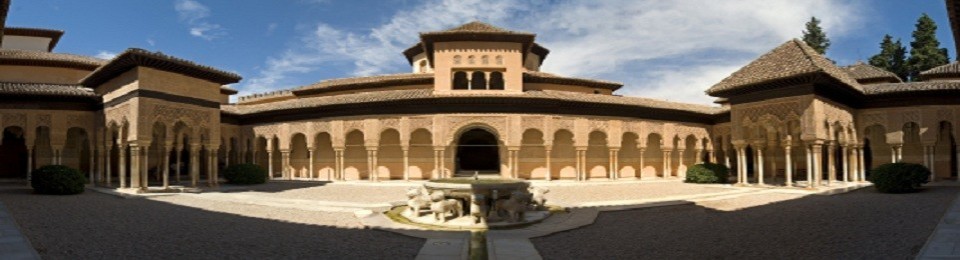
Two shipments of stolen Egyptian artefacts spanning the eras of the pharaohs and the Mamluks have been returned to Egypt, thanks to efforts from diplomatic officials. The first consists of eight Islamic wooden art decorations stolen in 2008 from the pulpit of Ghanim Al-Bahlawan Mosque in Al-Darb Al-Ahmar in Cairo’s historic Islamic district. Ghanim Al-Bahlawan Mosque, named after the Circassian Mamluk, was constructed in 1478 AD during the reign of Sultan Qait Bey. The decorative items depict geometrical patterns embellished with ivory.

Read More: Islamic, Pharaonic Items Returned to Egypt from Denmark and France

See also: Good Fortune Helps Egypt Recover Its Stolen Heritage
Non-traditional Artwork: Two Artists Showcase Contemporary Calligraphy, Paintings

Alfaaz

An exhibition of contemporary calligraphy and paintings opened up at My Art World gallery on Monday. Titled Alfaaz, the exhibition features artworks by Rabia Malik and Mahjabeen Atif, with each artist exhibiting nine pieces. Unlike most run-of-the-mill, traditional calligraphy pieces, the artwork on display is a combination of contemporary styles and techniques and in some places they comprise only the Arabic alphabet that may or may not make up actual words. This lends the collection an open-ended feel. However, the intertwined scripts, intricate detailing and symbolism make for a visually-appealing mix.

Read More: Non-traditional Artwork: Two Artists Showcase Contemporary Calligraphy, Paintings

The Art of the Matter

Raya Wolfsun

Raya Wolfsun talks and words flow into multi-directional thoughts with the fluidity of mercury on a table. You try to catch them so as to apportion them into comprehensible slots of the conventional. But they escape. Then, she smiles and asks, “You want to know how I brand myself, right?” That fluidity also speaks for how Wolfsun treats her passions. She calls herself an artist and a scholar and reasons that those roles are quite interlinked. “I wish there was a word that could integrate both, because to me, they are heavily intertwined. In fact, all my life, it’s been strange for me to try to be one or the other,” she says. An expert in Islamic astrolabes, Wolfsun has spent many a day marvelling at the impressive collection of astrolabes at the Museum of Islamic Art, and poring over several books at the MIA library on the subject.

Read More: The Art of the Matter

Qatar’s National Museum Eyeing 2016 Opening

Qatar National Museum

Despite a minor fire last month, construction for Qatar’s upcoming National Museum remains on track, and an opening date is scheduled for 2016, Qatar Museums has confirmed. When completed, the museum, located across from the Corniche near the Museum of Islamic Art, is expected to look like a desert rose that appears to grow out of the ground. It will join Qatar’s growing collection of cultural facilities, including the MIA, which opened in 2008, and the Arab Museum of Modern Art (Mathaf), which saw a 2010 launch. Late last year, Sheikha Amna bint Abdulaziz bin Jassim Al-Thani was appointed as the museum’s director.

Read More: Qatar’s National Museum Eyeing 2016 Opening

Creations Reflecting the Conflict in Syria

Syria's apex generation

Ayyam Gallery’s latest show, Syria’s Apex Generation, puts the spotlight on a new school of Syrian painting that developed in Damascus, and continues to thrive despite the disintegration of the art scene in the city. The multiple-venue show, spread across Ayyam’s two spaces in Dubai and in Beirut features recent works by Nihad Al Turk, Abdul Karim Majdal Al Beik, Othman Mousa, Mohannad Orabi, and Kais Salman. It explores the myriad ways a new generation of artists is responding to the current conflict in Syria, marking a new phase in Syrian contemporary art. But it also looks at how these artists are carrying forward the legacy of the artists who shaped Syrian visual culture for over 60 years.

Read More: Creations Reflecting the Conflict in Syria

A Hidden World in the Shadows

Don't Trust your eyes

The calligraphic sculptures created by Bassam Al Selawi and Maysoon Masalha look deceptively simple. But when the lights in the gallery are dimmed and the spotlights switched on, a surprising fourth dimension is revealed. The shadow cast by each wall-mounted sculpture is a figure or words related to the feelings evoked, or the mental images conjured by the words on the sculpture itself. The latest show by the Jordanian couple, Don’t Trust Your Eyes includes shadow sculptures featuring verses from the Quran and poetic phrases, with the shadows sometimes illustrating the emotions embodied by the words, and sometimes telling quite another story.

Read More: A Hidden World in the Shadows

Sweet Essence of Iran

Rose and Nightingale

The ‘rose and the nightingale’ is a theme that has been used in Persian literature and visual imagery for centuries. The rose represents beauty, perfection and a sometimes self-absorbed and cruel beloved. And the nightingale symbolises the devoted lover yearning to become one with the beloved. The theme can thus be interpreted as a metaphor for both earthly and spiritual love. Curator Maneli Keykavoussi explores modern interpretations of this age-old theme in a group show titled The Rose and the Nightingale: A Persian Iconography by bringing together works by pioneers of Iranian modern art such as her mother, the late Farideh Lashai, and Farshid Mesghali and well-known Iranian artists such as Amin Roshan, Rozita Sharafjahan, Dariush Hosseini, Ladan Boroujerdi, Navid Azimi Sajadi, Masoumeh Bakhtiari, Farid Jafari Samarghandi, Gizella Varga Sinai, Rasool Soltani and Sara Rahanjam.

Read More: Sweet Essence of Iran

Symmetry Inspired by Architecture

Kamal Boullata

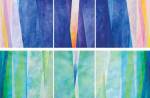
Arab artist Kamal Boullata was born in Occupied Jerusalem in 1942, but has lived in exile in America and Europe since he was 18. Despite his Western art education, he has kept in touch with his roots by doing extensive research on Islamic and Modern Arab art, and has written several essays and books on Islamic, Byzantine and Palestinian art. His latest body of work, Bilqis, named after the queen of Sheba, seamlessly combines Western and Islamic abstraction. The series, comprising five triptychs is inspired by the Quranic legend of the queen’s visit to the court of King Solomon, where she mistook the glass floor for a sheet of water and lifted up her skirt to avoid getting it wet. The paintings are essentially about recreating the transparency and spatial ambiguity in visual perception that the queen had experienced.

Read More: Symmetry Inspired by Architecture

A Labour of Love

A labour of love

It is obvious from the artworks in Ramin Shirdel’s first solo exhibition in Dubai, Whispers of Love, why the Iranian artist is also an award-winning architect. Shirdel’s three-dimensional wall-mounted works have been created from hundreds of painted pieces of wood of different shapes and sizes. These have been assembled together in layers that further combine to form Farsi-Arabic letters and words. The artworks, painted with bright automotive paints, look different from different angles. As you move around the pieces, the letters and words appear and disappear. And the layers seem to move in a rhythmic, wave-like motion, with the criss-crossing lines formed by the shadows adding to the movement and drama.

Read More: A Labour of Love

ASI Finds Remains of Shah Jahan’s Summer Palace Opposite the Taj

In an interesting discovery following excavations carried out by the Archaeological Survey of India (ASI) recently, remains of a summer palace have been reportedly found at the centuries-old Mughal-era garden Mehtab Bagh located opposite the Taj Mahal. The garden was reputedly Shah Jahan’s favourite spot which he used to frequent to get a view of the Taj Mahal at night, hence its name (Mehtab means moonlight in Urdu).

Read More: ASI Finds Remains of Shah Jahan’s Summer Palace Opposite the Taj

The World as Scripted in Persia

A thousand years of the Persian book

‘There is, in fact, no subject to which a Member of Congress may not have occasion to refer.” Thomas Jefferson penned these words on Sept. 21, 1814, just weeks after British troops had set fire to the U.S. Capitol, reducing its library to ashes. Jefferson had compiled a personal library over 50 years and was now exploring selling much of it to the government to replace Congress’s — and the nation’s — loss. Lest anyone think the books’ range too broad for politicians, Jefferson argued, “I do not know that it contains any branch of science which Congress would wish to exclude from their collection.” Two centuries later, a series of exhibitions illustrates the extent to which the Library of Congress has embraced Jefferson’s philosophy. After shows that highlighted American, Armenian and Hebraic books, we now have A Thousand Years of the Persian Book.

Read More: The World as Scripted in Persia

Salarjung Museum to Have Separate Section on Islamic Art

Salarjung Museum

The recent surge in interest in Islamic art and artefacts has kindled the Hyderabad’s famous Salarjung Museum to separately house a section on Islamic Art. Work is going on in full steam and The Islamic Art Gallery is expected to  be completed in one year’s time. Speaking exclusively to Times of Oman, Nagender Reddy, director of the Salarjung Museum, said:  “The Islamic Art section to be housed on the second floor of the Far Eastern building in the Salarjung Museum  will exhibit all  the Islamic-related collectibles that are showcased in different galleries of the museum.”

Read More:  Salarjung Museum to Have Separate Section on Islamic Art

Paris and the Hajj

Paris and the Hajj exhibition

This year’s spring show at the Institut du Monde Arabe in Paris is dedicated to the Muslim hajj, or major pilgrimage, that takes place every year in the Muslim month of Dhu al-Hijjah and is one of the “pillars,” or obligatory duties, of Islam. Spread across two floors of the Institut’s temporary exhibition spaces, the exhibition is an ideal opportunity for Paris residents and visitors to the French capital to learn more about the history of the hajj and its contemporary character. The exhibition, entitled Hajj, le pèlerinage à la Mecque, contains several hundred pieces illustrating the history of the hajj, among them objects used by pilgrims through the ages, historical accounts, and pieces taken from collections in Mecca itself.

Read More: Paris and the Hajj

Early Islamic Textiles to Feature Rare Fabrics at Royal Ontario Museum

Picture 29743

Cairo Under Wraps: Early Islamic Textiles, a Centennial exhibition opening at the Royal Ontario Museum (ROM) on June 21, 2014, highlights the ROM’s collection of early Islamic textiles, dating largely from the 8th to 12th centuries. More than half of the exhibition’s approximately 80 fabrics are on public display for the first time and many of the oldest were collected by C.T. Currelly, the ROM`s founding director. These rare, delicate objects are displayed alongside ceramics, glass, metalwork and coins from the ROM’s permanent collection of Islamic art.

Read More: Early Islamic Textiles to Feature Rare Fabrics at Royal Ontario Museum

Bucharest ‘Khans’ Reborn After Decades of Neglect

Bucharest Khans

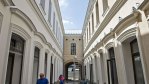
Sweaty merchants have given way to trendy tourists and horses to flashy cars, but oriental-looking “khans” in the heart of Bucharest are getting a new lease on life after marathon restoration works. Similar to the caravansaries that once dotted the Persian and Ottoman empires, roadside inns known as khans flourished in the 18th and 19th centuries in Romania, as the country at the crossroads of East and West attracted merchants from across Europe. The fortified structures built around a square courtyard comprised trader stalls, stables, and accommodation on the upper floor.

Read More: Bucharest ‘Khans’ Reborn After Decades of Neglect

Haunted Spaces: Photographs Explore the Arab Female Identity

Laila Essaydi

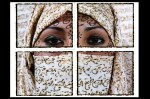
For the past six years, Moroccan-born photographer Lalla Essaydi has labored over a body of photographs made in a large, unoccupied home in her native country. She splits her time between Morocco and the U.S., transporting materials ranging from fabrics to bullet castings to a property owned by her family. The house is not just a distant studio space, though; it is a vital part of the narrative in Ms. Essaydi’s images that explore the Arab female identity. The vacant family home where her photographs are made once served as disciplinary space, where a young woman was sent when she disobeyed by stepping beyond the “permissible space.” The woman would spend a month alone in the house, where she was not spoken to by anyone, including the servants who were her only company.

Read More: Haunted Spaces: Photographs Explore the Arab Female Identity

Pembroke’s Shahnameh Centre for Persian Studies

Pembroke Centre for Persian Studies

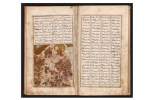
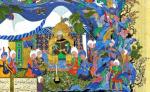
“Being originally from Russia, working on this project with the British, I realise we are sort of the worst possible candidates from the Iranian point of view to organise the preservation of Persian culture.” Dr Firuza Abdullaeva gives a self-deprecating smile to a chorus of knowing chuckles. As Head of Pembroke College’s Shahnameh Centre for Persian Studies, inaugurated this Saturday [24 May 2014], Dr Abdullaeva has every reason to smile.  The Shahnameh Centre is the culmination of a project founded by Professor Charles Melville in 1999, and despite the superfluous ghosts of old wrongs, any misgivings could be formed only in error.

Read More: Pembroke’s Shahnameh Centre for Persian Studies

The Art of Islam

Keir Collection in Dallas 5

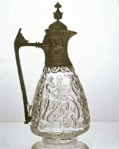
On May 22, The Dallas Museum of Art announced the presentation of the first work of art from the rarely shown Keir Collection, now on view at the Museum. The DMA announced in February the 15-year renewable loan of one of the largest private holdings of Islamic art. The Keir Collection is recognized by scholars as one of the world’s most geographically and historically comprehensive, encompassing almost 2,000 works, in a range of media, that span 13 centuries of Islamic art making. The carved rock crystal ewer from late 10th- to 11th-century Fatimid Egypt (969–1171), on view beginning May 27 in a special installation on the Museum’s third level, is considered one of the wonders of Islamic art.

Read More: The Art of Islam

A New Awareness of Conservation

Saudi Arabia conservation

The destruction in recent years of much of old Mecca, which dates back to the Ottoman empire and earlier, has aroused protests in the artistic community and beyond. It has been estimated that since 1985 about 95% of Mecca’s historic buildings have been demolished. Now, however, the Saudi government is investing money in renovating around 30 of the country’s ­museums, and religious buildings in Mecca and Medina.

Read More: A New Awareness of Conservation

The Kingdom to Spend $1.7bn on Building 230 Museums

Saudi Arabia 2

The government of Saudi Arabia is spending more than $1.7bn on building 230 new museums as part of a programme to promote the country’s culture. At a conference held in Oxford early in April, entitled “Green Arabia”, the influential HRH Prince Sultan bin Salman bin Abdulaziz Al Saud, nephew of King Abdullah and president of the Saudi Commission for Tourism and Antiquities (SCTA), said, “We have entered a new age; we have transitioned. Antiquities are the seat of a continuum to bring the life and history of Saudi Arabia closer to the hearts and minds of the people of the Kingdom — particularly the young.”

Read More: The Kingdom to Spend $1.7bn on Building 230 Museums

The Might of Oil Flows into Culture

Saudi Aramco initiative

In March, at the Art Dubai fair, Saudi Aramco, the hugely powerful oil and natural gas company whose headquarters in Dhahran represent almost a kingdom within the Kingdom, announced further details of a cultural centre under ­construction. The King Abdulaziz Center for World Culture, named after Saudi Arabia’s first monarch, is to open in late 2015 and, according to Laila Hussain Al-Faddagh, the contemporary Middle Eastern art co-ordinator for Saudi Aramco, it will offer visitors an experience “unlike anything seen before in the Kingdom”.

Read More: The Might of Oil Flows into Culture

Why the De Unger Family Decided to Move the Keir Collection from Berlin to Dallas

Keir Collection in Dallas 4

The first object from the Kier Collection, a trove of Islamic Art that includes nearly 2,000 objects and will be on a 15-year renewable loan with the Dallas Museum of Art, was unveiled at the museum this morning. The rock crystal ewer is an exquisitely crafted pouring vesicle that dates back to the courts of Fatimid Egypt in the late 10th century. Carved from a single stone, the object is the work of virtuosic skill, its delicate translucent container as thin as 1 mm in sections. The face of the ewer features an inlaid design, twisting vines which frame the profile of a cheetah, its back arched, eyes peering outwards. Carved from silica mineral quartz, it is one of only seven objects in the world that features a stone this large, and it is the cornerstone of the collection that is coming to Dallas.

Read More: Why the De Unger Family Decided to Move the Keir Collection from Berlin to Dallas

Persian Classical Music Mourns a Master

Mohammad Lotfi

The recent death of Iranian master musician Mohammad Reza Lotfi (1947-2014) on May 2 at the age of 68 marks a crucial turning point in the history of classical Persian music and its spectacular rise and fall as a performing public art. Lotfi was a Tar and Setar virtuoso who had collaborated with prominent Iranian vocalists Mohammad Reza Shajarian, Shahram Nazeri, and others and along with a handful of other master musicians of his generation had transformed Persian music from its slumbering, sedate and secluded courtly and mystical milieu into a massive scale public and vastly popular art form. It is impossible to imagine the social history of Iran of the last half a century and through the thick and thin of a cataclysmic revolution and a bloody war without thinking of the definitive presence of classical Persian music as reconceived by Lotfi’s generation of master musicians.

Read More: Persian Classical Music Mourns a Master

MF Husain’s ‘Last’ Works

MF Husain

At 93 years of age, MF Husain could have been forgiven for calling it a day. But when he sought exile from India in 2006 — on account of the vandalisation of his works and the stress of presenting himself in small-town courts all over India, where cases of obscenity had been filed to harass him for having had the temerity to paint goddesses in the nude — he sought not retirement but revalidation. And that came easily for, arguably, India’s most popular artist. In spite of his advanced age, the royal family of Qatar commissioned him to paint an epic series on the Arabic civilisation for the Museum of Islamic Art in Doha. And in London, the Mittal family — which had gifted the city the controversial ArcelorMittal Orbit ahead of the Olympic Games —s eized the opportunity to ask him to paint a tribute to Indian civilisation.

Read more: MF Husain’s ‘Last’ Works

Ottoman Manuscripts Displayed in Tirana, Albania

Ottoman civilization in the Balkans

The Ottoman Civilization in the Balkans exhibition in Tirana, where 20 historical documents from the 15th and 20th centuries were brought together, was organized by the Yunus Emre Institute and Tirana National Museum. The exhibition’s opening ceremony was attended by Turkish ambassador to Tirana, Hidayet Bayraktar, as well as many scholars, politicians and other distinguished invitees.

Read More: Ottoman Manuscripts Displayed in Tirana, Albania