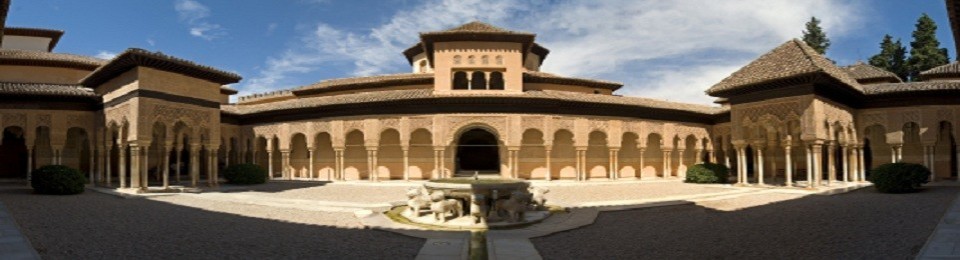
 Noted Iranian theatre director Behrouz Gharibpour will stage his Hafez Puppet Opera during the forthcoming Fajr International Theatre Festival.
Read More: Behrouz Gharibpour
22 Tuesday Jan 2013
Posted in Theatre - Iran
Noted Iranian theatre director Behrouz Gharibpour will stage his Hafez Puppet Opera during the forthcoming Fajr International Theatre Festival.
Read More: Behrouz Gharibpour
22 Tuesday Jan 2013
Posted in Archaeology - Turkey
 Turkey has been accused of cultural chauvinism and attempting to blackmail some of the world’s most important museums in the wake of its demands for the return of thousands of archaeological treasures.
Read More: In Pursuit of Its Archaeological Treasures
22 Tuesday Jan 2013
Posted in Photography - Central Asia
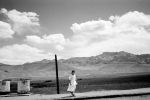 Anyone who’s traveled in the vast open spaces of Central Asia has heard it, or seen it plastered on roadside monuments punctuating long stretches of highway: Ak Jol in Kazakh and Kyrgyz and Oq Yol in Uzbek. “White Road.” It means something like “safe journey” or “have a good trip.” The refrain, which is the title of this new book, marks the places in-between, the places where photographer Ivan Sigal found himself constantly between 1998 and 2005 – a traveler in a region on the move, a region searching for work, and meaning, in a vacuum as wide as the steppe.
Read More: Ivan Sigal
22 Tuesday Jan 2013
Posted in Cinematography - Afghanistan
 American films about Afghanistan have had a good run at the Oscars lately. Both 2011’s Hell and Back Again and 2010’s Restrepo earned Best Documentary nominations for their harrowing looks at troops under fire. And this year, another U.S.-directed film on Afghanistan is in the hunt for a nod from the Academy Awards, but it’s fictional, it’s not about war, and it doesn’t feature any Americans. It is, however, the first of its ilk to feature dead livestock in a central role. Buzkashi Boys, one of eleven live-action short films to make the Academy’s short list, is the scripted tale of two boys in Kabul who dream of playing the Afghan national sport of buzkashi, which is kind of like polo, played atop horses, but with a headless, disemboweled goat carcass as the ball.
Read More: Buzkashi Boys
22 Tuesday Jan 2013
 Exploring the history and significance of the annual Muslim pilgrimage to Mecca, the British Museum organised, in January 2012, a major exhibition titled Hajj: Journey to the Heart of Islam. In this essay, published in April 2012, Christopher de Bellaigue, provides a review of the exhibition and accompanying catalogue.
Read More: Journey to the Heart of Islam
22 Tuesday Jan 2013
Posted in Gardens - Iran
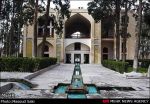 Completed around 1590 CE by the Safavids, the Bagh-e Fin – the oldest surviving garden in Iran – features the typical design of crossed water rills, the water being drawn from the mountains via an underground system of quanats.
Read More: Bagh-e Fin
21 Monday Jan 2013
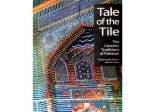 On the surface, Tale of the Tile: The Ceramic Traditions of Pakistan is simply an exploration of ceramic architectural embellishment, an art form that is slowly fading into obscurity. However, a closer study reveals that amidst the glossy pages filled with nearly five hundred striking photographs, Abdul Hamid Akhund and Nasreen Askari have skillfully woven in threads of deeper social commentary.
Read More: Tale of the Tile
21 Monday Jan 2013
Posted in Publications - New - Textiles
 Saffronart, India’s leading auction house for art and collectibles hosted the launch of the book Kashmir Shawls: The TAPI Collection, authored by internationally reputed textile scholars Steven Cohen, Rosemary Crill, Monique Lévi-Strauss and Jeffrey B. Spurr. This book is the latest in a series of publications based on the TAPI Collection’s important holdings of historic Indian textiles.
Read More: Kashmir Shawls
21 Monday Jan 2013
 From July 3rd to September 22nd, 2013, Tate Modern will present the UK’s first major exhibition of Sudanese artist Ibrahim El-Salahi (b. 1930). Bringing together 100 works from across more than five decades of his international career, this retrospective will highlight one of the most significant figures in African and Arab Modernism, and reveal his place in the context of a broader, global art history.
Read More: Major Exhibition of Sudanese Artist Ibrahim el-Salahi
21 Monday Jan 2013
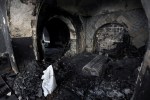 A mausoleum in Sidi Bou Said, Tunisia, has been ravaged by fire in what is thought to have been an arson attack which the presidency denounced as a criminal act. Several shrines dedicated to Muslim saints have been torched or looted in recent months in Tunisia.
Read More: Mausoleum in Sidi Bou Said
21 Monday Jan 2013
Posted in Music - Pakistan
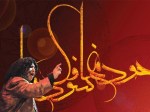 I am waiting to meet Abida Parveen. More than 100 interviews in my portfolio as a journalist, and I am as nervous as a rookie as I sit in the ‘Abida Parveen Gallery’ in F-10, Islamabad, waiting to be taken to her adjoining house. I am nervous because of the power of this performer and of the words that seem to speak themselves through her.
Read More: Abida Parveen
21 Monday Jan 2013
Posted in Photography - International Festival
 There are well over a hundred photo festivals around the world, and new ones pop up almost daily. Many claim to be international, usually exhibiting a few local photographers alongside some international — read Western — photographic luminaries. What sets apart the Chobi Mela International Festival of Photography in Dhaka, Bangladesh, is that it is not only truly international, but is also perhaps the world’s most demographically inclusive festival. Running this year from January 25th through February 7th, it will feature photographers from 23 countries, with a focus on photography from China, Russia, Nigeria, Latin America and the Middle East as well as Bangladesh.
Read More: Photo Festival Builds Bridges
21 Monday Jan 2013
Posted in Artists - Middle East
 Shurooq Amin is a Kuwaiti-Syrian artist, poet, and professor at Kuwait University. In two recent art exhibitions, It’s a Man’s World and Society Girls, Amin has explored themes of gender, identity, duality, religion, and hypocrisy in Middle Eastern and Arab societies. Her colorful mixed-media tableaux depict Kuwaitis in trendy clothes lounging, smoking hookah, and playing cards, their faces all eerily erased.
Read More: Masked Faces, Censored Hopes
21 Monday Jan 2013
Posted in Arts - Turkey - Istanbul
 Istanbul’s contemporary art scene is enjoying a moment, thanks to a rash of art fairs, dozens of exhibition spaces funded by the corporate sector and private investors and new-found recognition for Turkish artists overseas.
Read More: Burgeoning Art Scene in Istanbul
20 Sunday Jan 2013
 The manipulation and vulnerability of images are the central themes in Light From the Middle East, a thoughtful and layered photography exhibition at the Victoria and Albert Museum, London, through April 7th 2013.
Read More: Familiar Transformed with the Unexpected
20 Sunday Jan 2013
Posted in Exhibitions - North America
 Islamic masterworks from Kuwait’s renowned al-Sabah Collection will be exhibited, beginning January 26th 2013, at the Museum of Fine Arts, Houston as part of a long-term collaboration with the cultural institution Dar al-Athar al-Islamiyyah (DAI). The privately held al-Sabah Collection is one of the greatest collections of Islamic art in the world, and the partnership initiates a historic exchange of objects, staff, and expertise.
Read More: Al-Sabah Collection
20 Sunday Jan 2013
Posted in Exhibitions - North America
 The Iris and B. Gerald Cantor Art Gallery at the College of the Holy Cross will feature an exhibition of Southeast Asian textiles titled Transnational Ikat: An Asian Textile on the Move from January 24th to March 1st, 2013.
Read More: Exhibition on Southeast Asian Textiles
20 Sunday Jan 2013
Posted in Exhibitions - North America
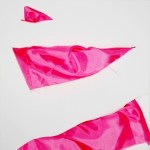 On January 1st 2013, the Virginia-based Hermitage Art Gallery rang in the New Year with an exhibit dedicated solely to contemporary Iranian art. Curated from the collection of gallery owners Mehri and Nasser Hosseini, the exhibition features more than 40 works of modern art by seven Iranian artists.
Read More: Generations of Modern Iranian Art
20 Sunday Jan 2013
Posted in Exhibitions - Asia - Malaysia
 Galeri Petronas’ latest exhibition aims to shed light on the beauty and richness of local contemporary Islamic artworks. Themed Islamic Impressions in Malaysian Contemporary Art, this art exhibition, on display until February 17th, 2013 evokes a sense of spiritual contemplation of the oneness of God or Tawhid, the very basis of the Islamic faith.
Read More: Galeri Petronas
20 Sunday Jan 2013
Posted in Music - Nigeria
 Da’ira is a popular musical sub-genre of Zikri, literally, remembrance of Allah’s name. Mairo Muhammad Mudi saw the Gorar Faila Band performing Da’ira at a wedding ceremony and reports that the unique feature of this Islamic praise worship is the production of melodic rhythm by the singers beating their chests and thighs with their open palms.
Read More: Praising Allah in a Unique Way
20 Sunday Jan 2013
Posted in Music - Hip-hop - Kuwait
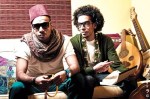 “Rap actually stands for ‘Rhythm and Poetry’. It is a way of expressing yourself. You can use it in a negative or a positive way. It is up to the writer really. I guess we can call it modern day poetry,” say Ya’koob and Humble Abdul, two Kuwaiti brothers who have taken rap and hip-hop music to a different level in a country like Kuwait, trying through their music to deliver a positive image regarding Islam and Arabs.
Read More: Brothers Blend Arabic Flavor with Rap
20 Sunday Jan 2013
Posted in Music - Africa - Mali
 Nowhere does music have a greater social and political importance than in the vast desert state of Mali. It is shocking, therefore, that it has been banned across much of the two-thirds of Mali currently controlled by Islamic rebel groups. As “Manny” Ansar, the director of the country’s celebrated Festival in the Desert, which has now been forced out of the country, explained: “Music is important as a daily event. It’s not just a business, for it’s through our music that we know history and our own identity.”
Read More: Mali Music Ban
20 Sunday Jan 2013
Posted in Music - Egypt
 Considered a healing rite, the Zar is one of the only forms of traditional Egyptian music where women play the lead role. It is an energetic, polyrhythmic style of music originating from the border between Egypt and Sudan, and it possesses a distinctly African sound. Though it is still practised in East Africa and some Gulf countries, in Egypt the Zar is on the verge of extinction.
Read More: Fading Notes
20 Sunday Jan 2013
Posted in Heritage Sites - Mali
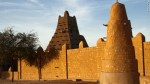 As the violence in Mali escalates following France’s intervention to halt the advance of Islamist fighters, UNESCO has issued calls for the protection of the ancient city of Timbuktu, urging armed forces to safeguard the nation’s historic and religious landmarks.
Read More: New Fears for Timbuktu
20 Sunday Jan 2013
Posted in Architecture - India
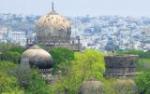 The Andhra Pradesh government has signed a Memorandum of Understanding (MoU) with the Aga Khan Foundation to give a facelift to the much-neglected Qutb Shahi tombs at a cost of Rs 100-crore over the next 10 years.
Read More: Project to Restore
 ArtsIslamica