Last of the Dictionary Men: An Exhibition on the Yemeni Sailors of South Shields

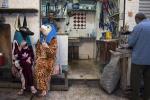
Last of the Dictionary MenThe North East of England boasts a proud maritime and industrial heritage that has all but disappeared from today’s landscape along the River Tyne. Over the course of 100 years, thousands of seamen from Yemen settled in the small town of South Shields and made it their home. This multimedia exhibition, running through to March 22nd, 2013 at The Mosaic Rooms, London, features interviews with and portraits of 14 of these sailors, the last survivors of the first-generation who settled in South Shields.

Read More: Last of the Dictionary Men

Reinventing Ourselves: On Cultures, Arts and Entertainment


The West and IslamThe question of culture is central to debates concerning Islam today. Though it must be repeated that Islam is primarily “a religion” and not “a culture”, one should immediately add that religion never finds expression outside a culture and that, conversely, a culture never takes shape without referring to the majority values and religious practices of the social group that constitutes it. There are, therefore, no religiously neutral cultures, nor any culture-free religions. Any religion is always born – and interpreted – within a given culture and in return the religion keeps nurturing and fashioning the culture of the social community within which it is lived and thought. Those inevitable and complex links make it difficult to define – whether in the relationship to Texts or in religious practice – what belongs to religion proper and what rather pertains to the cultural dimension.

Read More: Reinventing Ourselves: On Culture, Arts and Entertainment, by Tariq Ramadan

What Do We Mean When We Say ‘Islamic Art’?

ArtsIslamicaacademic-sIn a book published in 2008, Arnold Hottinger provocatively asserted that as far as the Western stance toward Islam is concerned, Islam does not exist. He argued correctly that it is pure fiction to speak about Islam using one sole, monolithic and global term. Moreover, he added that the desire to see in the wide-ranging and diverse ‘worlds of Islam’ a homogeneous sphere called Islam is simply an abstract cognitive notion, which, as with any general concept, has its sole origin in the mind of the person who creates this concept or theory…. In this essay published in 2012, Avinoam Shalem aims to begin a discussion on the history of ‘Oriental’ art and artistic production within the critical framework of Orientalism, or, more broadly, within the framework of colonial and postcolonial studies; and, at the same time, to contribute to the ongoing vital discourse on the creation and definition of the term ‘Islamic art history’ as a scientific field within the wider discipline of art history.

Read More: What do We Mean When We Say ‘Islamic Art’?, by Avinoam Shalem

Washington University Issues Statement on Death of Melanie Michailidis

Melanie MichailidisThe Washington University community is saddened to learn of the sudden and accidental death of Melanie Michailidis, PhD, who was in the second year of a three-year post-doctoral fellowship with the university’s Department of Art History and Archaeology, in Arts & Sciences, and who had a joint appointment with the St. Louis Art Museum. She was killed in an automobile accident Friday night [February 1st 2013], along with two other individuals. Our thoughts and prayers go out to her family, friends and colleagues during this difficult time.

Read More: Melanie Michailidis

Rare Album of the Earliest Indian Photographs from 1849 to be Sold at Bonhams, London

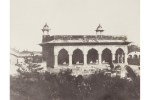
Indian photographsA wealthy young man having fun on a tour of India some 163 years ago, and one of the first to photograph the country compiled an album of photographs which will be sold by Bonhams on March 19th, 2013 for an estimated £40,000 to £60,000. Alexis De La Grange’s album offers 49 architectural views, most of which are Mughal, in northern India.

Read More: Album of Indian Photographs

Getting Inside a National Icon: Umm Kulthum’s Biopic

Umm KulthumSpeaking last year, Aaron Sorkin said that writing the forthcoming Steve Jobs biopic was like “writing about The Beatles” – an arduous task with numerous minefields if he were to avoid disappointing the droves who still adore and revere the late Apple boss. Daunting Sorkin’s screenplay may have been, but it’s nothing compared to the task the acclaimed Iranian visual artist Shirin Neshat has on her hands.

Read More: Umm Kulthum’s Biopic

The Veil: Visible and Invisible Spaces at the Handwerker Gallery, Ithaca College

Handwerker Gallery ExhibitionThe Veil: Visible and Invisible Spaces is a traveling exhibition and varied discourse attempting to investigate the veil in its broadest and most universal context. The work included in this exhibition, which continues through to March 8th, 2013 at the Handwerker Gallery, Ithaca College, intends to engage current clichés and stereotypes and to reflect on the great ubiquity, importance, and profundity of the veil throughout human history and imagination.

Read More: The Veil: Visible and Invisible Spaces

Iranian Artists Hit by Sanctions

Iran - Museum of Contemporary ArtInternational sanctions imposed against Iran over its disputed nuclear program are affecting all areas of Iranian life. Lately, inflation and a severely depreciated currency have begun to bite in a segment of society that seems far removed from debates over uranium enrichment and “possible military dimensions”: Tehran’s artistic class.

Read More: Iranian Artists Hit by Sanctions

Making the Invisible Visible: Conservation and Islamic Art

Making the Invisible VisibleThe renovation, expansion, and re-installation between 2003 and 2011 of the New Galleries for the Art of the Arab Lands, Turkey, Iran, Central Asia, and Later South Asia at The Metropolitan Museum of Art provided conservators and conservation scientists with an extraordinary opportunity to examine and conserve many works of Islamic art in the permanent collection. Discoveries that were made during this period have enhanced many aspects of the re-installation of the galleries. The exhibition Making the Invisible Visible, on view beginning April 2nd, 2013, will demonstrate how our understanding and appreciation of the works of art we see in visible light can be augmented by information gleaned using other wavelengths of light, from infrared to x-rays.

Read More: Making the Invisible Visible

Reconsidering Resistance: Taraneh Hemami at the Luggage Store Gallery, San Francisco

Taraneh HemamiStickers and graffiti cover the walls, the ceiling, and the floors as you ascend the interior stairwell of the Luggage Store Gallery. Over the years, many artists, and indeed many visitors, have made their mark here. Taraneh Hemami’s Fist (all works 2013), a powder coated aluminum and Plexiglas sculpture of a clenched fist raised in solidarity, is positioned at the top of the stairs, increasingly visible with each step. It presents a striking emblem of the Luggage Store’s long legacy as a fundamentally gritty alternative nonprofit arts space and embodies the same spirit of the layered stickers in the long entrance. It also offers visual entre to Hemami’s solo exhibition of largely sculptural new works that explore the visual history of resistance leading up to and beyond the 1979 Iranian Revolution.

Read More: Taraneh Hemami

Art Beyond Borders: Edinburgh Iranian Festival 2013

Edinburgh Iranian Festival 2From February 1st to 16th 2013, the third Edinburgh Iranian Festival comes to the capital to celebrate the history, culture, language and art of Iran. Often, the portrayal of Iran in the media focuses on the negative – Iran’s policies on censorship and its political situation are the subjects most often addressed, but the rich cultural heritage of Iran, not to mention its thriving contemporary cultural life – both in Iran itself, and in the expatriate Iranian community – are often passed over. The Edinburgh Iranian Festival seeks to redress this balance, and to expose the expat Iranian community in Scotland, and Scottish audiences, to a wide array of Iranian culture, history and art.

Read More: Edinburgh Iranian Festival 2013

Underground Museum to Shine New Light on Humayun’s Tomb

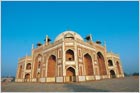
Tomb of HumayunInspired by the traditional step-well or baoli, the upcoming ‘sunken’ interpretation centre-cum-museum at the 16th-century Humayun’s Tomb complex will be fully underground but naturally lit through large octagonal skylights so as not to disturb visual linkages between various monuments. The foundation stone is expected to be laid later this year. Estimated construction time is two years.

Read More: Underground Museum at Humayun’s Tomb

Doha’s Mathaf Puts Arab Art on the World Map

Mathaf DohaOver two years after its foundation, Mathaf, an institution located in Doha and dedicated to promoting Arab culture, has put modern Arab arts on the world map with its contributes to the cultural landscape of the Gulf region, the Middle East and the Arab diaspora. With its recent exhibition, Tea with Nefertiti, Mathaf aimed to create a dialogue across time and geography in the context of art.

Read More: Mathaf Puts Arab Art on the World Map

The 2013 Edinburgh Iranian Festival

Edinburgh Iranian FestivalThe Edinburgh Iranian Festival now in its third year is a non-political showcase for world-class Iranian culture, as well as for bands and artists working both in and outside Iran. The festival aims to introduce the tremendous breadth of Iranian history and culture to adults and children in Scotland, and to integrate the two communities through a broad range of interactive events, spanning numerous art-forms. The 2013 Edinburgh Iranian Festival will take place between 1st and 16th February in Edinburgh, Scotland.

Read More: Edinburgh Iranian Festival 2013

Sixteenth-century Safavid Carpet Sells at Sotheby’s, New York for US$1,930,500

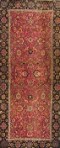
Safavid carpetAn outstanding and richly-coloured 16th-century Safavid carpet with a complex, layered design of spiraling tendrils terminating in palmettes, was the highest-selling object at an auction held on February 1st, 2013 at Sotheby’s, New York. Originally from the collection of Edmond de Rothschild, this treasured carpet sold for US$1,930,500.

Read More: Safavid Carpet Sells for US$1.93million

Calderwood Professors’ Book Part of National Endowment for the Humanities Cultural Initiative

Blair and BloomAn acclaimed book by Norma Jean Calderwood Professors of Islamic and Asian Art Sheila Blair and Jonathan Bloom will be part of an important new collection to provide the public with resources about Muslim beliefs and practices, and the cultural heritage associated with Islamic civilizations. The National Endowment for the Humanities selected Blair and Bloom’s 1997 volume, Islamic Arts, for its nationwide project with the American Library Association.

Read More: Blair and Bloom’s Islamic Arts Book

Brooklyn Museum Hires Curator and Collector Susan L. Beningson for Asian Art Department

Brooklyn MuseumThe Brooklyn Museum has hired curator and collector Susan L. Beningson to be its assistant curator of Asian art, Artforum reports, a role in which she will oversee the institution’s overhauling of its permanent collection galleries of Asian and Islamic art, which are scheduled to reopen in 2015.

Read More: Brooklyn Museum Appoints Susan L. Beningson for Asian Art Department

Are We Ready for the Exotic Adventures of Lady Hester, Queen of the Desert?

Lady Hester StanhopeWhere are Josef von Sternberg and Marlene Dietrich when you need them? An upcoming British movie, “The Lady Who Went Too Far,” sounds like it would have been a perfect vehicle for the actress and director who followed their German masterpiece “The Blue Angel” with the six classics of romantic exotica they made at Paramount in the 1930s. Based on Kirsten Ellis’s 2008 biography “Star of the Morning: The Extraordinary Life of Lady Hester Stanhope,” the film will tell the story of the fearless socialite, camel-mounted desert traveler, and archaeological treasure-seeker who in 1815 conducted the first modern excavation in Palestine.

Read More: Lady Hester Stanhope

Revolution Hasn’t Changed Artistic Censorship in Tunisia

Artistic Censorship in Tunisia“Rien n’a changé” (“Nothing has changed”). This was the response of many I met in Tunisia last summer when I asked them how they felt about the Tunisian revolution. Rising unemployment and persistent security concerns were the main worries many cited, along with increasing threats to freedom of speech for journalists and artists.

Read More: Artistic Censorship in Tunisia

In Harmony: The Norma Jean Calderwood Collection of Islamic Art

In HarmonyIn Harmony showcases some 150 works from the Norma Jean Calderwood Collection of Islamic Art. Largely unpublished and little known, the collection includes important objects from the Persian cultural sphere, such as luxury glazed ceramics of the early Islamic era, illustrated manuscripts of medieval epic poems, and lacquerware of the early modern era. Among the manuscripts are folios of the Shahnama, by Firdawsi, and the Khamsa, by Nizami.

Read More: The Norma Jean Calderwood Collection of Islamic Art

See also: Pearls of Persian Art

Pearls of Persian Art

Norma Jean CalderwoodAmong the roughly 170 pieces of Islamic art that Norma Jean Calderwood and her husband left to Harvard, one in particular hints at the late collector’s philosophy: an earthenware bowl bearing, in precise calligraphy, the epigram “Greed is a sign of poverty.” In Harmony: The Norma Jean Calderwood Collection of Islamic Art, which opens January 31st, 2013 at the Harvard Art Museums/Arthur M. Sackler Museum, is both a celebration of Calderwood’s championship of once-obscure work and a showcase of the vibrancy of Iranian culture over time.

Read More: Pearls of Persian Art

See also: The Norma Jean Calderwood Collection of Islamic Art

Has the Great Library of Timbuktu Been Lost?

Desert LibraryAs the desert inches south into the city of Timbuktu, the sand settles on your skin and the air feels heavy in your lungs. When I travelled there nine years ago, the mythical city, home to the shrines of three hundred and thirty-three Sufi saints, left a bleak impression, tempered only by the selected wonders under glass at the Ahmed Baba Centre, an edifice which, until last Friday, housed between sixty and a hundred thousand manuscripts dating back as far as the thirteenth century. Other smaller libraries and private collections held many more. Until last week, the total number of historic manuscripts in Timbuktu and its surrounding region was estimated at about two hundred thousand.

Read More: Libraries of Timbuktu

See also: Timbuktu Manuscripts Safe