AA Raiba Retrospective Begins at JJ School of Art

Raiba

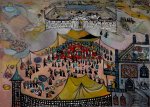
In the early months of 1943, Abdul Aziz Raiba began his association with the Sir JJ School of Art after being offered a scholarship by the dean Charles Gerard. He graduated with a Diploma in Fine Arts in 1946, and was appointed a Fellow to the painting department for a year in 1947. He returned to his alma mater in 1980 enrolling himself for an evening hobby course in Graphic Print Making at the Print-Making Studio while accompanying his senior who was seeking admission at the Faculty of Architecture. Seven decades later Raiba returns to the College with a retrospective that inquires into his practice, exploring his experimentations with medium, methods of research that inform the subject of his paintings and the unique approach towards exhibition making.

Read More: Abdul Aziz Raiba Retrospective
Sharjah Biennial, Re:emerge: Towards a New Cultural Cartography

Sharjah Biennale 2

In an age of confusing, sprawling art exhibitions, the current Sharjah Biennial stands out as an intelligent, tightly curated show featuring some hard-edged works that ever so slightly unsettle the delicate political and cultural ecosystems in the Gulf. The biennial has, since its launch in 1993, quietly provided a crucial platform for contemporary artists in the conservative enclaves of the Middle East.

Read More: Sharjah Biennial 2013

Exhibition at the Norton Museum Illustrates Philanthropist’s Passion for Islamic Art

Norton Museum

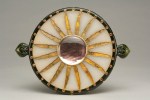
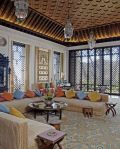
The special exhibition, Doris Duke’s Shangri La: Architecture, Landscape, and Islamic Art, showcases dozens of objects from Shangri La, the spectacular Honolulu home Doris Duke built in the mid 1930s and filled with Islamic art until her death in 1993. Featuring artwork from the first through the 20th centuries, Shangri La unfolds organically, much like Duke’s many travels through Muslim countries. The exhibition, which also includes contemporary work by former Shangri La artists-in-residence, is on view from March 21st through July 14th, 2013.

Read More: Exhibition at the Norton Museum

See also: Doris Duke’s Shangri La Museum

Persian Visions: Contemporary Photography from Iran

Persian Visions

The eye in the picture is distracting, alarming, demanding all at once. It’s presumably female – the lashes mascaraed, the eyelids lined, the brows sculpted – and it’s open very wide, as if startled. Her face is no help in reading that emotion: it’s hidden in a dark shadow, the eye spotlighted in a bright circle of light. And then your own eye drifts around the rest of Ahmad Nateghi’s untitled black-and-white photograph and encounters new disorientations. A sliver of a woman’s face smiles in the lower-right corner of a frame, as if she’s peeking through a barely opened door. In the lower-left quadrant, a woman stands with her back to the camera; in front of her, a sign reads “THE PROFESSIONAL CHOICE.”

Read More: Persian Visions: Contemporary Photography from Iran

Afghan Cultural Heritage on Show

Afghan Cultural Heritage

The richness of Afghan cultural heritage is on show at Ferozkoh: Tradition and Continuity in Afghan Art, a unique exhibition which opens today [March 20th, 2013] at Museum of Islamic Art’s temporary gallery on ground floor. “This exhibition is the result of a partnership between MIA and the Turquoise Mountain Institute for Afghan Arts and Architecture (TMI) in Kabul,” MIA director Aisha al-Khater said yesterday. The unifying theme of the exhibition, which runs until June 22nd, 2013 is the preservation of the traditional arts of the Islamic world – in both themes and materials – in the modern world, and the role of education in its transmission and translation.

Read More: Afghan Cultural Heritage on Show at MIA, Doha

Sotheby’s New York to Offer Important Carpets from The Collection of William A. Clark

William A. Clark collection

On June 5th, 2013, Sotheby’s will offer Important Carpets from the Collection of William A. Clark on behalf of the Corcoran Gallery of Art in a dedicated auction in New York. Comprising 25 rugs and carpets from the 16th and 17th centuries, the group includes one of the most important and revered carpets in the world, The Clark Sickle-Leaf Carpet, as well as one of the most majestic, The Lafões Carpet. Both epitomize the pinnacle of weaving attained during the Safavid dynasty in Persia (1501–1722) and are extraordinarily beautiful works of art.

Read More: Important Carpets from the Collection of William A. Clark

Met Museum Announces Islamic Art Installation

The renovation, expansion, and reinstallation between 2003 and 2011 of the New Galleries for the Art of the Arab Lands, Turkey, Iran, Central Asia, and Later South Asia at The Metropolitan Museum of Art provided conservators and conservation scientists with an extraordinary opportunity to examine and conserve many works of Islamic art in the Permanent Collection. Discoveries that were made during this period have enhanced many aspects of the re-installation of the galleries. The exhibition Making the Invisible Visible: Conservation and Islamic Art, on view beginning April 2nd, 2013, will demonstrate how our understanding and appreciation of the works of art we see in visible light can be augmented by information gleaned using other wavelengths of light, from infrared to x-rays.

Read More: Making the Invisible Visible

Museum of Islamic Art in Doha: ‘It’s About Creating an Audience for Art’

Museum of Islamic Art Doha

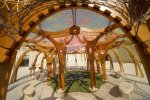
When they decided to build the Museum of Islamic Art in Doha, the veteran Chinese-American architect IM Pei was summoned out of retirement to design it. The fact that the then 86-year-old Pei was best known for the landmark glass pyramid in the forecourt of the Louvre — still widely regarded as the world’s greatest museum — was by no means accidental. The Museum of Islamic Art was designed to make an impact: to put the Qatari capital on the map as a cultural centre and to broaden global perceptions of Islamic culture. Just five years after its opening, this groundbreaking institution is already acclaimed as one of the world’s great museums.

Read More: Museum of Islamic Art, Doha

The Photos Saudi Arabia Doesn’t Want Seen – And Proof Islam’s Most Holy Relics are Being Demolished in Mecca

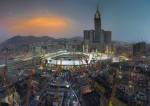
The authorities in Saudi Arabia have begun dismantling some of the oldest sections of Islam’s most important mosque as part of a highly controversial multi-billion pound expansion. Photographs obtained by The Independent reveal how workers with drills and mechanical diggers have started demolishing some Ottoman and Abbasid sections on the eastern side of the Masjid al-Haram in Mecca.

Read More: The Photos Saudi Arabia Does Not Want Seen

Kite Runner Conjures an Epic Journey

Kite Runner

“What happens in a few days, sometimes even a single day, can change the course of a whole lifetime.” — The Kite Runner. Last summer three Canadian theatre artists — director Eric Rose, lighting designer Kerem Cetinel, sound designer Matthew Waddell — found themselves on the hilltops of Mardin, one of the ancient cities of Turkey. In the mist they could see the Syrian border. They could hear the calls to prayer.

Read More: The Kite Runner

In the I of the Beholder

Amin Gulgee

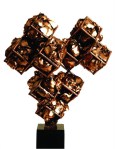
There was wonder, excitement and expectancy among the people who crowded into the Amin Gulgee Gallery recently in Karachi. They were there to see the artist’s latest exhibition, a collection of bronze sculptures titled ‘Through the Looking Glass’. Distributing warm greetings and hugs all around, the artist, nothing if not a showman, was in his element while holding what appeared to be 50 conversations all at once.

Read More: Amin Gulgee

Through Immersive Eyes

Husin Hourmain

There is a certain quality to Husin Hourmain’s third solo offering, much like his manner of speech; matter-of-fact, positive, engaging. An artist deeply imbued in abstract expressionism, his canvases illustrating the Jawi alphabet are monumental in scale, exploding with sumptuous colour, multi-layered, vigorous (of swipes, smears, streaks) yet controlled painterly strokes; the mood frenzied-romantic.

Read More: Husin Hourmain

Artists and Shows Navigate Cultural Boundaries in U.A.E.

Sharjah Biennale

The question of censorship looms large this month in the United Arab Emirates, a time when art and cultural events fill the calendar. In Dubai, early March was marked by a five-day literary festival, which will be followed mid-month by the annual art fair, Art Dubai. Next door, the Sharjah Biennial started on Wednesday, March 13th.

Read More: Artists and Shows Navigate Cultural Boundaries

Islamic Calligraphy Exhibition to Open in Ankara, Istanbul in April

An exhibition of a selection of the most exquisite works of the Islamic art of calligraphy will open in April in Istanbul, and in Ankara, the Turkish capital. The Sultans of Calligraphy exhibition is part of a series of events to celebrate the 1443rd anniversary of the birth of the Islamic Prophet Muhammad, and is organized by the Turkish Directorate of Religious Affairs.

Read More: Islamic Calligraphy Exhibition in Ankara and Istanbul

The Husain Conundrum

MFHusain

The recent auction in Mumbai — on January 17th, 2013 of M.F.Husain’s works by Pundole’s — was nothing less than extraordinary. It was the first of its kind devoted solely to works by the modernist Indian painter anywhere in the world. The horde of 145 lots amassed over the years by the late Badrivishal Pitti, an art lover and collector from Hyderabad — his family had close ties with the Nizam — realised a whopping Rs. 18.5 crores, according to Dadiba Pundole, the auctioneer, well over the total pre-sale estimate of Rs 8.8 crores, with only four lots left unsold in the end. A spectacular result, as auctions go.

Read More: The Husain Conundrum

Istanbul Exhibition Casts Middle Eastern Art in a Fresh Light

Istanbul exhibition

Khalid Khreis, a Jordanian artist, is on a mission to fight reductionist notions of contemporary Middle Eastern art. As curator of an exhibition at the Pera Museum in Istanbul, running through April 21st, 2013 he has included paintings, sculptures, engravings and ceramics by 44 artists spanning different styles and generations.

Read More: Istanbul Exhibition

Sex, Death and Ceramics

Omer Koc

The house was not easy to find. The boat journey to get to it started on a windswept pontoon next to a busy highway in Istanbul. “It’s like visiting James Bond,” Ömer Koç’s secretary had joked, but tales of his masked balls and exotic art collection, coupled with the two silent boatmen at the helm, made it feel more like a trip to the Magus. Koç is a scion of one of the richest families in Turkey.

Read More: Ömer Koç Talks About His Collecting Passions

Muslim Women Speak Out In Global Online Exhibition

THE INTERNATIONAL MUSEUM OF WOMEN HANDS OF FATIMA

The International Museum of Women (IMOW) announces the debut of Muslima: Muslim Women’s Art & Voices (muslima.imow.org) a groundbreaking international collection of artwork, stories and ideas from contemporary Muslim women. The free online exhibition features exclusive interviews with leading women’s rights advocates from countries including Iran, Afghanistan, and Bosnia and showcases the barrier-breaking creativity of female artists from every region of the world.

Read More: Muslima Online Exhibition

See also: Muslim Women’s Art and Voices

Artworks by Afghans to go on Show at Museum of Islamic Art, Doha

Artwork by Afghan Artists

Ferozkoh: Tradition and Continuity in Afghan Art, an exhibition showcasing works created by Afghan artists inspired by masterpieces from the Museum of Islamic Art (MIA) collection, will open on March 20th, 2013. The exhibition, which runs until June 22nd, 2013 at MIA’s temporary exhibition hall, presents thirty-seven works created specifically for the exhibition by the students and teachers of Turquoise Mountain’s Institute for Afghan Arts and Architecture in Kabul.

Read More: Artwork by Afghans

Photo Essay: Exquisite ‘Shahnameh for the Digital Age’ Embodies 1,000 Years of Tradition

Shahnameh

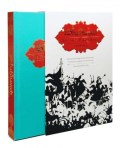
Shahnameh: The Persian Book of Kings is the great epic of Persia, composed by the poet Ferdowsi between 980 and 1010. It tells the story of pre-Islamic Iran, beginning at the time of the mythic creation through the Arab invasion of the seventh century. Grieved by the fall of the Persian empire, Ferdowsi sought to create a work that would capture the memory, culture and nostalgia of the golden days of Persia.

Photo Essay: Shahnameh for the Digital Age

Video: Shahnameh for the Digital Age Presentation

See also: Shahnameh Re-Imagined

Shahnameh, Re-Imagined: A Colorful New Vision of Old Iranian Folklore

Shahnameh 2

The ancient mythology of Iran is laden with heroic adventures of superhuman champions, magical creatures, heart-wrenching love stories, and centuries-long battles. Ferdowsi’s 10th-century text Shahnameh (The Book of Kings), which at 60,000 verses weighs in as the longest epic poems ever written, is a foundation for this mythology, comparable to The Odyssey, Nibelungenlied, and Ramayana.

Read More: Shahnameh Re-Imagined

See also: Shahnameh for the Digital Age and Video: Shahnameh for the Digital Age Presentation