New Doris Duke Exhibition Brings Islamic Art to Nasher Museum

Nasher Museum

Green lamps dangle from a ceiling framed by ornate carvings. The tirelessly detailed patterns, eclectic and timeless, continue along the walls, arched windows and crevices. The colors, some rustic and some pastel, rise in contrast to the floor with its shiny off-whiteness and large geometric designs. Oil lamps, water pipes and perfume bottles tastefully adorn tables and shelves. Golden Arabic calligraphy panels the walls above, and the photograph is taken in such a way that you feel as if, with a single step, you could enter into the “Syrian Room.” Tim Street-Porter’s large and backlit photograph welcomes viewers into the Nasher’s newest exhibition opening Thursday, August 29th 2013: Doris Duke’s Shangri La: Architecture, Landscape, and Islamic Art.

Read More: New Doris Duke Exhibition Brings Islamic Art to Nasher Museum

See also: An Earthly Retreat, A Shrine to Art

An Earthly Retreat, a Shrine to Art

Nasher Museum 2

Shangri La is the earthly paradise James Hilton described in his 1933 novel “Lost Horizon.” It was published, coincidentally, a few years before tobacco heiress Doris Duke and husband James Cromwell began their 1935 honeymoon and world tour that led to the building of a retreat in Hawaii that took the name Shangri La. This five-acre Honolulu estate, which overlooks the Pacific, was built as more than just an earthly retreat. During their honeymoon, the couple’s travels took them to Egypt, India, Indonesia and other countries. Duke began collecting Islamic art during that tour and continued until her death in 1993. The honeymoon ended in Honolulu, where the couple decided to build their estate, incorporating Islamic art and style in the architecture.

Read More: An Earthly Retreat, A Shrine to Art

How a Groundbreaking Art Show about Contemporary Islam Came to Rural New England

Rural New England exhibition

How did a groundbreaking group show on contemporary Islam happen in rural New England? It all started with a simple conversation. Megan Whilden, Director of Cultural Development for the City of Pittsfield, was interviewing me for a summer position in her Office through the Berkshire Hills Internship Program. The Boston Marathon bombing was a recent memory, and the need for a more expansive, nuanced understanding of modern Islam culture(s) was at an all time high.

Read More: How a Groundbreaking Art Show about Contemporary Islam came to Rural New England

The Alif Ensemble: The Sound of Transition

Alif Ensemble

The Arab revolts have shaken the status quo, shattering ideologies and threatening dominating discourses. They have spurred new debates and creative movements throughout the region, questioning capitalism and globalisation, Arabic and western identities and the nature of cultural exchanges. The Alif Ensemble, composed of an Iraqi-Syrian oud player with a British education, a Palestinian buzuk musician, an Egyptian electronic music composer, a Lebanese drummer and a Syrian bass player, are one of the most fascinating projects to have emerged in the region in the past few years.

Read More: The Alif Ensemble: The Sound of Transition

Walled City of Lahore: Six Degrees of Restoration

Walled city of Lahore 3

Six of the remaining 12 gates of the walled city of Lahore are being rescued. The Walled City of Lahore Authority is putting millions of rupees into the project with the help of the Aga Khan Trust for Culture. Experts will start with the Texali and Shah Alam gates. They will, however, be modeled on the Roshnai gate, which was built in the Mughal style, said a restorer. It appears that Sikh or British styles will be eschewed.

Read More: Walled City of Lahore: Six Degrees of Restoration

Unique Islamic Art Exhibition Makes UK Debut

Ferozkoh

Ferozkoh: Tradition and Continuity in Afghan Art, is the result of a collaboration between the Museum of Islamic Art (MIA) in Doha, Qatar and students and teachers from the Turquoise Mountain Institute for Afghan Arts and Architecture, in Kabul. The result is a striking exhibition that represents real social change. The exhibition will be on display at Leighton House Museum in London from 15 November 2013 until 23 February 2014 as part of both Qatar UK 2013 Year of Culture and the Nour Festival of Arts.

Read More: Unique Islamic Art Exhibition at Leighton House, London

Dreamers Work to Create Huge New Park in Delhi

India Central Park

In a tangle of forgotten, overgrown brush in the heart of India’s capital, a quiet plan has been hatched to change the landscape of one of the world’s most populous cities. An intricate Mughal garden is being created. Crumbling sandstone tombs nearly lost to history are being rebuilt. An artificial lake is being carved out. The renovation of Sunder Nursery is intended to serve as the catalyst for an even more ambitious project: the creation of a mammoth, iconic park that would rival New York’s Central Park as a refuge from urban chaos.

Read More: Dreamers Work to Create Huge New Park in Delhi

Sharp Practice: Investigating the Cut-paper Works of André Meyerhans

Andre Meyerhans

The white paper cut-outs are mounted on white frames and a white background, simple and clean in appearance. The thoughts and intent behind their creation is in fact the culmination of years of study and introspection. The nine cut-outs are displayed at the Swiss Art Gate UAE exhibition, The Universe of Patterns, in the lobby of the Swiss Tower at Jumeirah Lake Towers in Dubai. The exhibition is part of a study by the architect André Meyerhans that asks: how can we find a contemporary geometric design that reflects the modern Middle East?

Read More: Sharp Practice: Investigating the Cut-paper Works of Andre Meyerhans

“Cairo: New Testimonies of an Ongoing Revolution” Opens at MKG in Hamburg

Cairo New Testimonies

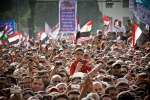
The exhibition “Cairo. New Testimonies of an Ongoing Revolution” [on display from 16 August] at the Museum für Kunst und Gewerbe Hamburg, revolves around the political and social awakening of a generation which became visible to the world public when the mass protests began on Tahrir Square in Cairo on 25 January 2011 and has remained a major force in Egyptian society to this day. The story is told above all by Egyptian artists and photographers, activists and curators who lend the events expression from their own perspectives. The individual sections of the show were curated by well-known figures of the Cairo art world, among them the artists Lara Baladi and Heba Farid, the photographers Thomas Hartwell and Tarek Hefny, artist-activist Jasmina Metwaly, film maker Philip Rizk, and the journalists Rowan El Shimi and Alex Nunns.

Read More: ‘Cairo: New Testimonies of an Ongoing Revolution’ Opens in Hamburg

Neglect and Decay Threaten Historic Algiers Kasbah

Kasbah of Algiers

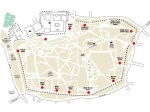
With its rich history, winding white-washed alleyways and enviable Mediterranean setting, the Kasbah of Algiers has been a world heritage site for 20 years but is now threatened by neglect and decay. The city within a city, crowned by a 16th-century hilltop citadel overlooking the bay and studded with Ottoman palaces, hammams, mosques and souks, has been rocked through the centuries by earthquakes, fires, floods and conflict.

Read More: Neglect and Decay Threaten Historic Algiers Kasbah

Venice Biennale Hosts Largest Ever Presence of Arab Art

Venice Biennale

Arab nations are represented more than ever at the current Venice Biennale, displaying a wide range of art from the Middle East. As a group of visitors walk out o f the United Arab Emirates (UAE) pavilion at this year’s Venice Biennale decidedly unsteady on their feet, they reach out for the hand rail thoughtfully placed on both sides of the ramp to guide them back on “shore”.

Read More: Venice Biennale Hosts Arab Art

I Am a Bird from Heaven’s Garden: Music, Sound and Architecture in the Muslim World

Heaven's Garden

Across the Muslim world diversity in language and culture has for centuries found expression in art, architecture and musical sound, articulating faith and aesthetic in relation to a plurality of local historical and social identities. Muslim sonic diversity is also linked to diversity of spaces where sounds are produced and heard. Designated spaces of performance are integral to the experience of sound and its messages, because built environments in nature as well as in architecture localize the song from heaven’s garden in the human landscape. The poetry of Hafiz and the flute of Rumi both evoke the Garden as a heavenly, as well as an earthly, home of beautiful music; we are all the bird that longs to return.

You are invited to join us for a three-day celebration of music, sound, architecture and gardens, September 13 to 15, 2013. Featuring presentations by distinguished scholars from around the world, garden designers and builders, plus performances and workshops with outstanding musicians, the University of Alberta hosts this unique event together with the Aga Khan Trust for Culture and The Aga Khan University. The conference is open to the global community of scholars and students, and to the general public, and will contribute significantly toward a greater understanding of Islam and Muslims, and their diverse cultures around the globe.

Go to Website: http://heavens-garden.org/

Medieval Islamic Architecture, Quasicrystals, and Penrose and Girih Tiles: Questions from the Classroom

Tiling Theory studies how one might cover the plane with various shapes. Medieval Islamic artisans developed intricate geometric tilings to decorate their mosques, mausoleums, and shrines. Some of these patterns, called girih tilings, first appeared in the 12th Century AD. Recent investigations show these medieval tilings contain symmetries similar to those found in aperiodic Penrose tilings first investigated in the West in the 1970’s. These intriguing discoveries may suggest that the mathematical understanding of these artisans was much deeper than originally thought. Connections like these, made across the centuries, provide a wonderful opportunity for students to discover the beauty of Islamic architecture in a mathematical and historical context. In this paper [published in 2009], Raymond Tennant describes several geometric constructions for Islamic tilings for use in the classroom along with projects utilizing girih tiles as construction templates. Open questions, observations, and conjectures raised in seminars across the United Arab Emirates are described including what the medieval artisans may have known as well as how girih tiles might have been used as tools in the actual construction of intricate patterns.

Read More: Medieval Islamic Architecture, Quasicrystals, and Penrose and Girih Tiles, by Raymond Tennant

The Jameel Prize Brings Inspired Islamic-influenced Art to San Antonio Museum of Art

Jameel Prize exhibition

When you encounter the word “Islamic” in this hemisphere, art is not what springs to mind in an era inflamed by religious terrorism. But London’s Victoria and Albert Museum recognizes the potent interaction between traditional Islamic arts and contemporary trends with the Jameel Prize under the patronage of avant-garde architect Zaha Hadid. More than 200 of the world’s leading curators, designers and artists were invited to nominate artists for the 2011 competition and the 10 finalists are featured in “The Jameel Prize: Art Inspired by the Islamic Tradition” at the San Antonio Museum of Art.

Read More: Jameel Prize Brings Inspired Islamic-influenced Art to San Antonio Museum of Art

Indian Treasures at National Museum Cardiff

Howard Hodgkin exhibition

As a successful artist in his own right, Sir Howard Hodgkin certainly has an eye for striking objects. So it comes as no surprise to learn that he’s amassed an his impressive collection of sought-after Indian paintings, some of which date back to the 16th century. Now he’s sharing the work for the first time in Wales during an exhibition which opens at National Museum Cardiff today [27 July, 2013].

Read More: Indian Treasures at National Museum Cardiff

Asia Society Museum Announces 26 Artists to Participate in First Major Exhibition of Modern Art from Iran

Asia Society Museum presents Iran Modern, the first major international loan exhibition of Iranian modern art created from the 1950s to 1970s. It will be on view in New York from September 6, 2013 to January 5, 2014. Showcasing more than 100 works by 26 artists, the exhibition illuminates Iran’s little known pre-Islamic Revolution era when Tehran was a cosmopolitan art center, artists were engaged with the world through their participation in the Venice Biennale and other international art festivals, and their work was collected by institutions inside and outside of Iran.

Read More: Asia Society Museum Announces First Major Exhibition of Iranian Modern Art

See also: Asia Society to Present Modern Iranian Art

Resurrecting an Old Raja’s Palace

Khaplu Palace

When Khaplu Palace opened its doors to the public in 2011, people saw, for the first time in 40 years, the 19th Century royal home used by the Dogra rulers. The palace was rescued by the Aga Khan Cultural Service of Pakistan that has restored and turned this Baltistan relic into a boutique hotel. It is located on the upper side of Khaplu Town, south of the River Shyok, in Skardu. Whatever is known about the town has come from the writings by the numerous historians, explorers, researchers and British Indian officials who trekked Skardu’s glaciers in the 19th century.

Read More: Resurrecting an Old Raja’s Palace

Conserving Heritage: Norway to Help Restore the Royal Bath (Shahi Hammam)

Shahi Hammam

Shahi Hammam (Royal Bath), located inside the Delhi Gate [Lahore] is to be restored with help from the Aga Khan Trust for Culture (AKTC). The restoration will begin from July 22nd 2013 and is set to be completed in a year’s time. Most of the restoration cost of Rs39,498,833 will be borne by the Norwegian embassy.

Read More: Norway to Help Restore the Royal Bath (Shahi Hammam) in Lahore

Israel’s National Library Exhibits 30 Ancient Koran Manuscripts to Celebrate Ramadan

Israel National Library Quran

Israel’s National Library has curated a special digital display of 30 rare Koran manuscripts that date from the 9th through the 19th centuries to mark the start last week of the Muslim holy month of Ramadan. The manuscripts are part of the NLI collection, which includes 2,400 manuscripts in the Arabic script, and over 100 manuscripts of the Koran.

Read More: Israel’s National Library Exhibits 30 Ancient Koran Manuscripts to Celebrate Ramadan

At Sotheby’s, Treasure Is as Treasure Does

Isfahan carpet at Sotheby's

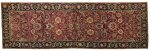
New money is pouring into the art market as never before. Two sales conducted at Sotheby’s in the past six weeks, one in New York on June 5 and the other in London on July 3, reveal the massive impact this unexpected intrusion has on prices in areas that long seemed too specialized to tempt the new buyers. When the auction house announced that its New York sale would include the rugs that the entrepreneur and politician William A. Clark bequeathed in 1925 to the Corcoran Gallery of Art in Washington, it did not exactly cause a worldwide stir. Collecting carpets from Safavid Iran, Ottoman Turkey and Egypt or Moghul India requires an understanding of complex cultures and a degree of technical knowledge. Moreover, the offerings were a mixed bag.

Read More: At Sotheby’s, Treasure is as Treasure Does

See also: Clark Sickle-Leaf Carpet Breaks World Record at Sotheby’s

Penn Libraries Acquire Unique Collection of Moroccan Lithographic Books

Moroccan Lithograph Collection

Penn Libraries recently acquired an extraordinary collection of lithographic books printed in Fez, Morocco, during the latter half of the 19th and the beginning of the 20th centuries. It includes some 108 titles in 136 volumes and represents one of the largest private assemblages of Fez lithographs outside of Morocco. This unique collection, built by Dr. Fawzi Abdulrazak, the leading scholar of the history of printing in Morocco and author of the authoritative bibliography of Fez lithographs, gives Penn Libraries the distinction of owning an exceedingly rare and invaluable resource, and one that few other libraries can match.

Read More: Penn Libraries Acquire Unique Collection of Moroccan Lithographic Books

An Artstic Approach To Inter-Faith Dialogue: The International Ramadan Photography Competition

Tomorrow [July 9th-10th] marks the start of the holy month of Ramadan for Muslims around the world. It also marks the beginning of the 2013 International Ramadan Photography Competition: Capture the Spirit of Ramadan, for a third year. The International Ramadan Photography Competition™ is a unique and unprecedented 30-day visual celebration that aims to educate and enlighten millions of viewers around the world about the holy month of Ramadan through the art of photography. It currently houses the world’s largest modern collection of Islamic themed photographs from over 60 countries. The IRPC aims to provide a platform for talented photographers to share their creativity with the world while delivering a cross-cultural and inter-faith message that aims to eradicate misconceptions and misunderstandings about the Muslim faith with beautiful and positive imagery.

Read More: The International Ramadan Photography Competition

When the Ruins Were New

Francis Bedford

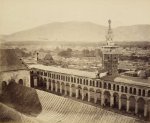
In February 1862 the eldest son of Queen Victoria, the Prince of Wales and future King Edward VII, embarked on a four-and-a-half month journey through the Middle East. The royal party followed what was on the face of it a conventional itinerary, sailing from Venice down the Dalmatian coast on the royal yacht Osborne to Alexandria, cruising up the Nile to Aswan to view the sites of ancient Egypt, crossing to Jaffa for a tour of the Holy Land, then returning to England via the Ionian islands and Constantinople. Among the party—included at the last moment—was the photographer Francis Bedford, who in over 190 prints produced one of the earliest photographic records of the region.

Read More: When the Ruins Were New