Lahore’s Unofficial Tourist Guide: The Rime of the Ancient Qissa Goh

Faqir Muhammad Shami

In an orphanage in 1947, a 14-year-old boy recited this poem at the parents’ day ceremony. The school was MC Bohri Primary School. The orphanage was Darul Shafqat. The city was Lahore. Faqir Muhammad Shami had just completed his fourth grade and was selected as the class speaker. Today, at 81 years of age, he remembers this poem with fondness. In a way, this has come to define his life. He calls upon people and shares with them the stories of Lahore’s past and present. He is the unofficial guide to the city’s monuments. You may have seen him. He is small, frail, and invisible, unless he comes up to you and starts speaking in English about a certain corner of the Badshahi mosque. When you get to know him a little, you realise he is much taller than he appears. And like all legends of this country, he too is fading into obscurity.

Read More: Lahore’s Unofficial Tourist Guide: Faqir Muhammad Shami

After Much Delay: Renovations to Begin at Mughal-era Fort

Sheikupura fort

A historical fort in Punjab may be getting the long-awaited attention it appears to desperately need. The 17th century Sheikhupura fort, which lies at the heart of Sheikhupura city some 35 kilometres away from Lahore, has been in a state of neglect and disrepair for years. In 2011, some hope for the fort, built by Mughal king Jahangir, appeared when the US Ambassadors Fund for Cultural Preservation (AFCP) awarded a $0.8 million grant for the fort’s conservation. But the conservation project, which was supposed to be finished by 2014, ran into delays due to administrative issues even before it started.

Read More: Renovations to Begin at Mughal-era Fort

The Arc of a Rare Ark Door

Back in the 1990s, a medieval synagogue ark door from Cairo was sold at a Florida estate auction house. It dated back to the Fatimid period in the 11th century; how the ark made its way from Egypt to America remains unclear. Two institutions jointly acquired the door in 2000: the Yeshiva University Museum and the Walters Art Museum of Baltimore. Now, they are presenting what they are dubbing a “biography” of this special ark door, which was once part of the Ben Ezra Synagogue, in an exhibit called Threshold to the Sacred.

Read More: The Arc of a Rare Ark Door

Edmonton Concerts Celebrate Ancient Sounds of Arab Music

Edmonton concert

As clarinet virtuoso Kinan Azmeh sees it, the ancient sounds of Arabic music never get old. “In our music there is always a continuum between the old and the new, between the traditional and the contemporary,” he explains. “But I don’t really see the differences. It’s not like we’re on a mission to re-promote this musical heritage. We’re just keeping our minds and ears and eyes wide open to the vocabulary we use on a daily basis.” Azmeh was raised in Damascus, Syria before he went to study at New York’s Juilliard school. Today he plays with western chamber music groups, jazz musicians and folkloric groups on tour around the world.

Read More: Edmonton Concerts Celebrate Ancient Sounds of Arab Music

Rare and Important Mughal Carpet to be Offered at Christie’s London in October

Star lattice carpet

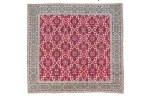
On 8 October 2013 Christie’s will offer a rare and magnificent Millefleur “star-lattice” carpet which dates to late 17th/early 18th century Mughal India. This carpet, which is in exceptional condition, was once owned by American industrialist Cornelius Vanderbilt and remained in his family for over a century. As one of only 12 Millefleur carpets from this illustrious time in Mughal India, the carpet is expected to realise between £1.5 million and £2 million. During the 16th, 17th and 18th centuries the carpet looms of the Mughal dynasty in India produced many of the most magnificent carpets extant today. These beautiful carpets were originally woven to adorn the palaces of the Mughal Indian aristocracy, but through Dutch, Portuguese and English trading companies they quickly became highly sought after objects by wealthy Europeans.

Read More: Rare and Important Mughal Carpet to be Offered at Christie’s

Charles Saatchi to Sell Collection of Middle Eastern Contemporary Art Online

Charles Saatchi artworks

Charles Saatchi has chosen a new online-only auctioneer to sell works from his collection of Middle Eastern contemporary art this month, rather than a more familiar live auction at Sotheby’s, Christie’s or Phillips. The 15 works, valued at more than £250,000, were exhibited in Unveiled: New Art from the Middle East, held at the Saatchi Gallery in 2009. The sale is being staged by the Auction Room, which was formed earlier this year by Sotheby’s former managing director of Europe, George Bailey, and is directed by Janet Rady, an independent expert in Middle Eastern art.

Read More: Charles Saatchi to Sell Collection of Middle Eastern Contemporary Art Online

16th Century Tools Giving Facelift to Mughal Gateway

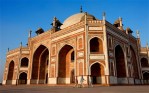
Once upon a time, 300 Persian craftsmen travelled to India to build a tomb for the emperor Humayun. According to historians, the craftsmen were housed in a Serai adjoining this tomb — said to be the precursor to the Taj. Now known as Arab Serai, this historical gateway is set to be restored after decades of neglect and decay, thanks to the Aga Khan Trust for Culture.

Read More: 16th Century Tools Giving Facelift to Mughal Gateway

UNESCO Heritage Awards 2013: Khaplu Palace Receives Award of Distinction

Khaplu Palace 2

Khaplu Palace in Gilgit-Baltistan (G-B) has received an Award of Distinction in the UNESCO Asia-Pacific Heritage Awards 2013 for cultural heritage conservation. The ceremony was held earlier this month in Bangkok to award initiatives which restored and conserved structures that are at least 50 years old. The palace, built in the 1840s by Yabgo Raja of Khaplu, is now known as Khaplu Palace and Residence and is managed by Serena Hotels.

Read More: Khaplu Palace Receives UNESCO Award of Distinction

Five Projects Win Aga Khan Award for Architecture

Aga Khan Award for Architecture 2013

The Master Jury for the 2013 Aga Khan Award for Architecture has announced five deserving projects as winners of the prestigious, US$1 million prize. Since the award was launched 36 years ago, over 100 projects have received the prize and more than 7,500 building projects have been documented for exhibiting architectural excellence and improving the overall quality of life in their regions.

Read More: Five Projects Win Aga Khan Award for Architecture

Egypt Antiquities Ministry Says No Islamic Artefacts are Missing

Egyptian Antiquities Authority

A number of artefacts exhibited at Doha’s Museum of Islamic Arts (MIA) are not from Cairo’s Museum of Islamic Arts (MIA), Egyptian Antiquities Minister Mohamed Ibrahim said at a press conference on Monday [September 9th, 2013]. Over the weekend, artists and activists wrote on social media sites that 35 objects from Cairo’s MIA had suddenly appeared in the Museum of Islamic Art in Doha, Qatar.

Read More: Egypt Antiquities Ministry Says No Islamic Artefacts are Missing

Preserving the Past

Bait al-Zubair Museum

A journey through the privately owned Bait Al-Zubair museum in Muscat is one into the past as the artifacts reflect the legacy of the period in which they were used, and symbolize the superb craftsmanship of those times. They are also mute witnesses to the social and economic prosperity of the past. The museum provides a crucial link between the past and the posterity of Oman.

Read More: Preserving the Past

Rediscovering Kashmir’s Forgotten Classical Music

Mohammad Yaqoob Sheikh places his santoor on a wooden stand and picks up a pair of finely carved wooden mallets or kalems. He holds them carefully between his index and middle fingers. A deep, gripping sound fills the room as he strikes the metal strings of his santoor with the mallets. It’s the kind of music that brims with life. Sheikh stops, looks up and smiles. “Beautiful, isn’t it? The world just ceases to exist for a while,” says the 53-year-old top-grade Sufiana artist who works in Radio Kashmir. The sound of the hundred-stringed Kashmiri santoor is indeed very rich and distinctive. No doubt it is used as an accompaniment to Sufiyana Mausiqi, the soul-stirring music of Sufis.

Read More: Rediscovering Kashmir’s Forgotten Classical Music

Iranian Artist Nicky Nodjoumi Talks Revolutions, Secret Police And The Vietnam War

Nicky Nodjoumi

Taymour Grahne, the accomplished blogger and art collector credited with shining a spotlight on some of the Middle East’s best artists, is finally opening his own gallery. The eponymous Tribeca establishment opens its doors this week, bringing the best of Middle Eastern and North African fine art to the doorsteps of Manhattan. To celebrate, Grahne is ushering in the gallery’s debut with a exhibition of one of Iran’s biggest – and most opinionated – painters, Nicky Nodjoumi.

Read More: Iranian Artist Nicky Nodjoumi Talks Revolutions

A Society Evolves

Chances are, if you played a game of word association with “Iran,” you’d get back responses like hostage, theocracy, ayatollah, Persia, terrorism and nuclear proliferation. Come September 6th, in the galleries of the Asia Society in New York, a different image of the country will be unveiled in Iran Modern, the first major international loan exhibition of art made there from the 1950s through the 1970s.

Read More: A Society Evolves

Aga Khan Revives Lost 16th Century Mughal Garden in Heart of Delhi

Park in Delhi

A lost 16th century Mughal garden in the heart of New Delhi is to be transformed into one of the world’s largest city centre parks, in a multimillion pound project from the Aga Khan and India’s government. The park will be based around Emperor Humayun’s Tomb, the world heritage site believed to have been the inspiration for the Taj Mahal, and will include the Purana Qila, the medieval fort of India’s Mughal and Afghan rulers, a 16th century caravanserai, smart restaurants and a museum to tell their stories.

Read More: Aga Khan Revives Lost 16th Century Mughal Garden in Heart of Delhi

See also: Return of the Mughal

Girl With a Bike: Haifaa Al Mansour’s Inspiring ‘Wadjda’ is First Feature Filmed Entirely Inside Saudi Arabia

Wadjda

Wadjda is a peek behind the black veils of Saudi Arabian women and girls. If its eponymous and irreverent hero is a surprise, she is also irresistible. Ten-year-old Wadjda (Waad Mohammed) listens to rock music, wins videogames against her dad, and dismisses anything that smacks of convention, especially the standards of respectability for Saudi girls. Wadjda desperately wants a bicycle in a country where girls, if they ride them at all, do so in their backyards. Writer-director Haifaa Al Mansour’s debut feature, the first by a Saudi woman, was shot on location in a kingdom where movie theatres have remained shuttered since the mid-1980s.

Read More: Girl With a Bike: Haifaa Al Mansour’s ‘Wadjda’

Pakistani Truck is Canvas on Wheels

Asheer Akram 2

One enters the 18th Street garage bay and — wham — there it looms, a fevered flashback to the ’60s and their acid/guru/hippie-flower-power art and sitar music. No, that’s too strong. It is like meeting up with the nephew of a long-lost, insanely eccentric foreign friend. Whatever. Art is in the view of the beholder, and it’s clear that what we have here is the American love child of a Pakistani “jingle truck.” That is to say, one eye-catching — no, eye-exploding — road beast.

Read More: Pakistani Truck is Canvas on Wheels

See also: Asheer Akram Collaborates to Put His Heritage on Moving Display

My Grandfather, the Baghdadi Artist

Hafed al-Droubi

Displayed in the British Museum’s Islamic world gallery is a drawing by Hafed Al-Droubi, my grandfather and one of the pioneers of Iraq’s modern art scene. The ink-on-paper sketch, entitled The Goal, depicts four men climbing up a ladder, scrambling to reach the top. I had a sense of déjà vu when I stood in front of the drawings recently: not so long ago, the picture was hung on the wall in my living room. I felt as though I was back home, sitting down on the sofa gazing at it. Yet in the museum, every time I looked more closely, something new would pop up that I hadn’t noticed before.

Read More: My Grandfather, the Baghdadi Artist

The Middle East Through Women’s Cameras

Lalla Essaydi

The most famous storyteller in Middle Eastern culture is a woman, Scheherazade. In the “Thousand and One Nights,” she told stories to save her life. Her exalted status lends a grim irony to the fact that the lives of women in much of the Middle East are radically circumscribed — and it lends a defiant irony to the title of She Who Tells a Story: Women Photographers From Iran and the Arab World. Organized by Kristen Gresh, the show runs at the Museum of Fine Arts through January 12th, 2014. Gresh is the MFA’s Estrellita and Yousuf Karsh assistant curator of photographs.

Read More: The Middle East Through Women’s Cameras

Asheer Akram Collaborates to Put His Heritage on Moving Display

Asheer Akram

Asheer Akram has used the word “nightmare” more than once the past few minutes. He shakes his head. This project, he tells me, is “the worst idea I ever had.” It’s late August, and I’ve met up with Akram and some of his many collaborators in a garage at 18th Street and Forest. Belger Cartage has provided this indoor space for the finishing work, which has been under way constantly for many days. (Akram has been a resident at Belger Crane Yard Studios on Tracy Avenue for a little more than two years.) For the past four months, Akram says, completing this idea has been a full-time job for seven or eight people, working 16 hours a day. As recently as an August 11 Facebook post, a photo showed what looked almost like a blank canvas. An August 21 Facebook update put out an emergency call for a flower painter.

Read More: Asheer Akram Collaborates to Put His Heritage on Moving Display

Ibrahim El-Salahi: A Visionary Modernist

Ibrahim el-Salahi 2

This summer, the Tate Modern has broken new ground by giving a number of Arab, Islamic and African artists solo exhibitions in one of London’s most prestigious contemporary art spaces. One of the most eagerly anticipated exhibitions belongs to Ibrahim El-Salahi, one of Sudan’s most important artists. This major retrospective places him in a global Modernist art context; the Sudanese artist’s vision crystallized in his ability to blend Islamic, African and Western elements into a transnational, cosmopolitan whole. The show traces his personal journey across five decades of sustained creativity, his international studies, detention as a political prisoner, self-imposed exile to Qatar and current life in Oxford.

Read More: Ibrahim El-Salahi: A Visionary Modernist

Eastern Treasures Travel to the Jepson

Dr. Joseph B. Touma, a successful physician in Huntington, W.V., first became interested in Near Eastern art as a boy in Damascus, Syria. “As I was growing up, I encountered historic monuments on a daily basis,” he said. “After years of attending medical school and training in the United States, I rediscovered the beauty and uniqueness of this art and began collecting, at first slowly. Later, it became my mission to cover all aspects of this diverse art.” Over the years, he and his wife, Dr. Omayma Touma, collected art from the Middle East, the Indian subcontinent, North Africa, Moorish Spain and Ottoman Turkey. The Touma Collection, housed at the Huntington Museum of Art in West Virginia, is considered to be one of the nation’s finest collections of Near Eastern art.

Read More: Eastern Treasures Travel to the Jepson

Return of the Mughal

Sunder Nursery

Every Sunday, as the sixteenth-century Humayun’s Tomb girds up to receive thousands of noisy visitors, its contemporary, Sunderwala Burj, sleeps undisturbed behind the tall gates of Sunder Nursery just across the road. Few know the nursery as anything more than a seedbed for the trees and flowers in Lutyens’ Delhi, but that is set to change soon. Quietly, the sprawling property is being transformed into an authentic Mughal garden laid around a central axis with monuments, fountains, water bodies and a large variety of tree and bird species. The project’s landscape planner, Mohammed Shaheer, says the aim is to conserve the environment and create a “major landscaped space” aligning nature and utility in a garden.

Read More: Return of the Mughal

See also: Dreamers Work to Create Huge New Park in Delhi