Restoring the Fount of Life

Qutb Shahi Tombs 4

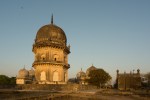
The Qutb Shahi Tombs complex is an island of quiet off the Old Bombay Highway. As we walk inside the complex after crossing the Abdullah Qutb Shah’s tomb, there is a cackle of laughter as children frolic, couples have their moment of togetherness and tourists walk talking noisily with each other. A little ahead, a few guys decide to have some imli (tamarind). They throw stones at the big tamarind tree that is laden with the fruit on the edge of the baoli. It all looks like a picnic is in progress.

Read More: Restoring the Fount of Life

See also: Jamshed Quli’s Tomb Set to Regain Lost Lustre

Art Enthusiasts Mourn Loss of Islamic Artefacts in Cairo Bomb Blast

Islamic Museum Cairo 3

Art experts and enthusiasts strongly condemned the devastation wreaked last week at the Museum of Islamic Art in Cairo, which was damaged in a blast aimed at the nearby Cairo security directorate on Friday (January 24th). Two car bombs exploded outside the directorate last week, killing four people and inflicting heavy damage on the building and collections of the Museum of Islamic Art, located opposite the directorate on Port Said Street.

Read More: Art Enthusiasts Mourn Loss of Islamic Artefacts in Cairo Bomb Blast

See also: Cairo Blast Rips into Islamic Art Museum

Life Around the Tombs

The Nizamuddin Urban Renewal Initiative is an experiment in heritage and urban rejuvenation in the heart of New Delhi, which should make every Delhiite proud. The restoration of Humayun’s Tomb and its gardens, as well as the development of Sunder Nursery are well known, but few are aware of the urban rejuvenation in the Nizamuddin Basti that is being carried out without much fanfare by a team of dedicated young professionals led by Ratish Nanda. The basti is one of Delhi’s oldest settlements. It not only has an impressive collection of Indo-Islamic monuments dating back 700 years, but has also been a fountain of performing arts and host to a living culture of festivals and processions.

Read More: Life Under the Tombs

Cairo Blast Rips into Islamic Art Museum, Damaging Key Global Collection

Islamic Museum Cairo 2

Cairo’s Museum of Islamic Art — home to almost 100,000 priceless artifacts that comprise one of the world’s most important collections of its kind — was extensively damaged when a car bomb exploded early Friday morning outside police headquarters across the street.

Read More: Cairo Blast Rips into Islamic Art Museum

See also: Islamic Museum in Cairo Seriously Damaged After Bomb Blast

Islamic Museum in Cairo Seriously Damaged After Bomb Blast

Islamic Museum Cairo

The facade of the Museum of Islamic Art in central Cairo has been completely destroyed by a powerful car bomb that exploded outside the adjacent Cairo Security Directorate early on Friday morning. Four people were killed and at least 76 injured in the bomb last, according to health ministry figures. The blast of the bomb also destroyed the facade of the nearby Egyptian National Library and Archives building.

Read More: Islamic Museum in Cairo Seriously Damaged After Bomb Blast

See also: Bomb Damages Egypt’s National Library and Archives

Iran Citadel Restored After Quake Will Never Regain Past Glory

Bam citadel

Experts who are painstakingly rebuilding the Bam citadel after an earthquake destroyed it a decade ago say Iran’s architectural masterpiece will never return to its past glory but are hopeful they will restore some of it. A thousand kilometres (600 miles) southeast of Tehran, the pre-Islamic desert citadel was the largest adobe monument in the world made of non-baked clay bricks. But it was reduced to rubble on December 26, 2003, when it was hit by a major quake that killed 26,000-32,000 people, according to various estimates.

Read More: Iran Citadel Restored After Quake Will Never Regain Past Glory

Restorations to Begin for Egypt’s Al-Azhar Mosque

Al-Azhar mosque

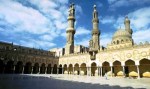
The Ministry of State for Antiquities (MSA) will participate in the restoration of the Al-Azhar mosque in historic Cairo, the MSA minister told Ahram Online. The MSA is responsible for protecting Egypt’s cultural history, which includes the country’s rich Islamic heritage. The project is carried out by the Arab Contractors under the supervision of the Ministry of Construction. The project aims to fix the foundation of the important mosque partially through soil injection as well as the restore its minaret.

Read More: Restorations to Begin for Egypt’s Al-Azhar Mosque

Barquq’s Holy Quran Restored to Former Glory

Barquq Quran

Following three years of fine restoration work, the Holy Quran transcribed during the reign of the first Burji Mameluk Sultan Malik Al-Zahir Seif El-Din Barquq regains its original splendour. The 412 page-Holy Quran is very large, with each page 105 centimetres tall and 79 centimetres wide. It is decorated with golden leaf and lapis lazuli decorations and contains all the signs and symbols used in Quranic recitation.

Read More: Barquq’s Holy Quran Restored to Former Glory

Zincirli Mosque Serres: The Forgotten Monument

Zincirli mosque

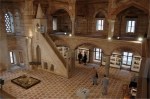
The Zincirli Mosque in the Greek northern town of Serres, one of the oldest Ottoman mosques in Europe, has opened its gates for public, non-religious use after nearly a century of neglect. Built by Mimar Sinan (1490-1588), the famous Ottoman chief architect serving three sultans and responsible for more than three hundred major Ottoman structures, the monument is among the most important of its kind for the history of Islamic architecture.

Read More: Zincirli Mosque Serres: The Forgotten Monument

Saved from War, Bosnian Trove of Books Finds New Home

Gazi Husrev Bey Library

When Bosnia’s National Library went up in flames in 1992 in a bombardment during the Bosnian Serb siege of Sarajevo, Mustafa Jahic knew he had to act to save his own institution’s priceless collection. As curator of the almost 500-year-old Gazi Husrev Bey Library, Jahic was guardian of a treasure trove of Oriental literature in the heart of Sarajevo, a city under siege during Bosnia’s 1992-95 war.

Read More: Saved from War, Bosnian Trove of Books Finds New Home

Jamshed Quli’s Tomb Set to Regain Lost Lustre

Tomb of Jamsheed Quli Qutb Shah

As you approach the Qutb Shah Tombs complex, you can sense a tingle of change in the air. The restaurant opened sometime back, has been transformed into a site archeological museum. Inside, there are sepia-tinted photographs, charts and maps about the state of the Qutb Shah Complex over a period 200 years. Some photographs show an open land with the tombs in the background, some from the vantage point of Old Bombay Highway and some show the excavations at the site.

Read More: Jamshed Quli’s Tomb Set to Regain Lost Lustre

Recalling the Future: Post Revolutionary Iranian Art

Recalling the Future

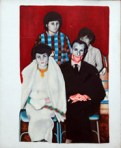
Post 1979 Iranian revolution artworks by 29 Iranian artists, many exhibiting in the UK for the first time, will be on display at The Brunei Gallery at SOAS, University of London from 16 January – 22 March 2014. Recalling The Future challenges assumptions about ‘Iranian’art. As Iranian artists in the 1960s and 70s increasingly combined signifiers of their local, national identity with formal approaches fit for the increasing modernity of their environment, this exhibition demonstrates artwork that radically shakes up the basic conception of the country’s modern canon.

Read More: Recalling the Future

The Minimalist Maze

Sameh Ismail

Unlike most Arab and Muslim calligraphers, who tend to restrict Arabic calligraphy to Quranic verses or Hadith, Sameh Ismail opted for a new approach to the world of contemporary calligraphy that makes it a more popular art, accessible to a wider range of art lovers. A Safe Way Out is the title Ismail chose for his new solo exhibition, currently showing at the Zamalek Art Gallery. As I first entered the spacious gallery, I was curious to explore this safe exit. However, the exhibited paintings were so huge that the viewer could easily lose his way in the large white spaces in between calligraphic elements, and the slow, circular lines.

Read More: The Minimalist Maze

Ara Güler: Capturing Turkey’s Unseen Corners in New Exhibit at Sackler Gallery

Ara Guller

Two cone-topped minarets pierce the sky, silhouetted against a striking backdrop of clouds. Below them is an elaborate stone portal with a pointed arch, intricately carved with Islamic calligraphy and arabesque patterns in the style of the Seljuks, a dynasty that ruled much of what is now Turkey during the 12th and 13th centuries. Inside the archway, a wooden door sits ajar, while a small child, barefoot and unkempt, passes by in the foreground.

Read More: Ara Guler: Capturing Turkey’s Unseen Corners in New Exhibit at Sackler Gallery

Dr. Pedro Moura Carvalho Appointed Deputy Director for Art and Programs at The Asian Art Museum

ASIAN ART MUSEUM DR. PEDRO MOURA CARVALHO

The Asian Art Museum announced today the appointment of Dr. Pedro Moura Carvalho as the museum’s new Deputy Director for Art and Programs, a key leadership position overseeing the curatorial, museum services, education and public programs departments. Reporting to the museum Director, Moura Carvalho will be responsible for providing strategic oversight and management of collections, exhibitions, education and interpretive initiatives that enhance audience engagement. He begins his tenure at the Museum in March 2014.

Read More: Dr Pedro Moura Carvalho Appointed Deputy Director for Art and Programs at The Asian Art Museum

Sacred Meets Everyday in Gardner Work by Hamra Abbas

Hamra Abbas

As a girl growing up in Pakistan, Hamra Abbas would draw pictures of whatever she saw around the house. Last summer, visiting her mother in Lahore, the artist spotted a small keepsake, a plaster cast of a curtain covering the entrance to the Kaaba, the Islamic holy site in Mecca. She made a picture of it. Now that image is emblazoned on the façade of the Isabella Stewart Gardner Museum. “It sparked an inquiry about objects of religious significance in a neglected, sad state,” says Abbas, now a multimedia artist with an international career who divides her time between Cambridge and Lahore.

Read More: Sacred Meets Everyday in Gardner Work by Hamra Abbas

Blurred Reality

Mohammed Elhadi

Oman-based artist Mohammed Abd Elhadi’s works try to unlock the mystery of our double lives. We all have an alter ego; a side that we rarely reflect to others. It is a corruption of our true selves, one that we struggle to deal with and sometimes seek redemption from. Its very existence obliterates the notion of a fixed identity, blurring the lines between what is real and unreal. Ambiguous to us, this conflict-ridden imagery though is no stranger to the art world.

Read More: Blurred Reality

The New Face of Punk Rock

Islamic Punk

You’ve heard of punk, pop punk, and garage punk, but what about Islamic punk rock? It’s also called Taqwacore, and after toiling in obscurity for the last decade, the sub-genre is poised for big things in 2014. The Kominas got their start ten years ago in Lowell, Massachusetts. Sunny Ali, the group’s guitarist, told Fuse News, “My parents are Pakistani first generation. I had older brothers, so they really turned me on to alternative music.” Karna Ray, the group’s drummer, recalls, “The first time I heard a glimmer of punk rock, the first album I ever got was actually Green Day’s Dookie.”

Read More: The New Face of Punk Rock

Rohina Malik’s Play Unveiled Addresses Negative Stereotypes About Muslims

Rohina Malik Unveiled

All stereotypes have the potential to be harmful, but negative stereotypes about a group of people are really dangerous,” says Rohina Malik, a Chicago-based playwright and actor, who was recently awarded the Lorraine H Morton Woman of Promise Award by the Evanston YWCA for her critically acclaimed play Unveiled.

Read More: Rohina Malik’s Play Unveiled Addresses Negative Stereotypes About Muslims

Precious Heritage: Of Forts Long Gone

Gilgit Forts

Nagar Valley, located north-east of Gilgit town along the Karakoram Highway, has lost much of its built heritage over the years and almost all its once-majestic forts.  “The loss of historic forts isn’t just a loss of buildings, it’s much more than that,” says resident Ismail Nashad who, under the banner of Anjuman Fikr-o-Sukhan, is striving to restore the forts. “We have lost precious heritage, that which belonged to our ancestors.”

Read More: Precious Heritage: Of Forts Long Gone

The Topkapı Scroll’s Thirteen-Pointed Star Polygon Design

This paper will explore the Topkapı Scroll sketch known as Catalog Number 30, the only repeat unit, that, when replicated using symmetry operations, creates an overall pattern consisting of “nearly regular” thirteen-pointed stars, regular sixteen-pointed stars as well as irregularly-shaped pentagonal stars. Since there are no known written instructions explaining how this repeat unit was generated, we set out to see if we could recreate this highly unusual design using only the simplest of Euclidean construction techniques that may have been known to, and used by, master builders during medieval times.

Read More: The Topkapi Scroll’s Thirteen-Pointed Star Polygon Design

Islamic Constructions: The Geometry Needed by Craftsmen

The Islamic world has a rich artistic tradition of creating highly geometric and symmetric ornamentation. Over the centuries, the process of creating Islamic tilings was refined from the 15th century ornamentation in the Alhambra Palace in Granada, Spain to the exquisite tilings, which are seen in mosques, mausoleums and minarets throughout the world today. The contemporary mathematics of group theory and knot theory combined with computer programs provide tools for creating modern day variations of these historical tilings. The title of this paper is motivated by the 10th century treatise On Those Parts of Geometry Needed by Craftsmen written by the Khorasan mathematician and astronomer Abu’l-Wafā who described several constructions made with the aid of straightedge and ‘rusty compass’, a compass with a fixed angle. He was one of a long line of Islamic mathematicians who developed geometric techniques that proved useful to artisans in creating the highly symmetrical ornamentation found in architecture around the world today. In this paper, Raymond Tennant looks at the geometry of Abu’l-Wafā with an eye toward determining geometric methods for reproducing Islamic tilings with students in the classroom.

Read More: Islamic Constructions, by Raymond Tennant