A Millennium of Persian Literature

Library of Congress exhibition

Persian first gained prominence a thousand years ago, a language of literature, poetry and folklore that connected people across vast stretches of Asia, Eastern Europe and the Middle East. The Library of Congress today [March 27, 2014] opens A Thousand Years of the Persian Book, the first major U.S. exhibition to make such a wide-ranging study of the Persian language and literature. The landmark exhibition features 75 items drawn primarily from the Persian collection of the Library’s African and Middle Eastern Division, one of the most important such collections assembled outside of Iran.

Read More: A Millennium of Persian Literature
Dallas Museum is Only Venue Outside of Europe to Host Major Islamic Art & Culture Exhibition

Nur exhibition in Dallas

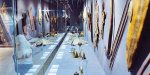
From March 30 through June 29, 2014, the Dallas Museum of Art will host Nur: Light in Art and Science from the Islamic World. The DMA is the only venue outside of Europe to host this international touring exhibition of Islamic art and culture co-organized by the DMA and the Focus-Abengoa Foundation. Critically acclaimed by such publications as The Financial Times and the International New York Times when it premiered in Seville, Spain in October, Nur: Light in Art and Science from the Islamic World spans more than ten centuries and features 150 works of art and objects from public and private collections in Europe, North Africa, the Middle East, and the United States.

Read More: Dallas Museum is Only Venue Outside of Europe to Host Major Islamic Art & Culture Exhibition

See also: How the Dallas Museum of Art Will Solve its Islamic Problem

See also: How the Dallas Museum of Art Will Solve its Islamic Problem

Despite Conflict and Repression, Creativity

Art amongst war

In assembling Art Amongst War: Visual Culture in Afghanistan, 1979-2014, the current exhibition at the College of New Jersey Art Gallery, Deborah Hutton discovered works that evoked feelings ranging from dismay to guarded hope. But Dr. Hutton, the curator of the show and an associate professor of art history at the college, also expects visitors to react with surprise. Not just at what is portrayed in the pieces, but that the art, which will be on display through April 17, even exists.

Read More: Despite Conflict and Repression, Creativity

Sculptor Finds Himself in the Crossfire of Iran’s Culture Wars

Parviz Tanavoli

When officials from Tehran municipality broke into the house of Iran’s most celebrated visual artist to remove works they claimed were city property, they carelessly put chains around the unwrapped bronze sculptures and lifted them with cranes. The raid on the home of Parviz Tanavoli – which damaged and broke artworks worth millions of pounds – was rooted in a decade-long dispute between the artist and the local government, but has now been dragged into a rivalry between the mayor of Tehran and the president, Hassan Rouhani.

Read More: Sculptor Finds Himself in the Crossfire of Iran’s Culture Wars

Islamic Art Dating Back 1000 Years to be Auctioned at Sotheby’s

Sotheby's auction April 2014

Rare arts from the Islamic World including a map of nineteenth century Mecca and an Ottoman metal-thread curtain are to be auctioned. Sotheby’s Arts of the Islamic World sale [on April 9th, 2014] will bring to the market an exquisite selection of paintings, manuscripts, textiles, ceramics, weaponry and rugs. Spanning over 1000 years, these objects offer a remarkable testimony to the astonishing scope of artistic production in the lands under Islamic patronage from Spain to China.

Read More: Islamic Art Dating Back 1000 Years to be Auctioned at Sotheby’s

How the Dallas Museum of Art Will Solve its Islamic Problem

Sabiha Khemir 2

For an encyclopedic museum, it’s something of a feat that the Dallas Museum of Art has gone 111 years without hosting a major exhibition of Islamic art. It has been nearly 40 years since the museum has hosted even a small Islamic art exhibition. That changes this month with Nur: Light in Art and Science From the Islamic World. But don’t expect that to be mentioned on the promo poster.

Read More: How the Dallas Museum of Art Will Solve its Islamic Problem

See also: Shedding a Light on Islamic Art’s Great Treasure

Dana Awartani: Decoding Islamic Art

Dana Awartani

Islamic geometric artwork, tile work, parquetry and illumination are considered a very rare form of art nowadays. It’s considered an old art haven used during the peak age of the Islamic Empire centuries ago when they studied the beauty of things and have since did all they could to study and perfect their handwork. Architects and artists alike studied math and geometry and explored that world and have thus created masterpieces found all over the Islamic world.

Read More: Dana Awartani

Matchless Tolerance of the 18th Century Brass Astrolabe

Aga Khan Museum Preview in Dubai

The 18th century brass astrolabe, an instrument for measuring movements of the Moon and stars, was engraved by maker Haji Ali in Latin and Arabic, but Hebrew characters are also faintly visible. For Dr Henry Kim, the director and chief executive of the new Aga Khan Museum, this object is redolent of a more tolerant age about which we may have forgotten. “What people often find surprising about art and artefacts from the Islamic civilisation is their secular nature, and how often they embraced all religions and different facets of cultures,” Dr Kim says.

Read More: Matchless Tolerance of the 18th Century Brass Astrolabe

From Rugs to Riches

From rugs to riches

There’s a widespread fascination with tracking the fate of a human contrivance across centuries and regions — mapmaking, prayer rituals, the use of salt, and the like. The ways such ideas and inventions change, where they pop up and why, open unexpected windows onto the social pageant of our species. Carpets of the East in Paintings From the West, a little gem of a show at the Metropolitan Museum of Art, taps into that fascination as it examines artistic cross-pollination between three types of 17th-century Oriental carpets and three Dutch paintings of the same era.

Read More: From Rugs to Riches

See also: Metropolitan Museum Displays Islamic Carpets Alongside Dutch Paintings

Shedding a Light on Islamic Art’s Great Treasure

Sabiha Khemir

Sabiha al-Khemir was visiting a solar energy plant in Spain about four years ago when inspiration struck. Her host, the foundation of a Spanish company with interests in alternative energy, wanted her to conceive an Islamic art exhibition for Seville to recognize Spain’s 800-year history under Moorish rule and ideally to tie her concept into the Seville-based company’s work. Touring the solar plant, the Tunisian-born curator found her organizing principle. “It was an incredible experience,” Ms. Al Khemir, 55, recalled. “Light was everywhere.”

Read More: Shedding a Light on Islamic Art’s Great Treasure

Eastern Memories: 600 Years of Turkish–Polish Diplomatic Relations

Eastern Memories

One of the most important events in Istanbul to commemorate the anniversary of 600 years of diplomatic relations between Turkey and Poland is the Distant Neighbour, Close Memories exhibition, which opened at the Sakıp Sabancı Museum last Friday [March 7th, 2014]. As the museum’s director, Dr Nazan Ölçer put it, ‘The documents, maps, paintings, personal possessions, trade goods, textiles, weapons, armour, costumes and ceramics on display aim to act as reminders of the memories that have been created between the two countries in the past 600 years.’

Read More: Eastern Memories

See also: Exhibition Documents 600 Years of Dialogue Between Turkey and Poland

Gifts from the Shah

Gifts from the Shah

A fascinating exhibition on display at the Chamber of the Scrutinio in the Doge’s Palace in Venice traces the history of diplomatic relations between the Republic of Venice and the Safavid Persia under the rule of Shah Abbas the Great (1587–1629). The show specifically highlights the gifts exchanged between the two powers from 1600 until the end of the Shah’s reign.

Read More: Gifts from the Shah

Historical Ottoman Palace to Reopen as a Museum

Dolmabahce Palace

Once the residence of Ottoman crown princes, including the last caliph Sultan Abdulmajid, the Dolmabahce Palace in the Besiktas district of Istanbul is now a museum displaying paintings from artists around the world, including Italian artists Fausto Zonaro and Luigi Acquarone and Polish artist Stanislaw Chlebowsk. After seven years of restoration and renovation, the palace is to be open to the public from March 22 and is the only one in Turkey dedicated to ‘Late Ottoman Life’ in the 19th century.

Read More: Historical Ottoman Palace to Reopen as a Museum

Exhibition Documents 600 Years of Dialogue Between Turkey and Poland

Distant neighbour exhibition

To arrange a meeting with a close friend of your great-great-grandfather in order to learn about his life is one of the opportunities which is nearly impossible to seize in your lifetime, even though many of us have a deep thirst to obtain knowledge about the past experiences of our relatives. But now, a similar experience awaits both Turkish and Polish citizens in İstanbul’s Sakıp Sabancı Museum (SSM) which is presenting its most recent historical exhibition, Distant Neighbor, Close Memories: 600 Years of Turkish-Polish Relations, from March 7th to June 15th, 2014.

Read More: Exhibition Documents 600 Years of Dialogue Between Turkey and Poland

Hasankeyf, Turkey: Soon-to-be Sunken Treasure

Hasankeyf

A stork wheels over the ancient mosque, flying solo in a sky of seamless blue. Circling lower it executes a seemingly impossible landing on a nest precariously perched atop the minaret. Far below, the Tigris is flowing lazily towards Iraq, its sparkle extinguished by the lengthening shadow cast by cliff and citadel. This is Hasankeyf, fortress of rock, in Anatolia, Turkey’s far east. Dug into the southern slopes of the Raman mountains, the small town has for millennia guarded the river crossing, though perhaps not for much longer. “It is a jewel of history,” says my guide, Remzi Bozbay. “Soon it will become sunken treasure.”

Read More: Hasankeyf, Turkey: Soon-to-be Sunken Treasure

Metropolitian Museum Displays Islamic Carpets Alongside Dutch Paintings in New Exhibit

Carpets of the East

The Metropolitan Museum of Art has announced that it will house a new exhibit, Carpets of the East in Paintings from the West, featuring 17th-century Islamic carpets alongside depictions in Dutch paintings from March 11 – June 29 at The Hagop Kevorkian Fund Special Exhibitions Gallery, Gallery 458. As early as the 14th century, images of carpets woven in the East-primarily in the areas constituting present-day Turkey and Iran-began to appear in European paintings.

Read More: Metropolitan Museum Displays Islamic Carpets Alongside Dutch Paintings

Sultans of Science Exhibit Touches Down at Ontario Science Centre

Sultans of Science

A special exhibit that was featured five years ago at the Ontario Science Centre has returned with new features, more interactive displays, and plenty to do for all ages. Sultans of Science: 1,000 Years of Knowledge Rediscovered opened Friday, March 7, and will run until June 7, 2014 for visitors to learn about the important scientific and technological discoveries made by scholars during the Golden Age of Islamic Science.

Read More: Sultans of Science Exhibit Touches Down at Ontario Science Centre

Melbourne Islamic Museum Offers Steely Edge to Muslim Works

Islamic Museum of Australia 2

Nur Shkembi doesn’t like to use the words “east” and “west”, and yet in many ways, her work as art director of the newly opened Islamic Museum of Australia occupies the boundary between the two. Even from the outside, the hybrid identity of the building is clear: nestled in Melbourne’s northern suburbs and backing onto Merri Creek, the museum is wrapped in rusted steel that has been laser-cut with images from Australian and Arabic history.

Read More: Melbourne Islamic Museum Offers Steely Edge to Muslim Works

An Insider’s View of the Arab World

Fotofest 2014 two

A spectrum of special exhibitions, cultural events and academic symposia will put the spotlight on Arab artists and the Arab world at the 15th edition of the FotoFest Biennial, to be held in Houston, Texas, from March 15th to April 27th 2014. FotoFest is the oldest photographic arts festival in the United States, and one of the leading photography biennials in the world. Art lovers can look forward to more than 100 independently organised art exhibitions and events at various museums, art spaces, universities and public spaces across Houston at FotoFest 2014 Biennial. But the centrepiece of the event is View from Inside, which comprises four exhibitions showcasing video, photography and mixed-media art by contemporary Arab artists from the Middle East and North Africa.

Read More: An Insider’s View of the Arab World

Art Gallery to Showcase Sufism’s Mystical Journey Through Exhibition

Hossein Irandoust

Pro Art Gallery, the gallery that celebrates innovative and cutting edge art in the Middle East, will host a new exhibition titled Spirituality in Motion, which will showcase artworks by renowned contemporary Iranian artist Hossein Irandoust. The exhibition will run from March 12th to March 20th at the Pro Art Gallery.

Read More: Art Gallery to Showcase Sufism’s Mystical Journey Through Exhibition

Rare 19th Century Indian Paintings up for Auction

Fraser album at Bonhams

Part of a “treasure trove” of rare Indian paintings, commissioned by two Inverness brothers in Delhi in the early 19th century, are expected to fetch close to £100,000 when they go under the hammer at a leading London auction house next month. Bonhams today announced they are sell three stunning images from The Fraser Album, discovered amongst the papers of a Scottish family in 1979, at its next auction of Indian and Islamic art on 8th April 2014.

Read More: Rare 19th Century Indian Paintings up for Auction

Peabody Essex Museum Appoints New Curator of Indian and South Asian Art

Sona Datta

The Peabody Essex Museum announces the appointment of Sona Datta, Ph.D., as its new curator of Indian and South Asian Art. Datta comes to PEM from the British Museum, London, where during her eight-year tenure as art historian and curator, she specialized in the visual culture of South Asia. At PEM, Datta will play a pivotal role in shaping the museum’s program in South Asian art primarily through innovative exhibitions, interpretation and programming as well as strategic collection enhancement and research.

Read More: Peabody Essex Museum Appoints New Curator of Indian and South Asian Art

An Armenian Craftsman Reviving a Long-Forgotten Ottoman Art

Hrac Arslanyan and Murassa

Hrach Arslanyan is an artist and instructor of Armenian descent who is engaged in reviving murassa, a traditional Ottoman art that was forgotten for almost five centuries. Murassa is an art which involves the decoration of metal objects with precious stones. Arslanyan focuses on the work which goldsmiths used to produce for palaces in the Ottoman era, and is attracting an increasing level of interest in his projects. Hraç Arslanyan relates that he was mischievous as a child, but was sent by his parents as an apprentice to master craftsman Hagop Usta in the Grand Bazaar in İstanbul, and ended up teaching murassa himself.

Read More: An Armenian Craftsman Reviving a Long-Forgotten Ottoman Art

Iranian-Born Artist Explores Cost Of Egypt’s Revolution

Shirin Neshat 6

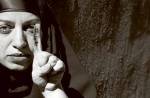
The work of Iranian-born artist Shirin Neshat, whose photographs, films and video installations deal with gender, politics and religion in the Islamic world, has been heralded by art critics and collected by major museums. Although Neshat has lived in the United States since the 1970s, her work has most often been focused on the lives of women in Iran, and more recently with the aftermath of the Arab Spring in Egypt.

Read More: Iranian-Born Artist Explores Cost of Egypt’s Revolution

Islamic Art Exhibit Explores Doris Duke’s ‘Shangri-La’

Doris Duke

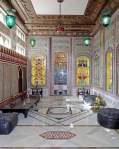
Tobacco heiress Doris Duke, who died in 1993, built a fantasy compound in Honolulu to showcase an exquisite collection of Islamic art she’d acquired in her many travels. You can get an exhilarating peek into this elegant, rarefied life by visiting Doris Duke’s Shangri-La: Architecture, Landscape and Islamic Art at the University of Michigan Museum of Art through May 4th, 2014.

Read More: Islamic Art Exhibit Explores Doris Duke’s ‘Shangri-La’